Showing posts with label zoo. Show all posts
Showing posts with label zoo. Show all posts
Tuesday, January 10, 2012
waving bear
I originally posted this on facebook with the following comment
"a little worried that this is from some sketchy animal park so if anyone has info on it give me a heads up - am posting in hopes that its from somewhere nice..."
but turned out that sadly the bears are from here: http://www.olygamefarm.com/
Sunday, September 11, 2011
Monday, August 22, 2011
Something light to start off Monday morning: Orangutan cools off with face cloth
Thanks to Mark W for the link
Thursday, August 4, 2011
Nénette MovieTrailer
Thanks to Richard M for the link!
This looks totally beautiful/tragic.
From Youtube:
Born in the jungles of Borneo, Nenette is a 40-year-old orangutan -- and the oldest (and most beloved) inhabitant at the Menagerie du Jardin des Plantes in Paris. The latest film by legendary French documentarian Nicolas Philibert (TO BE AND TO HAVE), NENETTE is a captivating study of an enigmatic animal and our relationship to her.
Saturday, July 9, 2011
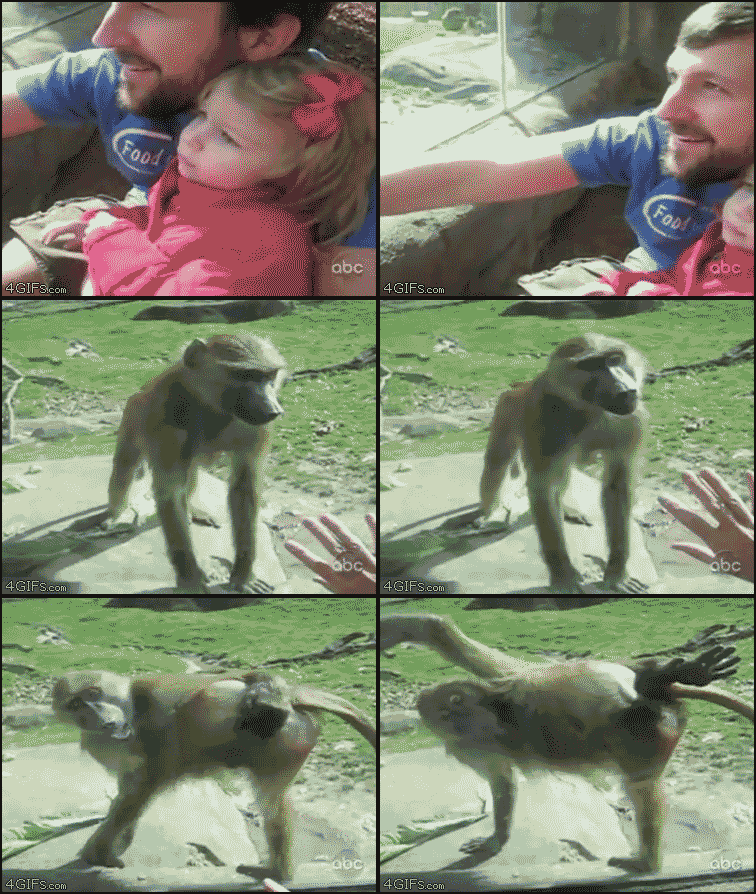
Thursday, June 30, 2011
Funniest zoo signs ever.
Environmental Grafitti has a gallery of the 20 most ridiculous zoo signs. I've posted some of these before, and I picked my favorite and reposted below, but go to their page to see the full set. Too funny. -MA
via Houston Zoo Wildlife Conservaytion facebok page

Photo: Sparks68

Photo: The Rocketeer

Photo: BenSpark

Photo: DiscoWeasel


Photo: alexstaubo

Photo: tenioman

Photo: maestroben

Photo: via Equine Ink
via Houston Zoo Wildlife Conservaytion facebok page
Photo: Sparks68
Photo: The Rocketeer
Photo: BenSpark
Photo: DiscoWeasel

Photo: alexstaubo
Photo: tenioman
Photo: maestroben
Photo: via Equine Ink

Photo: AxsDeny

Wednesday, June 1, 2011
success - Toronto Zoo closes its elephant exhibit!
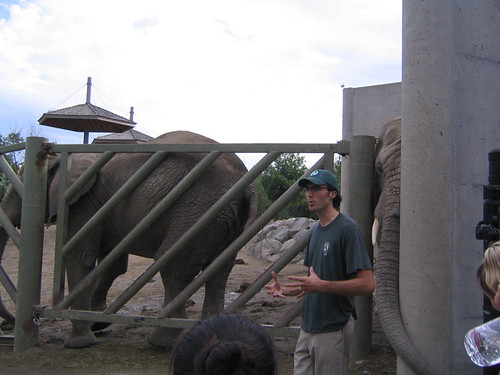
From PETA.org
Toronto Zoo to Close Elephant Exhibit
by Jennifer O'Connor
I've got some great news and some not-so-great news. The great news is that the Toronto Zoo has heeded the call of animal defenders, including Bob Barker, and decided to close its elephant display, joining more than a dozen other zoos that have done the same thing. What's more, the Toronto Zoo has agreed that it will not send Toka, Iringa and Thika to any facility that uses bullhooks.
The not-so-great news is that instead of sending the elephants to the spacious comfort of a sanctuary, the zoo seems intent on sending them to another zoo.
The Performing Animal Welfare Society (PAWS) sanctuary in California is willing and able to immediately provide these elephants with the many acres of natural habitat that they need to thrive, warmer weather, and the companionship of other elephants. Toka, Iringa, and Thika deserve no less, and we're appealing to the zoo to send them to PAWS.
Another Canadian elephant in desperate need of retirement is Lucy, who spends her days alone in Edmonton's Valley Zoo. Please ask city officials to send Lucy south.
Sunday, May 15, 2011
London Zoo criticised over death of baby gorilla Tiny
I think this is a sad but interesting issue to discuss. I certainly see Dr. Sommer's point but if zoo's are trying to provide the proper social structure for gorillas then what choice did they have? On the other hand, this comes back to the question I have brought up here several times - what is the role of zoos in conservation? I think most zoo apes are far far away from natural conditions, no matter how hard zoos try. In which case, strictly adhering to wild gorilla social structure maybe should not be the priority. They could have had a 2 female and infant group and introduced the other female to the new silverback. Once the infant was older and his mother started cycling again the mother and juvenile could probably be introduced to the silverback without incident. Many zoos have ape groups that are divided so that some are on display and other not at any given time. It is cleearly not a black and white issue and its something that should be discussed. -MA

From the BBC via the Vigilant Primate Genetics Lab facebook page
London Zoo criticised over death of baby gorilla Tiny
Tiny, a baby western lowland gorilla, with his mother Mjukuu Keepers waited months to introduce Tiny and his mother to the new male
A leading evolutionary anthropologist has called London Zoo "incompetent" over the death of its baby gorilla in an attack by a silverback.
Professor Volker Sommer said he was "bewildered" why seven-month-old Tiny was introduced to new male Kesho.
In the wild, when a new male takes over an existing group, there is a danger he will kill any young fathered by other males to ensure his genes survive.
London Zoo said it took expert advice and did all it could to cut the risks.
The young western lowland gorilla, who was fathered by a male that died last year, was injured on Thursday when he and his mother Mjukuu were introduced to Kesho for the second time.
Vets believe Tiny, the first gorilla to be born at the zoo for 22 years, may have suffered internal injuries following a scuffle in which he broke an arm.
The infant underwent a three-hour operation to pin his arm but vets were unable to revive him.
Prof Sommer, an advisor to the International Union for Conservation of Nature on great apes, said introducing Tiny to the silverback "ignored findings accumulated over the last 40 years".
In a letter to the Zoological Society of London (ZSL), he said: "What on Earth did ZSL expect to happen? Any undergraduate student of zoology could have told you what to expect!
"How can it be that ZSL, an organisation known for being guided by scientific knowledge, ignores findings that have been accumulated over the last 40 years?"
He said those responsible should no longer keep apes if the zoo was not up to scratch with what science told us.
The letter added: "Sorry, but the word 'incompetence' comes to mind for those responsible for this blunder.
"As a logical conclusion, London Zoo should not keep apes anymore."
Kesho's arrival last year was recommended by experts to create a cohesive social group, after the death of the zoo's previous male gorilla.
In the wild male gorillas often attack the offspring of their rivals, so staff were cautious about introducing Kesho to the baby, who was the offspring of the former male.
Kesho had been gradually introduced to the two other female gorillas at the zoo but keepers waited many months for an introduction to the youngster and his mother.
London Zoo said it took advice from the European Association of Zoos and Aquaria's European endangered species programme (EEP), and did all it possibly could to lessen the risks.
It said keepers felt it would be unnatural to keep female gorillas without a male leader.
"We always knew the risks and were very open from the beginning about the fact that bringing a new male into a situation where a female was pregnant by another male was very challenging," a ZSL spokeswoman said.
"We held a press conference in August at the science media centre to explain all of this. However, we were advised by the EEP at the time to find a new male for the long-term welfare of the group as a whole.
"It would be unnatural to keep female gorillas without a male leader and would not have met their complex social needs satisfactorily.
"We did all that we possibly could to mitigate the known risks but fundamentally we cannot stop wild animals exhibiting their natural behaviours, and neither should we."
From the BBC via the Vigilant Primate Genetics Lab facebook page
London Zoo criticised over death of baby gorilla Tiny
Tiny, a baby western lowland gorilla, with his mother Mjukuu Keepers waited months to introduce Tiny and his mother to the new male
A leading evolutionary anthropologist has called London Zoo "incompetent" over the death of its baby gorilla in an attack by a silverback.
Professor Volker Sommer said he was "bewildered" why seven-month-old Tiny was introduced to new male Kesho.
In the wild, when a new male takes over an existing group, there is a danger he will kill any young fathered by other males to ensure his genes survive.
London Zoo said it took expert advice and did all it could to cut the risks.
The young western lowland gorilla, who was fathered by a male that died last year, was injured on Thursday when he and his mother Mjukuu were introduced to Kesho for the second time.
Vets believe Tiny, the first gorilla to be born at the zoo for 22 years, may have suffered internal injuries following a scuffle in which he broke an arm.
The infant underwent a three-hour operation to pin his arm but vets were unable to revive him.
Prof Sommer, an advisor to the International Union for Conservation of Nature on great apes, said introducing Tiny to the silverback "ignored findings accumulated over the last 40 years".
In a letter to the Zoological Society of London (ZSL), he said: "What on Earth did ZSL expect to happen? Any undergraduate student of zoology could have told you what to expect!
"How can it be that ZSL, an organisation known for being guided by scientific knowledge, ignores findings that have been accumulated over the last 40 years?"
He said those responsible should no longer keep apes if the zoo was not up to scratch with what science told us.
The letter added: "Sorry, but the word 'incompetence' comes to mind for those responsible for this blunder.
"As a logical conclusion, London Zoo should not keep apes anymore."
Kesho's arrival last year was recommended by experts to create a cohesive social group, after the death of the zoo's previous male gorilla.
In the wild male gorillas often attack the offspring of their rivals, so staff were cautious about introducing Kesho to the baby, who was the offspring of the former male.
Kesho had been gradually introduced to the two other female gorillas at the zoo but keepers waited many months for an introduction to the youngster and his mother.
London Zoo said it took advice from the European Association of Zoos and Aquaria's European endangered species programme (EEP), and did all it possibly could to lessen the risks.
It said keepers felt it would be unnatural to keep female gorillas without a male leader.
"We always knew the risks and were very open from the beginning about the fact that bringing a new male into a situation where a female was pregnant by another male was very challenging," a ZSL spokeswoman said.
"We held a press conference in August at the science media centre to explain all of this. However, we were advised by the EEP at the time to find a new male for the long-term welfare of the group as a whole.
"It would be unnatural to keep female gorillas without a male leader and would not have met their complex social needs satisfactorily.
"We did all that we possibly could to mitigate the known risks but fundamentally we cannot stop wild animals exhibiting their natural behaviours, and neither should we."
0
comments

 Labels:
animal rights,
captive studies,
death,
europe,
gorillas,
very important scientist,
zoo
Labels:
animal rights,
captive studies,
death,
europe,
gorillas,
very important scientist,
zoo
Labels:
animal rights,
captive studies,
death,
europe,
gorillas,
very important scientist,
zoo
Tuesday, April 12, 2011
Cell phone recycling for Goualougo Apes!
News from the Minnesota Zoo and the Goualougo Triangle Ape Project:
"Dr .Tara Harris (Conservation Biologist, Minnesota Zoo) is spearheading a cell phone recycling campaign to benefit the Goualougo Triangle Ape Project. Goualougo will receive a small donation for every cell phone received through this program!!!
A group of video production students from the University of Minnesota filmed a public service announcement which features Tara promoting the cell phone recycling program: http://www.youtube.com/watch?v=huZUyzq51hg
People anywhere in the USA can send in phones for free through the mail by printing out the mailing label at www.mnzoo.org/cell and all of the proceeds benefit the Goualougo Triangle Ape Project!!!
We would really appreciate if you could help us to promote this program! Many thanks to Tara for the great initiative!
All the Best,
Dave, Crickette, Jean Robert, and the GTAP team!"
More info can be found at the Minnesota Zoo website
Tuesday, September 21, 2010
Zoos and Conservation
 From the CharlotteObserver
N.C. Zoo works without borders
Animal conservation efforts send researchers across the state - and all the way to Africa
BY ROBIN SMITH
Watching a 400-pound gorilla lollygag in his habitat at the North Carolina Zoo in Asheboro, visitors can see up close how the zoo preserves and showcases natural wonders. Not as evident are the thousands of wild animals in the zoo's care that live far beyond the park's managed grounds. "What most people see when they come to the zoo are the animals and the rides and the restaurants. But what's less visible is the research that goes on behind the scenes," said Rich Bergl, N.C. Zoo curator of conservation and research.
The N.C. Zoo spends approximately $400,000 each year on field conservation programs, both in Africa and closer to home in North Carolina. More than 5,000 miles away in the African countries of Nigeria and Cameroon, for example, N.C. Zoo researchers are using remote sensing and satellite tracking tools to bring endangered animals back from the brink. Tracking tools provide vital information for the conservation of animals in the wild, not only species such as gorillas and elephants that are star zoo attractions, but also other animals and plants that share their homes. "When those areas are protected, the elephants are just the tip of the iceberg," said Mike Loomis, the zoo's chief veterinarian, who leads a project that uses satellite tracking collars to monitor elephants' movements in Cameroon. Bergl agrees. "When you conserve a population of gorillas in an area, you're not just conserving the gorillas. The gorillas act as umbrellas for the rest of the plants and animals in the forest as well."
The work is a testament to how far zoos have come from the menageries they once were, said Bergl: "Conserving animals in their natural habitats is a key part of a zoo's mission."
Rediscovering rare apes
In one project, the zoo is collaborating with New York's Wildlife Conservation Society to protect the critically endangered Cross River gorilla, one of the world's rarest and least-understood apes. Named for the river that flows through their forest home, Cross River gorillas were thought to be extinct until the mid-1980s, when they were rediscovered in a remote region along the Nigerian-Cameroon border. Current counts suggest there are fewer than 300 Cross River gorillas left in the wild and only one known in captivity. Due to their low numbers, their remote highland habitat, and their wariness of people, Cross River gorillas are extremely difficult to study, Bergl said. "In the 10 years that I've been working on these gorillas, I've probably observed them for a total of 10 seconds," he said.
Instead, Bergl and colleagues rely on clues the great apes leave behind. Researchers can tell how many gorillas are in a group, what they eat, and where they go by analyzing their trails, dung and nests - the beds of leaves and twigs the animals make each night for sleeping. Much of the work revolves around a hand-held computer system designed to help researchers and park rangers gather information about gorillas and other wildlife as they patrol the forest. "We're using exactly the same GPS technology many people have in their cars or cell phones," Bergl explained, pointing to a photograph of a black-and-yellow device that looks like an oversized iPhone.
Rangers enter their observations and hit a button to register the latitude and longitude via satellite. They then download the information to a central database, where it can be used to create computerized maps that allow scientists to better monitor the elusive animals. "We've found gorillas in at least two areas not previously known to be inhabited," Berg said.
Keeping the peace
In addition to monitoring the Cross River gorilla, researchers at the N.C. Zoo are working to protect an animal that is much less wary of humans, but just as tricky to track.
In partnership with other conservation organizations and the government of Cameroon, Loomis, the zoo veterinarian, uses satellite tracking collars to trace elephants' movements in and out of Cameroon's national parks. They share data with nearby farmers and communities when elephant herds may be heading toward crops. The aim is to ease conflict between humans and the roaming animals.
The world's largest living land animals, elephants need a lot of space. At the recently expanded African elephant exhibit at the N.C. Zoo, for example, seven elephants roam a 7-acre enclosure. In the wild, elephant herds can travel tens of miles each day in search of food and water. "Though Cameroon has a nice series of parks and preserves, it's almost impossible to make sure elephants stay within protected areas," Loomis said.
Elephants in search of an easy meal raid farmers' fields and trample crops. Farmers sometimes kill them in retaliation. Elephants also occasionally kill or injure people with their sharp tusks, Loomis said. Satellite collars can provide an early warning system when the animals are on the move, transmitting their comings and goings back to researchers.
"I get the location for those animals every day by e-mail on my computer," Loomis said. "By setting up this early warning system, we've been able to reduce the number of elephants killed, the number of people injured, and the amount of crops destroyed."
A big, dangerous job
Putting a tracking collar on a 10,000-pound elephant is no easy task. The work requires a team of trackers, porters, veterinarians and biologists, hauling heavy loads over difficult terrain, sometimes for days at a time, Loomis said.
"It's a matter of trying to get close enough to the elephant, quietly enough, and downwind from the elephant so we can get in a position to dart the animal," Loomis said.
Once an elephant has been anesthetized, the team fits a tracking collar around its neck, reverses the anesthesia and releases the animal.
For the collaring team it's treacherous work.
"We're working with really large, really dangerous animals in remote areas. A few injuries goes along with the territory," he added.
The researchers have succeeded in collaring 35 elephants since the project began in 1998. Most are larger, older females at the heads of their herds. By targeting matriarchs, researchers can follow an entire herd - as many as 250 elephants - for up to 16 months, Loomis said.
The data help wildlife managers identify key migration corridors to focus their conservation efforts more effectively. This also helps the Cameroon government identify priority areas for protection when creating or expanding national parks. One of only four species of elephants still alive, the African elephant is threatened throughout its range by illegal hunting for meat and ivory, Loomis said.
"By understanding elephant movement patterns," he said, "anti-poaching patrols can concentrate on areas where elephants are more likely to be."
Read more: http://www.charlotteobserver.com/2010/09/19/1704779/nc-zoo-works-without-borders.html#ixzz10AwdKQ35
Saturday, September 4, 2010
Chimps and gorillas respond differently to their holding areas
 (please note: this is a stock image and not a chimpanzee at the Lincoln Park Zoo)
From the Economist
Behind the curtain
Zoos are better places for animals than they used to be. But more still needs to be done
ONCE, they were grim places of bars and concrete. But zoos today are, more often than not, places where endangered species are bred in verdant and naturalistic enclosures. At least, that is what the public sees. As night falls and the facilities need to be cleaned, the animals are commonly led into small concrete holding areas. For decades zoos around the world have used such areas without question and assumed that their effects on the animals’ behaviour were negligible so long as high-quality enclosures were available during the day. This notion may, however, be wrong, for a new study shows that, at least among the great apes, holding areas have a dramatic effect on behaviour.
While working with chimpanzees and gorillas, Stephen Ross, a primatologist at Lincoln Park Zoo in Chicago, noticed that the animals changed their behaviour when they were moved in and out of the holding areas. Curious as to whether these changes were happening regularly, and keen to identify specifically how behaviour was changing, Mr Ross and a team of his colleagues decided to carry out an experiment.
The researchers trained observers to monitor seven chimpanzees and seven gorillas in both the holding areas and the enclosures. These observers did so for 15 months. Every day, the apes spent two hours in their holding areas, which had a floor area of 11 square metres, and the rest of the time in their enclosures, which were ten times this size. Both the holding areas and the enclosures were indoors.
While doing their work, the observers sat quietly near the animals and noted down their behaviour. When the apes were on public view, the number of visitors present was also noted. In total, the observers collected 208 hours of observations in the enclosures and 73 hours in the holding areas.
Mr Ross and his colleagues report in the American Journal of Primatology that among their chimpanzees, aggressive behaviour increased when the animals were placed inside holding areas. Chimps spent about 0.1% of their time being aggressive when they were in the enclosures. That rose to 0.5% when the animals were in the holding areas. The researchers also found that chimps scratched and groomed themselves much more. Scratching increased fourfold. Chimps spent 0.4% of their time in the enclosures having a scratch. That went up to 1.6% in the holding areas. Self-grooming, a gentler activity than scratching, increased from 12.3% to 17.4%. In contrast, time spent foraging for food dropped from 18.1% of the total in the enclosures to 10.5% of it in holding areas.
Gorillas showed a drop in foraging as well. It fell from 30.6% of their time when in the enclosures to 5.4% in the holding areas. But they also showed numerous changes of behaviour that were different from those seen in chimpanzees. Most notably, they became more affectionate rather than more aggressive when in the holding areas. Behaviours such as grooming other individuals, playing with them and embracing them rose from 4.1% of their time to 8.2%. The animals also moved around much more, spending 11.6% of their time on the move in the holding areas, but only 7.2% in the enclosures. Neither species, though, seemed to mind being watched. The number of visitors outside an enclosure had no effect on the behaviour of the animals within it.
Mr Ross argues that interpreting the chimpanzee data is straightforward. Scratching and self-grooming are well known to be related to anxiety. That they increase in frequency in holding areas suggests the chimpanzees feel bad in these places. The increase in aggression and decrease in foraging also support this hypothesis.
The gorilla data, by contrast, are anything but straightforward. That holding areas saw gorillas foraging less suggests the animals do not like them. Yet friendly behaviour and moving around (which is also regarded as a positive activity in gorillas) happened more often in holding areas, which suggests they were happy there.
While the gorilla data will require further analysis before any clear conclusion can be drawn, the discovery that great apes’ behaviour changes when they go into holding areas is important. Hundreds of reports about the behaviour of animals in modern zoos support the idea of building complex enclosures. If animals come under stress when put in holding areas, though, the benefits of these enclosures may be reduced.
Although Lincoln Park Zoo puts its chimpanzees and gorillas in such areas for only two hours a day, a survey that Mr Ross conducted of the management practices for chimpanzees in other zoos accredited by the Association of Zoos and Aquariums suggests that is unusual. Some 85% of the institutions that responded reported that their chimps spend more than 12 hours a day in holding areas. And this is only what happens in accredited zoos. In America alone there are also more than 1,800 chimpanzees in unaccredited zoos, sanctuaries, laboratories and private homes. Compared with some other places, two hours a day in the cooler may be paradise.
--
Reference
Ross SR, Wagner KE, Schapiro SJ, Hau J (2010) Ape behavior in two alternating environments: comparing exhibit and short-term holding areas. American Journal of Primatology 71:1-9
Abstract
In many facilities, primates are voluntarily transferred between different enclosures on a daily basis to facilitate animal husbandry and exhibit maintenance. This procedure is particularly relevant in the management of great apes living in zoos, where the requirements of functional management must be balanced with the desire to maintain enriching and naturalistic exhibit enclosures that benefit ape residents and attract the visiting public. In these settings, examinations of ape behavior and welfare typically focus exclusively on activity in the primary exhibit area. However, physical, social and sensory experiences unique to each area may shape different patterns of behavior. In the current study, zoo-living chimpanzees and gorillas were moved each day from exhibit areas to off-exhibit holding areas for a short duration as a part of regular management procedures. Behavioral data indicated species-specific reactions to the holding area, including increased aggression and self-directed behavior by chimpanzees and increased activity and prosocial behavior among gorilla subjects. Both species showed more feeding-foraging behavior while in the exhibit enclosure. Results suggest that holding areas may not meet all behavior needs of captive great apes and demonstrate the importance of including all components of the captive enclosure in comprehensive analyses of great ape behavior and welfare.
Wednesday, August 11, 2010
More on zoos and gorilla captive breeding

Continuing the debate going on in this post on the role of zoos in conservation is this article from the guardian that discusses how much breeding gorillas in zoos makes sense from a conservation perspective. - MA
from the guardian.co.uk
London Zoo's gorilla breeding initiative is questioned by conservationists
Is our preoccupation with the species in captivity distracting from the problems they face in the wild?
by IAN TUCKER
London Zoo announced that, in August, Kesho, an 11-year-old male "blackback" gorilla will be imported from Dublin in the hope he might graduate to silverback status and breed with the females in Regent's Park.
One would find it hard to recall the last time we read a story about the baby-making issues of other under-threat species in our zoos. Why are we fascinated by gorillas and their breeding habits? Ian Redmond, a biologist and conservationist who worked with Dian Fossey in the 1970s, refers to himself as a "lifelong gorillaholic". He is consultant to the Born Free Foundation; in 2009 he was an ambassador for the UN year of the gorilla; and he taught Sigourney Weaver how to grunt like a gorilla for her role as Fossey in 1988's Gorillas in the Mist.
"We seem to be more excited by gorillas perhaps because they embody many of the characteristics we wish we had. Chimpanzees are very like us – prone to violence and mob culture sometimes – but gorillas have a reputation for being above all that."
So our interest in gorillas isn't necessarily about their fight against extinction and conservation issues are often far from our minds. Redmond finds a zoo visit "very uncomfortable".
"You see a lot of institutionalised behaviour patterns that you see in humans – rocking, plucking of hair, boredom and stress – things you don't see in the wild because there's so much going on. In the wild, they take the daily decisions, not someone else."
Such as decisions about who they breed with. As Redmond says, breeding is a tricky business among complex social mammals. Ask London Zoo: in 22-years of trying they have only managed to produce one youngster.
"In captivity, males are not competing with each other and females aren't weighing up the talent and choosing – they're presented with a male." The patter of tiny gorilla feet will only follow if they "get on".
In 2006, Bristol Zoo used IVF drugs to help produce a baby gorilla, but what practical use this has for gorillas in the wild is unclear. The 125,000 odd gorillas in the wild don't have problems breeding, the problem is with hunters, farmers and mining companies destroying their habitat, and disease.
In less enlightened times, a zoo that fancied exhibiting a gorilla would just go and catch one. These days, that's not allowed – you have to breed your own. With this, Redmond argues you begin to see the creation of a sub-species. Zoos breed a type of gorilla that knows nothing of the forest. If you were inclined to reintroduce this zoo-bred gorilla to its natural habitat, you'd have problems.
The relationship between zoos and conservation is delicate. In 2007, London Zoo handed over 10% of the £5.3m budget for its gorilla kingdom enclosure to field conservation. Yet a warden of a national park in Africa might question why 90% is spent on maintaining captive gorillas.
David Field, zoological director of London Zoo, sees breeding as a key part of its role as a "safety net". "Without the funding that comes from zoos, the programmes for protecting gorillas in the wild would not get funding."
But Redmond wonders if the preoccupation with gorillas in zoos distracts from the threats they face in the wild, "If you look at the range of organisations that fund conservation in the wild, most don't hold animals captive. Increasingly, the public asks if we're wanting to raise money for field conservation, why do we need to keep them captive?"
Wednesday, August 4, 2010
Do we still want zoos?
Here is a 2008 article from Mongabay.com, so some of the info may be a bit dated, but it is still a great read. I definitely think that Mr. Hance makes some great points, but I don't agree with it all either. Zoos may be one of the thorniest topics in conservation, I know people who hate them and people who think they ARE conservation, and everything in between. I personally think that the Toronto Zoo played a substantial role in connecting TV and stories about nature to something more tangible and wonderous for me. It played a big role in me becoming a conservation biologist and I think it can also make other people care about our planet and all its inhabitants. At the same time, other zoos I have visited made me care more about animals rights and hate the way we treat animals (even some of the enclosure at the Toronto Zoo make me cringe).
The economics of running a zoo is tricky business. I have heard from several people over the years that the Toronto Zoo is boring because its too big and spread out. Wonderful for many of its animals, but it highlights the problem of attracting people/balancing revenue (not necessarily profit but at lest breaking even!) with animal welfare. I, like Mr. Hance, like to sit and watch animals for hours and when the zoo is at its quietest, is my favorite time to go. I know not everyone is like that though, and zoos needs to engage them as well. Nevertheless, zoos should be about education first and entertainment second (and profit way down the line) and deviating from that , loses my support.
Furthermore, some animals should simply not be kept in captivity, like elephants, big cats and apes. There are plenty of sanctuaries in Africa which can repopulate the wild populations if it really comes to that (which has all its own problems since captive-bred animals rarely do well when put back in the wild) as well as sanctuaries in North America that have taken on the responsibility of retiring entertainment and biomedical animals, (like the fauna foundation, save the chimps, the elephant sanctuary) some of which can even be visited . If people want to see elephants, zoos should either create suitable, truly suitable enclosures for them, the same size that a sanctuary can provide, or direct them to such sanctuaries (or Africa!). I think Mr. Hance is correct when he writes that an animal in a cage (or even 500 square meter paddock), pacing around, doesnt teach anyone anything and pretending it is conservation education is deliberately misleading.
The criticisms of the Minnesota Zoo are rather harsh and without understanding how the deal went down, it is impossible to judge whether it was a good or bad decision. Perhaps the deal secured long term funding for the zoo to help support it's other animals? Maybe it was a farm or no money at all. I know the Minnesota Zoo has a top notch conservation department and is actively engaged in conservation activities. (full disclosure, my friend and colleague works there and the MPI-EVA's conservation group has received funding for our conservation education program Club P.A.N. from the zoo in the past)
Do zoos' role in society need to be re-evaluated and justified? Yes, and lets use this op-ed below as a spring board for discussions. -MA
From Mongabay.com
Zoos: Why a Revolution is Necessary to Justify Them
by JEREMY LEON HANCE
When the Grey Squirrel Met the Siberian Tiger
Watching a Siberian tiger kill a grey squirrel for a half-hour proved to be one of my most enlightening experiences at a zoo. It was a weekday; I was alone, not even an employee passed by. The tiger pounced on the squirrel, flipped it into the air like a juggler's ball, pinned it and rolled it. A short reprieve from this unlikely encounter and the bloodied, half-crushed squirrel attempted an escape, dragging itself across the grass; the tiger watched curiously, let it go a few feet then pounced again. My whole self suffered over the squirrel's pain and torture while marveling in the same instance at the tiger's power, the ease with which it knocked the rodent along the ground. Here in an institution where nature is faked was a relatively truthful half-hour: nature's brutality, grace, ugliness, awe, beauty, and tragedy were reveled. I never could conclude whether the Asian terror was just playing or if it simply lacked the knowledge (as has been proven with many captive cats) to finish off the squirrel. Either way, it took a long time for the rodent to die.
At 28 years of age I have spent countless hours in well over twenty zoos spanning four continents. I present this fact as the main expertise I posses in writing an essay analyzing contemporary zoos and their visitors. That is to say, this is not an exploratory essay of a professional zoologist or biologist (or even a science major), rather this is one zoo-goers and environmental reporter's view of the current state of zoos and, more importantly and rarely discussed, some general ideas that could transform the zoo's place in our society. This is my hope. Due to the desire to avoid a dissuadable length, I will not evaluate zoos separately (though of course they vary widely in quality), but rather sketch a general impression.
The True Purpose of Zoos
Think about it: the zoological park—in which living beings are subjected to strict confinement, where they must live a life, no matter the size and 'naturalness' of the cage, wholly different from the natural one to which they are suited, where their instincts are dulled, tamed, and corrupted: eating involves no hunting or foraging and sexual relations are interfered with and closely monitored—allows such seemingly needless suffering to fellow creatures that we, as ethical (hopefully) animals, must not only supply a very good reason for this subjection, but also achieve it.
Zoos have a long history. China claims the first (as it does with most public institutions), but Egypt, Greece, and Rome all possessed zoos of a kind. However our contemporary zoos are direct descendants of Europe's first public zoos (replacing royal menageries meant only for the aristocratic class). A product of the European Enlightenment, late 18th Century zoos were built with the purpose to harbor animals for scientific purposes and public education. These were noble ideas, but it would be two-hundred years before zoos began to consider the health and sanity of its inmates. At the same time, circa 1960s and 70s, zoos began to rethink their general purpose. It was quite clear at this point that the earth was on the verge of a global extinction, called the Holocene Mass Extinction, and only strong efforts by scientists and societies at large could save the vast biodiversity of our planet. Contemporary zoological parks have added stipulations regarding species health and well-being, while embracing the idea that they must focus on conservation efforts worldwide and environmental education locally. This is a purpose that makes sense. In fact this is the only reason to allow such unnatural captivity: the zoo should be a local Conservation Center, focusing wholly on saving (or reinstating) species in the wild and on educating the public on the importance of conservation and biodiversity. AZA (the accrediting Association of Zoos and Aquariums) exists to make this happen, and there are many quality conservation programs going in and coming out of most zoos. My skepticism lies not so much with zoo's conservation programs, but with their effectiveness as educators.
Zoo: The Educational Institution?
It appears that most zoos believe the animals themselves are sufficient education: somehow by seeing a bear in a cage one will be environmentally enlightened. Yet what do captive animals—lacking context—teach one about the natural world and its importance? The zoo is an artificial 'wilderness'; it is man-made and man-managed. There is no connection between a pen and an ecosystem. A visitor can look through the glass and see an insect, a snake, a reptile and 'learn' nothing more than: they are boring, because they just sit there. In the same manner polar bears appear as playful, cute, and hardly menacing, though they can kill a two-hundred pound seal (or human) with one hit from the paw. Finally, it's difficult to wrap one's head around an animal being endangered when its three feet from you. Without context—without quality information in a wide variety of forms—zoos only teach us illusions regarding nature and conservation, yet many zoos still believe that the caged animal will say it all. If this were true then according to my experience the main prey of Siberian Tigers would be the North American Gray Squirrels.
Zoos have tried—a little—to incorporate education into the premier attraction. Some zoos are satisfied with a including fascinating fact about each subject: 'the chameleon can look in two directions at once!' or 'the kangaroo is the world's largest marsupial!' It's like if you went to see an exhibit on Van Gogh and all it said was 'he shot himself in the stomach!' Most zoos, however, have informative signs regarding the animal itself, including habitat, feeding, mating, nominal behavior etc. Even when zoos offer more information, they expound upon the subject as though it lives in a vacuum: zoos rarely explain an animal's place in its ecosystem. Better information on this level would allow people to find more respect for animals (or plants) they usually ignore and avoid—reptiles, snakes, amphibians, insects, arachnids—and to gain new insight into the so-called charismatic species. A wide assortment of such information would help people understand why every part of an ecosystem is vital.
Conservation and Education
Since zoos embraced conservation, most include a display regarding the species' conservation status. Some are even enlightened enough to include the reasons behind the animal's endangerment. But even this proves hardly sufficient: when a visitor reads about logging in Sumatra or the bush-meat problem in Congo, what can they really do but shrug their shoulders in wonder and drop a quarter in a donation bin? Zoos need to take these conservation issues and make them applicable. If they want to stop logging in Borneo to save the orangutans, why doesn't the zoo provide a list of tropical woods to avoid purchasing? In addition, why don't they highlight that the rainforest isn't being cut for Borneo's needs, but western consumption? To tackle the bush-meant trade, zoos could address the larger issue of poverty in Africa. American policy can have a large effect on this issue. These are merely two examples of how to make wildlife conservation meaningful to the average visitor. The zoo, as a conservation center, must make visitors aware of their responsibility in fixing these global problems. For in the end it is lack of funds, awareness, and will that continually allows our world to be ravaged in unsustainable and wasteful ways.
To truly reach visitors, zoos should employ a variety of new educational strategies: signs in front of a cage are simply not enough. For example, I find it odd that science and art museums have continuously rotating exhibits, but zoos do not. Why not include such exhibits exploring a particular species, a famous wildlife expedition, or the state of our earth? Imagine an exhibit on birds of paradise, the journeys and writings of Peter Matthiesen, or the recent extinction of the Baiji. Quality and detailed exhibits may make some visitors excited by biology and conservation who are otherwise dispassionate to animals in cages. Displaying exhibits on conservation issues would kill two birds with one stone—excuse the completely inappropriate adage. Such exhibits could cover major topics like human population, rainforest deforestation, or global warming. And if zoos are serious about shaping minds regarding conservation they should be pursuing honest and effective information: the presentation should not wipe away the complexities of these issues nor avoid our responsibility in making the difference. In the end, as I have related, conservation information must include concrete steps that the visitor can do to make a difference.
A theatre that would play quality nature and conservation programs would be a perfect place for tired visitors to take a respite and learn something new. With amazing programming such as the recent Planet Earth—including its follow-up episodes on conservation—and David Attenborough's or National Geographic's wonderful documentaries, it seems odd to me that zoos have not thought of this as a novel way to provide both entertainment and education. However, if the programs that are played have no interest in conservation and science, but merely display 'funny' or 'dangerous' animals to entertain than they are not worthy of what should be zoo's higher place in society.
While quality education may be lacking at most zoos, they are still doing great things in the conservation world. The Bronx Zoo, arguably one of the best zoos in the world, is run by the Wildlife Conservation Society which currently has 660 field projects running around the world. The Association of Zoos and Aquariums (AZA) admirably bring zoos and conservation programs together around the country. But this leaves me with a question: why are these conservation initiatives not proclaimed? Why don't zoo visitors see information first-hand what their local zoo (or zoos across the world) are working on? I'm not talking about just a little plaque and a few words, but an in-depth description of the project and its goals. Let the visitor know that the zoo does not exist solely for their needs, but as a research institute and base for overseas conservation. Allow them to comprehend that animals are not mere entertainment for humans, but a vital part of ecosystems around the world that the makes our earth as wondrous (and effective) as it is.
The Green Zoo?
Currently, most zoos are standing contradictions. They use tremendous amounts of dirty power and water daily, both for guests and animals. Zoo cafes serve largely unhealthy and purely unethical foods. One minute you could be walking through a rainforest exhibit and the next drinking coffee or eating chocolate, both of which are grown in tropical countries. Or you might have just read about the devastating impact of climate change on amphibians worldwide and then have a hamburger or hotdog for lunch (according to the UN livestock is responsible for 18 percent of greenhouse gases released into the atmosphere—5 percent more than global transportation). Munch on some chips while watching orangutans and despairing of their plight without even realizing the threat to them and innumerable other Asian species is in your mouth—palm oil (which can appear in products ranging from snack foods to cosmetics and shampoo). Palm oil has ravaged forests across south-east Asia over the last few decades, especially in Indonesia (which lost 24 percent of its forest in just fifteen years) and Malaysia (6.6 percent). Or shop in the gift store and buy something—pretty much anything—and you'll be supporting China's industrial and booming economy, which is run almost entirely on carbon emitting coal.
Imagine if the zoo put its ethics where its mouth is: power could be generated entirely from sustainable sources; water could be very carefully consumed, reused after treatment, and collected whenever it rains; the zoo restaurant could be filled with local foods; carrying chocolate and coffee that is both shade-grown and fair-trade (with explanations as to the importance of these distinctions) and offering a good selection of vegetarian meals. In addition it could make a point of carrying foods that either do not contain palm oil or carry eco-certified palm oil. The gift shop could sell materials that are only ethically and sustainably produced. Instead of gifts from Chinese sweat shops or Indonesian rainforests, we could be buying alpaca scarves from co-operatives in Peru or hand-carved animals from recycled wood in Kenya. If a zoo cannot live by the standards it attempts to teach than our gluttonous society is perhaps beyond the point of help.
Obviously, many of these suggestions and ideas are dependent on funds. I am no economist but I imagine making a zoo 'green' would be expensive, but I also believe public benefactors and the government would quickly shore up funds for a 'green' zoo, and then tout that sustainability as an example to the public.
An Example of One Zoo's Incongruent Decision
Despite continuous opportunities for zoos to improve upon their mission statement of education and conservation, some of their decisions simply boggle the mind. In 2000 the Minnesota Zoo—the state in which I grew up—decided to add a new attraction: a giant barn with lots of domesticated animals. In what way does this meet goals of wildlife conservation and education? Here is the description from the website: "The objective of the Wells Fargo Family Farm is to create a place for Minnesota Zoo visitors to become part of a community of people, plants and animals striving to maintain balance with nature." That's all well and good, but these are not endangered species! There are a few rare breeds in the barn, but a domestic breed—genetically managed by and for man—is not an endangered species. These are not wild species: they have no habitat, no prey, no ecosystem—so why are they taking up zoo's money and resources? The barn, as well, features a unique exhibit: cloned farm animals. I almost have no words for this, for in whose devious mind does a cloned domestic breed of cattle inspire conservation?
This decision is odd for another reason. Minnesota already has several places one can go for this exact experience. Numerous small working farms incorporate educational programs for children and adult visitors. The decision by the zoo to spend 4.5 million dollars—yes, 4.5 million—on this farm complex (when it could have been using the money for overseas conservation, breeding programs, or any set of educational activities) is a direct threat to small family-farms that gain a lot of their livelihood from visitors.
This giant barn illustrates a final disturbing trend in zoos recently. You may have noticed the barn's evocative title: Wells Fargo Family Farm. I wonder if all the tellers at Wells Fargo came and did a barn-raising? Hardly, instead Wells Fargo shelled out 4.5 million dollars to build the barn. But why didn't any board members turn around and say that the money would be much better spent on something, say, conservational? And does anyone remember those days when companies would donate money without requiring their logo to appear everywhere?
Visiting zoos now is like walking through a set of commercials: 3M, Cargill Target, Wal-mart, Verizon, the list goes on. Even more ironic is the dubious, if not atrocious, environmental records of many of these corporations. Even on the Minnesota Zoo website, Wells Fargo has made its mark: just under an adorable picture of a girl feeding a calf with a bottle appears a direct link to Wells Fargo's. Such branding de-legitimizes zoos, as though these animals could (or should) be 'owned' by corporations. I don't know how we reached a point where this must be said, but aren't we overwhelmed with enough advertisements than to add them into a public institution like a zoo? I look forward to the day when the library shelf sports an ad for Mountain Dew, the judge's bench proclaims Home Depot, and the church pew has Hallmark carved into its wood. Not only has the Minnesota Zoo strayed from conservation to build this fake monstrosity, but they sold themselves to a big, big bank. And, of course, at the end of any strange decision process—such as the one that led to a big barn plastered with Wells Fargo—lie clues, i.e. one of the board members of the zoo is the VP of Human Resources at Wells Fargo.
Where could the Minnesota Zoo have better spent 4.5 million? The options makes the mind reel: updating old exhibits, additional educational facilities, creating a new exhibit on a particularly threatened ecosystem, or how about a program that brings lower-income children and families to the zoo who can't afford the general admission price of $14.00.
A Zoo is Not a Movie
Often, zoos are viewed by adults as a place for children, as though adults are too 'old' to learn anything from encountering other species. Zoos are also rarely thought of as a place of science or serious conservation. Visitors view zoos as a form of entertainment, something akin to a fluff movie, and most zoos have bought into that. Yet for the sake of the future, zoos need to rise above their self-belief and their public-perception that they are a carnival, something akin to a Disney movie or a theme park (like the ridiculous Disney's Animal Kingdom, in which the meld between theme park and zoo becomes so indistinguishable that animals are merely a backdrop to rides or confused with movie characters).
While our cultural fixation on entertainment and distraction is bad enough, it is a terrible thing when zoos place themselves in this category. To do so only perpetuates the idea that other species exist solely for our amusement and use (or abuse). Animals in zoos are not Disney characters; they do not speak English and tell funny jokes. Animals are true and real because they are not us. These species are not our slaves or property. We have no claim (moral or otherwise) for mastery over them. Yet, it was the expansion of this mostly-western philosophy of human dominance over pretty much everything that allowed previous generations to purposefully (or just lazily) bring species to the brink. One thinks of the American settlers who languidly shot bison from moving trains, killing at least 60 million animals (though they had an even more dubious reason added to boredom for this slaughter—our government wanted bison extinct to starve out Native Americans) or when the same Americans dropped the original population of two billion Passenger Pigeons to zero. The birds were ruthlessly hunted to provide low-quality meat to society's slaves, poor, and domestic animals.
Uniquely, we are a species that often destroys something for the sake of destruction or a desire to feel powerful. When I was a child I used to torture ants with a liquid blend of pesticides, toothpaste, whole milk, window cleaner, etc. I would watch them squirm and die for hours. I always felt bad when I did it, yet I still went ahead. This is the place where the view of life as entertainment leads us.
If one seeks pure entertainment, there are many other options than a zoo. This is not to say that one can't be entertained at a zoo, rather that such an experience should be complimented by education, awe, respect, and enlightenment. These are living and breathing beings, not pixels or stuffed bears. While western cultural humans may have a tradition of believing itself vastly superior to all other forms of life, seeing the breadth of a polar bear, the social organization of an ant colony, the unruffled beauty of an eagle, the gaze of a mountain gorilla, the deadliness of a copperhead should be an avenue to question such beliefs, not reinforce them.
Zoo's Effectiveness: Analysis of a Study
In 2007 AZA (Association of Zoos and Aquariums) published the findings of a survey that addresses many of the issues I have explored thus far. This survey, three years in the making, interviewed visitors from a total of twelve zoos and aquariums. They asked questions regarding educational experiences, conservation, and the place of zoos in society.
AZA, an extremely respectful and noble organization, view their findings as proof that "visits to accredited zoos and aquariums prompt individuals to reconsider their role in environmental problems and conservation action, and to see themselves as part of the solution." I am not surprised by their findings. Zoos do produce a lot of good. The problem however is that instead of looking at their findings and seeing the gaps for improvement, the conclusions of the paper state that all is well and good. They're playing Pollyanna.
Allow me to state why. First, when they state that visiting zoos and aquariums causes reconsideration of environmental problems and conservation actions in the visitor and the belief that we—humans—are apart of the solution, they really mean that 54 percent of visitors affirmed this. Fifty-four percent isn't bad, but it's hardly good. If we state that zoos are educational facilities and that their main focus is public education regarding conservation issues then how do these zoos seriously feel about failing 46 percent of the populace? While AZA sees this as a positive percentage, I only see it as proof that zoos are not doing enough—near enough—to change minds. I wish the AZA had followed up this question by asking visitors to then list the concrete steps they learned to lessen their impact on the environment.
Another curious finding from AZA's assessment was the results of a test given to adults to see if their knowledge of ecological concepts improved by visiting the zoo. Only 10 percent of visitors were found to have better knowledge of ecology after visiting the zoo. AZA states that this is because zoos underestimated the knowledge of the visitors. If this is the case, should they not be rushing to provide more and better information? If the visitors have graduated from Ecology 101, shouldn't zoos step it up to Ecology 201? After all, the more knowledge our populace has regarding ecology the better informed they will be in tackling complex issues like mass extinction and climate change. For decades, zoos have sufficed with the basics: name, habitat, a few sentences about behavior. Regarding conservation information it is more even pathetic. Inadequate information is not enough anymore, and this study proves that clearly. People are ready (and they must) come face-to-face with complex issues like climate change, bio-fuels, the Holocene mass extinction, poverty, and conservation, but why just focus on the problems without solutions? You want to cut your carbon foot-print: eat less red meat, buy less stuff, eat local foods, turn down your thermostat, and purchase a vehicle that gets at least 45 miles-per-gallon. If I can list a few big things in one sentence, you'd think a zoo could do a lot more than that.
Ineffective Zoos Are Immoral
When confronted with a caged animal, let us say the beautiful snow leopard, my brain sometimes flashes to Edmund Dantes from The Count of Monte Cristo, falsely imprisoned for fourteen years (incidentally about the lifespan of a snow leopard) that lead to madness and a desperate escape. Just because these are not humans in prison, does not mean that animals in the zoo do not 'feel' their confinement. Have you ever seen a polar bear pace back and forth, back and forth? That is called stereotypic behavior and has been compared to an insane man's ticks. Gorillas will pound on glass walls (and occasionally escape). Tigers (who in the wild may have a territory of over 50 square miles) patrol the same small acre incessantly. Primates may appear listless and withdrawn or overtly active from stimulants to keep zoo-goers happy. An eagle may have nothing more to do all than sit on a single perch and defecate (most zoo birds no longer have the ability to fly, something that would instantly doom them in their natural habitat). No matter how much someone wants to dismiss the 'intelligence' or 'awareness' of these animals (and this is becoming increasingly difficult with new scientific studies), one cannot argue against the fact that they are living a life to which they are not at evolved. These are not tame animals; it took humans centuries, perhaps millennia, to turn the now extinct aurochs into the fatter, duller, blanker cattle we see on farms today: animals so far from their ancestors that they can only survive in managed environments. Putting wild species in a managed environment is akin to a sane man locked in a madhouse.
If wild animals are not allowed to strike awe in the visitor and to educate them about what decisions they (or their governments) make that affect their wild relatives than their incarceration is not merely reasonless, but criminal. These animals are ambassadors for wilderness, for a bio-diverse earth, for the planet as it is (or even as it was). This is not a role they have chosen, but one we have forced upon them. Zoos have a moral obligation to achieve the most good out of this sad state of affairs.
Final Thoughts
An animal is worth more than a masterwork of art or an archeological treasure, simply because it lives. It breathes, it eats, it sleeps, it thinks, one day it will die; its true nature is impenetrable, because we can only view it through our own prejudices and limitations as humans.
I realize at times I probably sound terribly dour and that my ideas would suck all the fun out of any zoo experience, making it dim and serious. I am quite aware of this personal stuffiness: my wife likes to say that I am a 'zoo snob'; I don't deny the possibility. But I do not mean that a zoo experience should not be enjoyable. Experiencing the zoo should never become any less fun than it already is, rather it should be given the added dimensions of awe and education, of respect and a higher purpose to save the vastness of life on this planet, and in turn save ourselves.
For me, I am a quiet zoo-goer. It is almost a spiritual experience for me. I stand before an animal—unique and beautiful—and I undergo a sense of meaning and rejuvenation. It is a strange thing to experience such emotions while the source of them is locked in a cage, but there it is. I understand those who can find no joy in a zoo and those who see zoos as cruel (inherently they are), and I would stand and protest with them, if not for the fact that all other species are in the midst of a devastating ecological crisis, and it may only be these caged ambassadors who make people wake-up and act. But the institution has responsibilities that should no longer be overlooked. Remember the next time you visit the zoo, to stare an animal in the face and to know that the only reason this animal is where it is… You.
You and me and all of us are the reason these animals sits behind glass or bars; we are reason only a fraction of their habitat remains; we are the reason they have been driven to almost nothing; and may very well—sooner than we can imagine—be extinct and gone, forever flung from living. What right do we have to this? And what right do zoos have to exist, if not to show us our illusion of mastery, our waste of creation, and our responsibility to make it right—as right as it can be? The zoo—if only it lived up to its purpose—could play a leading role in the preservation of creation, the saving of life. I hope it will take up its mantle, and leave-by the many immaturities that still plague it.
Jeremy Leon Hance, mongabay.com (October 05, 2008). Zoos: Why a Revolution is Necessary to Justify Them. http://news.mongabay.com/2008/1006-hance_zoos.html

The economics of running a zoo is tricky business. I have heard from several people over the years that the Toronto Zoo is boring because its too big and spread out. Wonderful for many of its animals, but it highlights the problem of attracting people/balancing revenue (not necessarily profit but at lest breaking even!) with animal welfare. I, like Mr. Hance, like to sit and watch animals for hours and when the zoo is at its quietest, is my favorite time to go. I know not everyone is like that though, and zoos needs to engage them as well. Nevertheless, zoos should be about education first and entertainment second (and profit way down the line) and deviating from that , loses my support.
Furthermore, some animals should simply not be kept in captivity, like elephants, big cats and apes. There are plenty of sanctuaries in Africa which can repopulate the wild populations if it really comes to that (which has all its own problems since captive-bred animals rarely do well when put back in the wild) as well as sanctuaries in North America that have taken on the responsibility of retiring entertainment and biomedical animals, (like the fauna foundation, save the chimps, the elephant sanctuary) some of which can even be visited . If people want to see elephants, zoos should either create suitable, truly suitable enclosures for them, the same size that a sanctuary can provide, or direct them to such sanctuaries (or Africa!). I think Mr. Hance is correct when he writes that an animal in a cage (or even 500 square meter paddock), pacing around, doesnt teach anyone anything and pretending it is conservation education is deliberately misleading.
The criticisms of the Minnesota Zoo are rather harsh and without understanding how the deal went down, it is impossible to judge whether it was a good or bad decision. Perhaps the deal secured long term funding for the zoo to help support it's other animals? Maybe it was a farm or no money at all. I know the Minnesota Zoo has a top notch conservation department and is actively engaged in conservation activities. (full disclosure, my friend and colleague works there and the MPI-EVA's conservation group has received funding for our conservation education program Club P.A.N. from the zoo in the past)
Do zoos' role in society need to be re-evaluated and justified? Yes, and lets use this op-ed below as a spring board for discussions. -MA
From Mongabay.com
Zoos: Why a Revolution is Necessary to Justify Them
by JEREMY LEON HANCE
When the Grey Squirrel Met the Siberian Tiger
Watching a Siberian tiger kill a grey squirrel for a half-hour proved to be one of my most enlightening experiences at a zoo. It was a weekday; I was alone, not even an employee passed by. The tiger pounced on the squirrel, flipped it into the air like a juggler's ball, pinned it and rolled it. A short reprieve from this unlikely encounter and the bloodied, half-crushed squirrel attempted an escape, dragging itself across the grass; the tiger watched curiously, let it go a few feet then pounced again. My whole self suffered over the squirrel's pain and torture while marveling in the same instance at the tiger's power, the ease with which it knocked the rodent along the ground. Here in an institution where nature is faked was a relatively truthful half-hour: nature's brutality, grace, ugliness, awe, beauty, and tragedy were reveled. I never could conclude whether the Asian terror was just playing or if it simply lacked the knowledge (as has been proven with many captive cats) to finish off the squirrel. Either way, it took a long time for the rodent to die.
At 28 years of age I have spent countless hours in well over twenty zoos spanning four continents. I present this fact as the main expertise I posses in writing an essay analyzing contemporary zoos and their visitors. That is to say, this is not an exploratory essay of a professional zoologist or biologist (or even a science major), rather this is one zoo-goers and environmental reporter's view of the current state of zoos and, more importantly and rarely discussed, some general ideas that could transform the zoo's place in our society. This is my hope. Due to the desire to avoid a dissuadable length, I will not evaluate zoos separately (though of course they vary widely in quality), but rather sketch a general impression.
The True Purpose of Zoos
Think about it: the zoological park—in which living beings are subjected to strict confinement, where they must live a life, no matter the size and 'naturalness' of the cage, wholly different from the natural one to which they are suited, where their instincts are dulled, tamed, and corrupted: eating involves no hunting or foraging and sexual relations are interfered with and closely monitored—allows such seemingly needless suffering to fellow creatures that we, as ethical (hopefully) animals, must not only supply a very good reason for this subjection, but also achieve it.
Zoos have a long history. China claims the first (as it does with most public institutions), but Egypt, Greece, and Rome all possessed zoos of a kind. However our contemporary zoos are direct descendants of Europe's first public zoos (replacing royal menageries meant only for the aristocratic class). A product of the European Enlightenment, late 18th Century zoos were built with the purpose to harbor animals for scientific purposes and public education. These were noble ideas, but it would be two-hundred years before zoos began to consider the health and sanity of its inmates. At the same time, circa 1960s and 70s, zoos began to rethink their general purpose. It was quite clear at this point that the earth was on the verge of a global extinction, called the Holocene Mass Extinction, and only strong efforts by scientists and societies at large could save the vast biodiversity of our planet. Contemporary zoological parks have added stipulations regarding species health and well-being, while embracing the idea that they must focus on conservation efforts worldwide and environmental education locally. This is a purpose that makes sense. In fact this is the only reason to allow such unnatural captivity: the zoo should be a local Conservation Center, focusing wholly on saving (or reinstating) species in the wild and on educating the public on the importance of conservation and biodiversity. AZA (the accrediting Association of Zoos and Aquariums) exists to make this happen, and there are many quality conservation programs going in and coming out of most zoos. My skepticism lies not so much with zoo's conservation programs, but with their effectiveness as educators.
Zoo: The Educational Institution?
It appears that most zoos believe the animals themselves are sufficient education: somehow by seeing a bear in a cage one will be environmentally enlightened. Yet what do captive animals—lacking context—teach one about the natural world and its importance? The zoo is an artificial 'wilderness'; it is man-made and man-managed. There is no connection between a pen and an ecosystem. A visitor can look through the glass and see an insect, a snake, a reptile and 'learn' nothing more than: they are boring, because they just sit there. In the same manner polar bears appear as playful, cute, and hardly menacing, though they can kill a two-hundred pound seal (or human) with one hit from the paw. Finally, it's difficult to wrap one's head around an animal being endangered when its three feet from you. Without context—without quality information in a wide variety of forms—zoos only teach us illusions regarding nature and conservation, yet many zoos still believe that the caged animal will say it all. If this were true then according to my experience the main prey of Siberian Tigers would be the North American Gray Squirrels.
Zoos have tried—a little—to incorporate education into the premier attraction. Some zoos are satisfied with a including fascinating fact about each subject: 'the chameleon can look in two directions at once!' or 'the kangaroo is the world's largest marsupial!' It's like if you went to see an exhibit on Van Gogh and all it said was 'he shot himself in the stomach!' Most zoos, however, have informative signs regarding the animal itself, including habitat, feeding, mating, nominal behavior etc. Even when zoos offer more information, they expound upon the subject as though it lives in a vacuum: zoos rarely explain an animal's place in its ecosystem. Better information on this level would allow people to find more respect for animals (or plants) they usually ignore and avoid—reptiles, snakes, amphibians, insects, arachnids—and to gain new insight into the so-called charismatic species. A wide assortment of such information would help people understand why every part of an ecosystem is vital.
Conservation and Education
Since zoos embraced conservation, most include a display regarding the species' conservation status. Some are even enlightened enough to include the reasons behind the animal's endangerment. But even this proves hardly sufficient: when a visitor reads about logging in Sumatra or the bush-meat problem in Congo, what can they really do but shrug their shoulders in wonder and drop a quarter in a donation bin? Zoos need to take these conservation issues and make them applicable. If they want to stop logging in Borneo to save the orangutans, why doesn't the zoo provide a list of tropical woods to avoid purchasing? In addition, why don't they highlight that the rainforest isn't being cut for Borneo's needs, but western consumption? To tackle the bush-meant trade, zoos could address the larger issue of poverty in Africa. American policy can have a large effect on this issue. These are merely two examples of how to make wildlife conservation meaningful to the average visitor. The zoo, as a conservation center, must make visitors aware of their responsibility in fixing these global problems. For in the end it is lack of funds, awareness, and will that continually allows our world to be ravaged in unsustainable and wasteful ways.
To truly reach visitors, zoos should employ a variety of new educational strategies: signs in front of a cage are simply not enough. For example, I find it odd that science and art museums have continuously rotating exhibits, but zoos do not. Why not include such exhibits exploring a particular species, a famous wildlife expedition, or the state of our earth? Imagine an exhibit on birds of paradise, the journeys and writings of Peter Matthiesen, or the recent extinction of the Baiji. Quality and detailed exhibits may make some visitors excited by biology and conservation who are otherwise dispassionate to animals in cages. Displaying exhibits on conservation issues would kill two birds with one stone—excuse the completely inappropriate adage. Such exhibits could cover major topics like human population, rainforest deforestation, or global warming. And if zoos are serious about shaping minds regarding conservation they should be pursuing honest and effective information: the presentation should not wipe away the complexities of these issues nor avoid our responsibility in making the difference. In the end, as I have related, conservation information must include concrete steps that the visitor can do to make a difference.
A theatre that would play quality nature and conservation programs would be a perfect place for tired visitors to take a respite and learn something new. With amazing programming such as the recent Planet Earth—including its follow-up episodes on conservation—and David Attenborough's or National Geographic's wonderful documentaries, it seems odd to me that zoos have not thought of this as a novel way to provide both entertainment and education. However, if the programs that are played have no interest in conservation and science, but merely display 'funny' or 'dangerous' animals to entertain than they are not worthy of what should be zoo's higher place in society.
While quality education may be lacking at most zoos, they are still doing great things in the conservation world. The Bronx Zoo, arguably one of the best zoos in the world, is run by the Wildlife Conservation Society which currently has 660 field projects running around the world. The Association of Zoos and Aquariums (AZA) admirably bring zoos and conservation programs together around the country. But this leaves me with a question: why are these conservation initiatives not proclaimed? Why don't zoo visitors see information first-hand what their local zoo (or zoos across the world) are working on? I'm not talking about just a little plaque and a few words, but an in-depth description of the project and its goals. Let the visitor know that the zoo does not exist solely for their needs, but as a research institute and base for overseas conservation. Allow them to comprehend that animals are not mere entertainment for humans, but a vital part of ecosystems around the world that the makes our earth as wondrous (and effective) as it is.
The Green Zoo?
Currently, most zoos are standing contradictions. They use tremendous amounts of dirty power and water daily, both for guests and animals. Zoo cafes serve largely unhealthy and purely unethical foods. One minute you could be walking through a rainforest exhibit and the next drinking coffee or eating chocolate, both of which are grown in tropical countries. Or you might have just read about the devastating impact of climate change on amphibians worldwide and then have a hamburger or hotdog for lunch (according to the UN livestock is responsible for 18 percent of greenhouse gases released into the atmosphere—5 percent more than global transportation). Munch on some chips while watching orangutans and despairing of their plight without even realizing the threat to them and innumerable other Asian species is in your mouth—palm oil (which can appear in products ranging from snack foods to cosmetics and shampoo). Palm oil has ravaged forests across south-east Asia over the last few decades, especially in Indonesia (which lost 24 percent of its forest in just fifteen years) and Malaysia (6.6 percent). Or shop in the gift store and buy something—pretty much anything—and you'll be supporting China's industrial and booming economy, which is run almost entirely on carbon emitting coal.
Imagine if the zoo put its ethics where its mouth is: power could be generated entirely from sustainable sources; water could be very carefully consumed, reused after treatment, and collected whenever it rains; the zoo restaurant could be filled with local foods; carrying chocolate and coffee that is both shade-grown and fair-trade (with explanations as to the importance of these distinctions) and offering a good selection of vegetarian meals. In addition it could make a point of carrying foods that either do not contain palm oil or carry eco-certified palm oil. The gift shop could sell materials that are only ethically and sustainably produced. Instead of gifts from Chinese sweat shops or Indonesian rainforests, we could be buying alpaca scarves from co-operatives in Peru or hand-carved animals from recycled wood in Kenya. If a zoo cannot live by the standards it attempts to teach than our gluttonous society is perhaps beyond the point of help.
Obviously, many of these suggestions and ideas are dependent on funds. I am no economist but I imagine making a zoo 'green' would be expensive, but I also believe public benefactors and the government would quickly shore up funds for a 'green' zoo, and then tout that sustainability as an example to the public.
An Example of One Zoo's Incongruent Decision
Despite continuous opportunities for zoos to improve upon their mission statement of education and conservation, some of their decisions simply boggle the mind. In 2000 the Minnesota Zoo—the state in which I grew up—decided to add a new attraction: a giant barn with lots of domesticated animals. In what way does this meet goals of wildlife conservation and education? Here is the description from the website: "The objective of the Wells Fargo Family Farm is to create a place for Minnesota Zoo visitors to become part of a community of people, plants and animals striving to maintain balance with nature." That's all well and good, but these are not endangered species! There are a few rare breeds in the barn, but a domestic breed—genetically managed by and for man—is not an endangered species. These are not wild species: they have no habitat, no prey, no ecosystem—so why are they taking up zoo's money and resources? The barn, as well, features a unique exhibit: cloned farm animals. I almost have no words for this, for in whose devious mind does a cloned domestic breed of cattle inspire conservation?
This decision is odd for another reason. Minnesota already has several places one can go for this exact experience. Numerous small working farms incorporate educational programs for children and adult visitors. The decision by the zoo to spend 4.5 million dollars—yes, 4.5 million—on this farm complex (when it could have been using the money for overseas conservation, breeding programs, or any set of educational activities) is a direct threat to small family-farms that gain a lot of their livelihood from visitors.
This giant barn illustrates a final disturbing trend in zoos recently. You may have noticed the barn's evocative title: Wells Fargo Family Farm. I wonder if all the tellers at Wells Fargo came and did a barn-raising? Hardly, instead Wells Fargo shelled out 4.5 million dollars to build the barn. But why didn't any board members turn around and say that the money would be much better spent on something, say, conservational? And does anyone remember those days when companies would donate money without requiring their logo to appear everywhere?
Visiting zoos now is like walking through a set of commercials: 3M, Cargill Target, Wal-mart, Verizon, the list goes on. Even more ironic is the dubious, if not atrocious, environmental records of many of these corporations. Even on the Minnesota Zoo website, Wells Fargo has made its mark: just under an adorable picture of a girl feeding a calf with a bottle appears a direct link to Wells Fargo's. Such branding de-legitimizes zoos, as though these animals could (or should) be 'owned' by corporations. I don't know how we reached a point where this must be said, but aren't we overwhelmed with enough advertisements than to add them into a public institution like a zoo? I look forward to the day when the library shelf sports an ad for Mountain Dew, the judge's bench proclaims Home Depot, and the church pew has Hallmark carved into its wood. Not only has the Minnesota Zoo strayed from conservation to build this fake monstrosity, but they sold themselves to a big, big bank. And, of course, at the end of any strange decision process—such as the one that led to a big barn plastered with Wells Fargo—lie clues, i.e. one of the board members of the zoo is the VP of Human Resources at Wells Fargo.
Where could the Minnesota Zoo have better spent 4.5 million? The options makes the mind reel: updating old exhibits, additional educational facilities, creating a new exhibit on a particularly threatened ecosystem, or how about a program that brings lower-income children and families to the zoo who can't afford the general admission price of $14.00.
A Zoo is Not a Movie
Often, zoos are viewed by adults as a place for children, as though adults are too 'old' to learn anything from encountering other species. Zoos are also rarely thought of as a place of science or serious conservation. Visitors view zoos as a form of entertainment, something akin to a fluff movie, and most zoos have bought into that. Yet for the sake of the future, zoos need to rise above their self-belief and their public-perception that they are a carnival, something akin to a Disney movie or a theme park (like the ridiculous Disney's Animal Kingdom, in which the meld between theme park and zoo becomes so indistinguishable that animals are merely a backdrop to rides or confused with movie characters).
While our cultural fixation on entertainment and distraction is bad enough, it is a terrible thing when zoos place themselves in this category. To do so only perpetuates the idea that other species exist solely for our amusement and use (or abuse). Animals in zoos are not Disney characters; they do not speak English and tell funny jokes. Animals are true and real because they are not us. These species are not our slaves or property. We have no claim (moral or otherwise) for mastery over them. Yet, it was the expansion of this mostly-western philosophy of human dominance over pretty much everything that allowed previous generations to purposefully (or just lazily) bring species to the brink. One thinks of the American settlers who languidly shot bison from moving trains, killing at least 60 million animals (though they had an even more dubious reason added to boredom for this slaughter—our government wanted bison extinct to starve out Native Americans) or when the same Americans dropped the original population of two billion Passenger Pigeons to zero. The birds were ruthlessly hunted to provide low-quality meat to society's slaves, poor, and domestic animals.
Uniquely, we are a species that often destroys something for the sake of destruction or a desire to feel powerful. When I was a child I used to torture ants with a liquid blend of pesticides, toothpaste, whole milk, window cleaner, etc. I would watch them squirm and die for hours. I always felt bad when I did it, yet I still went ahead. This is the place where the view of life as entertainment leads us.
If one seeks pure entertainment, there are many other options than a zoo. This is not to say that one can't be entertained at a zoo, rather that such an experience should be complimented by education, awe, respect, and enlightenment. These are living and breathing beings, not pixels or stuffed bears. While western cultural humans may have a tradition of believing itself vastly superior to all other forms of life, seeing the breadth of a polar bear, the social organization of an ant colony, the unruffled beauty of an eagle, the gaze of a mountain gorilla, the deadliness of a copperhead should be an avenue to question such beliefs, not reinforce them.
Zoo's Effectiveness: Analysis of a Study
In 2007 AZA (Association of Zoos and Aquariums) published the findings of a survey that addresses many of the issues I have explored thus far. This survey, three years in the making, interviewed visitors from a total of twelve zoos and aquariums. They asked questions regarding educational experiences, conservation, and the place of zoos in society.
AZA, an extremely respectful and noble organization, view their findings as proof that "visits to accredited zoos and aquariums prompt individuals to reconsider their role in environmental problems and conservation action, and to see themselves as part of the solution." I am not surprised by their findings. Zoos do produce a lot of good. The problem however is that instead of looking at their findings and seeing the gaps for improvement, the conclusions of the paper state that all is well and good. They're playing Pollyanna.
Allow me to state why. First, when they state that visiting zoos and aquariums causes reconsideration of environmental problems and conservation actions in the visitor and the belief that we—humans—are apart of the solution, they really mean that 54 percent of visitors affirmed this. Fifty-four percent isn't bad, but it's hardly good. If we state that zoos are educational facilities and that their main focus is public education regarding conservation issues then how do these zoos seriously feel about failing 46 percent of the populace? While AZA sees this as a positive percentage, I only see it as proof that zoos are not doing enough—near enough—to change minds. I wish the AZA had followed up this question by asking visitors to then list the concrete steps they learned to lessen their impact on the environment.
Another curious finding from AZA's assessment was the results of a test given to adults to see if their knowledge of ecological concepts improved by visiting the zoo. Only 10 percent of visitors were found to have better knowledge of ecology after visiting the zoo. AZA states that this is because zoos underestimated the knowledge of the visitors. If this is the case, should they not be rushing to provide more and better information? If the visitors have graduated from Ecology 101, shouldn't zoos step it up to Ecology 201? After all, the more knowledge our populace has regarding ecology the better informed they will be in tackling complex issues like mass extinction and climate change. For decades, zoos have sufficed with the basics: name, habitat, a few sentences about behavior. Regarding conservation information it is more even pathetic. Inadequate information is not enough anymore, and this study proves that clearly. People are ready (and they must) come face-to-face with complex issues like climate change, bio-fuels, the Holocene mass extinction, poverty, and conservation, but why just focus on the problems without solutions? You want to cut your carbon foot-print: eat less red meat, buy less stuff, eat local foods, turn down your thermostat, and purchase a vehicle that gets at least 45 miles-per-gallon. If I can list a few big things in one sentence, you'd think a zoo could do a lot more than that.
Ineffective Zoos Are Immoral
When confronted with a caged animal, let us say the beautiful snow leopard, my brain sometimes flashes to Edmund Dantes from The Count of Monte Cristo, falsely imprisoned for fourteen years (incidentally about the lifespan of a snow leopard) that lead to madness and a desperate escape. Just because these are not humans in prison, does not mean that animals in the zoo do not 'feel' their confinement. Have you ever seen a polar bear pace back and forth, back and forth? That is called stereotypic behavior and has been compared to an insane man's ticks. Gorillas will pound on glass walls (and occasionally escape). Tigers (who in the wild may have a territory of over 50 square miles) patrol the same small acre incessantly. Primates may appear listless and withdrawn or overtly active from stimulants to keep zoo-goers happy. An eagle may have nothing more to do all than sit on a single perch and defecate (most zoo birds no longer have the ability to fly, something that would instantly doom them in their natural habitat). No matter how much someone wants to dismiss the 'intelligence' or 'awareness' of these animals (and this is becoming increasingly difficult with new scientific studies), one cannot argue against the fact that they are living a life to which they are not at evolved. These are not tame animals; it took humans centuries, perhaps millennia, to turn the now extinct aurochs into the fatter, duller, blanker cattle we see on farms today: animals so far from their ancestors that they can only survive in managed environments. Putting wild species in a managed environment is akin to a sane man locked in a madhouse.
If wild animals are not allowed to strike awe in the visitor and to educate them about what decisions they (or their governments) make that affect their wild relatives than their incarceration is not merely reasonless, but criminal. These animals are ambassadors for wilderness, for a bio-diverse earth, for the planet as it is (or even as it was). This is not a role they have chosen, but one we have forced upon them. Zoos have a moral obligation to achieve the most good out of this sad state of affairs.
Final Thoughts
An animal is worth more than a masterwork of art or an archeological treasure, simply because it lives. It breathes, it eats, it sleeps, it thinks, one day it will die; its true nature is impenetrable, because we can only view it through our own prejudices and limitations as humans.
I realize at times I probably sound terribly dour and that my ideas would suck all the fun out of any zoo experience, making it dim and serious. I am quite aware of this personal stuffiness: my wife likes to say that I am a 'zoo snob'; I don't deny the possibility. But I do not mean that a zoo experience should not be enjoyable. Experiencing the zoo should never become any less fun than it already is, rather it should be given the added dimensions of awe and education, of respect and a higher purpose to save the vastness of life on this planet, and in turn save ourselves.
For me, I am a quiet zoo-goer. It is almost a spiritual experience for me. I stand before an animal—unique and beautiful—and I undergo a sense of meaning and rejuvenation. It is a strange thing to experience such emotions while the source of them is locked in a cage, but there it is. I understand those who can find no joy in a zoo and those who see zoos as cruel (inherently they are), and I would stand and protest with them, if not for the fact that all other species are in the midst of a devastating ecological crisis, and it may only be these caged ambassadors who make people wake-up and act. But the institution has responsibilities that should no longer be overlooked. Remember the next time you visit the zoo, to stare an animal in the face and to know that the only reason this animal is where it is… You.
You and me and all of us are the reason these animals sits behind glass or bars; we are reason only a fraction of their habitat remains; we are the reason they have been driven to almost nothing; and may very well—sooner than we can imagine—be extinct and gone, forever flung from living. What right do we have to this? And what right do zoos have to exist, if not to show us our illusion of mastery, our waste of creation, and our responsibility to make it right—as right as it can be? The zoo—if only it lived up to its purpose—could play a leading role in the preservation of creation, the saving of life. I hope it will take up its mantle, and leave-by the many immaturities that still plague it.
Jeremy Leon Hance, mongabay.com (October 05, 2008). Zoos: Why a Revolution is Necessary to Justify Them. http://news.mongabay.com/2008/1006-hance_zoos.html
2
comments
Labels:
animal rights,
birds,
captive studies,
conservation,
homo,
misc mammals,
society,
zoo
Labels:
animal rights,
birds,
captive studies,
conservation,
homo,
misc mammals,
society,
zoo
Sunday, May 30, 2010
Lego Artisan Creates Endangered Species for Zoo

from treehugger.com
by Stephen Messenger
For more pictures see the slideshow! or go to treehugger.com
With the precarious state of ecosystems throughout the world today, it is difficult to know for certain which threatened species will continue to be around for future generations - and which will have gone the way of the Dodo. But as sobering of a legacy that may be, it is increasingly important to raise awareness of these fading animals early and often to the children of today, whose attitudes and actions as adults may determine the fate of the planet's biodiversity. So, with that in mind, one zoo is educating its young visitors about the importance of preservation in an imaginative way--with an exhibition of endangered animals constructed out of Legos.
Opened yesterday, the Philadelphia Zoo's Lego-made exhibit, called ''Creatures of Habitat: A Gazillion-Piece Animal Adventure," features the work of world-renowned Lego artist Sean Kenney. According to Kenney, the 34 animals he created for the zoo took him over one year to complete--the largest project he's undertaken. Included in the exhibit are sculptures of endangered birds, frogs, tamarins, and a polar bear made with 95,000 Lego pieces.
"I love being able to explain serious problems in ways that kids can understand them," says Kenney.
In addition to the Lego sculptures, each exhibit features a description of how the animals' habitat is under threat, and simple ways that everyone can help aid in its protection. Visitors are encouraged to recycle, avoid environmentally irresponsible products, and bicycle instead of drive when they can.
Zoo officials are hoping that folks who may have been drawn in by the impressive sculptures will walk away with a better understanding of threatened ecosystems and what they can do to lower their impact.
Vikram Dewan, the zoo's president:
Every child -- and adult, for that matter -- can relate to the universal desire to protect our planet, this place we call home. A key principle of our new exhibit is showing how our world fits together and how we all connect with it.Similar exhibits are scheduled throughout the year with five more Lego-certified professionals on board to present their creations of more species that could benefit from raised awareness about their condition. After all, unless future generations move forward with more mindfulness of the world's most threatened animals, their Lego-built counterparts may be all that remain.
consider joining the TreeHugger facebook page.
Wednesday, April 21, 2010
What will zoos be in the future?
 I have been on the fence about zoos at times, but tend to lean towards pro-zoo - this article makes a lot of good arguments and some not so good ones (eg: "gorillas are expensive" isnt really why we shouldn't have gorillas in zoos in my opinion. Some animals should simply not be in captivity, they stress easily and can't carry out their normal lives in an enclosure designed for people to view them 8 hrs of the day) but i do like the following emphasis: "...he believes that contemporary zoos should be in the business of conservation as much as entertainment, helping preserve animals in the wild as well as at home.... “If you take away the conservation part, I’m not sure there would be a good reason to have zoos.”..." -MA
(full disclosure: the article features one of my good friends and colleagues Dr. Tara Harris)
from Minnesota Monthly
New Zoo
The Minnesota Zoo has never had gorillas, lions, elephants, or rhinos—and still won’t after its first permanent African exhibit opens this month. But does that matter anymore?
By Tim Gihring
At a recent meet-and-greet held by the Minnesota Zoo, a host of its most monied backers mingled at the Minneapolis Club—far from the animals in Apple Valley. They breakfasted on eggs and sausage amid dark-paneled walls and oil paintings, looking up now and then at a PowerPoint presentation led by the zoo’s director, Lee Ehmke. Eventually, Ehmke paused on a slide depicting lions, gorillas, and the quarterback Brett Favre. What did the animals and the aging athlete have in common? Ehmke explained that they were all large, crowd-pleasing animals, or—in zookeeper’s parlance—“charismatic mega-vertebrates.”
Since the zoo opened, in 1978, it has often been faulted for its distinct lack of such beasts, the sort that visitors to many other zoos take for granted: elephants, rhinoceroses, and yes, lions and gorillas. The Minnesota Zoo has even been accused of not “being complete,” as one legislator put it years ago, raising questions of what a contemporary zoo should look like.
At the meet-and-greet, Ehmke, who has run the zoo since 2000, offered a simple explanation for the big animals’ absence: They’re expensive, both to acquire and to keep, especially African animals and particularly in Minnesota’s climate. The zoo has an annual operating budget of only about $19 million, supplied in part by a fickle state legislature—much less than the budget of other Midwestern zoos, such as those in St. Louis and Milwaukee. “We’re a small-market group,” Ehmke told the zoo’s backers.
But what if the zoo could become more than the sum of its smallish parts? Continuing the slide show, Ehmke flipped to images of the species that will be showcased in “Faces of the African Forest,” opening this month as the zoo’s first permanent exhibit of African animals. Zoo officials say the attraction will be a model, in some ways, for future zoo exhibits and could goose attendance this summer to a record high. The animals include two species of monkeys, fruit bats, rock hyrax (gopher-like creatures), dwarf crocodiles, and Ehmke’s favorite—red river hogs.
From his office at the zoo, Lee Ehmke can see the facility’s empty and crumbling whale tank, a reminder of the zoo’s controversial relationship with big animals. The zoo opened in what many zoo directors now refer to as the “utopian period” of zoo-building, characterized by wide-open, natural spaces—“500 acres and a monorail,” Ehmke muses. It was a reaction to the tile-and-bars aesthetic of many zoo exhibits at the time, such as the Milwaukee Zoo’s quarters for Samson, the largest gorilla ever in captivity: a linoleum cell with a glass wall that he would vigorously assault with all of his 650 pounds. The Minnesota Zoo was conceived as the area’s “new zoo,” in contrast to St. Paul’s Como Zoo, which was smaller and more old-fashioned at the time. It was designed to be, at 485 acres, the most spacious, modern exhibition in the country and planners estimated that the concept would easily draw 2.5 million visitors annually—4 million by the year 2000—and become self-sustaining within a few years.
The execution was less impressive. Only a third of the proposed exhibits were ever built. The contemporary concrete architecture was beyond stark—“Brutalist,” Ehmke calls it—and visitors had difficulty spotting the animals, lounging deep in their pens. Moreover, the creatures were largely unexotic: deer, raccoons, and the like. The zoo’s most charismatic animals, introduced at the opening, were two beluga whales. After they were shipped to the San Diego Zoo in 1987 for health reasons, attendance—which had never topped 1 million visitors—went into a free fall.
In a 1987 report, zoo officials argued that within the “conservation-minded framework” of progressive zoos, “the absence of some of the charismatic mega-vertebrates will no longer be perceived as a deficiency.” Whales, gorillas, rhinos—“All real big, exciting animals,” an official clarified—wouldn’t be missed. But legislators felt duped. When the zoo instead proposed an exhibit of insects, lawmakers declared that the institution had succumbed to “academic elitism.” Governor Rudy Perpich called for the zoo to be spun off as a nonprofit business.
Ehmke can empathize: “No one wants to walk a mile to maybe see a deer,” he says. He was hired a decade ago to add some “wow appeal,” as he put it at the time, to the zoo’s exhibits. Laid-back, with a wry sense of humor, he comes across as more intellectual than idealist. And it was clear he had nothing against charismatic mega-vertebrates: As an exhibit designer at the Bronx Zoo, he’d created its signature attraction, the Congo Gorilla Forest, featuring, well, gorillas—lots of them.
Ehmke is now slowly reversing the Minnesota Zoo’s old layout, creating so-called “immersive exhibits” that draw animals closer to visitors by means of food, heated rocks, and other enticements. For “Russia’s Grizzly Coast,” a $24 million fantasia that opened in 2008, he brought in Amur leopards and grizzly bears, luring them so close to the viewing glass that the bears’ massive heads are occasionally pressed against it. Last year, the Association of Zoos and Aquariums declared “Russia’s Grizzly Coast” the best new exhibit in the country, and attendance spiked by 15 percent over 2008 to a record 1.35 million visitors. Attendance has now increased 40 percent in the last five years, and legislators are pleased: Over the last several years, they’ve awarded the zoo some $66 million, including $21 million this year.
But Ehmke can’t afford to stock every new exhibit with bears or equally large equivalents. Nor does he believe it’s always necessary. “It’s not just about having the crowd pleasers,” he says, echoing the zoo’s former insect proponents. Like them, he believes that contemporary zoos should be in the business of conservation as much as entertainment, helping preserve animals in the wild as well as at home. “All great zoos are committed to taking on the bigger conservation issues of the world,” says Ehmke, “and we want to be perceived as a great zoo.” Going a step further, he says, “If you take away the conservation part, I’m not sure there would be a good reason to have zoos.”
Ehmke now has a simple requirement for all new or remodeled exhibits: “We want to link everything we do here at the zoo to some conservation effort in the place where the animals are from.” In 2008, as the zoo’s designers conceived “Faces of the African Forest,” Ehmke hired Tara Harris, a young conservation biologist who, when she’s not monitoring the zoo’s sustainability measures, studies mountain zebras in Namibia. The next year, the zoo hired Jeff Muntifering, a conservation biologist based in Namibia. In his early thirties, Muntifering tracks black rhinoceroses—a species poached to the brink of extinction—from a base so remote that locals call it World’s End. The two hires tripled the zoo’s conservation department and staked the organization in Africa, the world’s most prominent conservation battleground. The stage for displaying African animals was set.
This emphasis on conservation isn’t expected to draw additional visitors to the Africa exhibit, Ehmke says. (As one zoo director has put it, no one goes to zoos “to eat their vitamins.”) But if it’s not a pull, it might just be a push. In his office, Ehmke keeps a paper written by former Bronx Zoo director Bill Conway, revered in zoo circles as the father of modern zoo exhibitions, called “How to Exhibit a Bullfrog: A Bedtime Story for Zoo Men.” (“The gender reference tells you how long ago we’re talking,” Ehmke notes.) In the paper, Conway imagines an amazing exhibit centered around the common bullfrog—or rather, its engaging environment: a periscope shows a small-mouth bass fanning its eggs, cutaway tunnels reveal amphibians. Conway suggests that well-designed displays open the door to exhibits about habitats, rather than any particular species, much less large ones. “The idea was that any animal could be interesting if exhibited and interpreted creatively,” Ehmke says.
Among Ehmke’s favorite zoos is the Arizona-Sonora Desert Museum, in Tucson, which encompasses just 21 acres and displays no animals larger than black bears (the smallest are ants). The evocative settings, approximating the Sonora Desert, steal the show. The Santa Barbara Zoo, in southern California, recently opened a similar exhibit called Rattlesnake Canyon, which uses reptiles and amphibians to represent the habitat of the nearby Los Padres National Forest. “There’s a lot you can do with small things,” says Rich Block, the zoo’s chief executive officer.
If the Minnesota Zoo’s original designers had the right idea about conservation highlighting the importance of humble creatures—and vice versa—they may have been wrong about the presentation. “What’s changed,” says Ehmke, “is that we’ve realized we’re not re-creating nature. We’re not giving the animals a natural existence—they live at the zoo. They’re being managed by people, which in many cases doesn’t mean turning them loose on five acres and calling it a day.” In other words, you don’t put the bullfrog in a swamp. You put it in a nightclub.
Faces of the african Forest” is located on the zoo’s Tropics Trail, a balmy indoor garden the size of one-and-a-half football fields. The space is among the zoo’s signature attractions and a popular spot for weddings (vows are typically exchanged under a thatched hut), although no marriages will be consecrated there this summer. It’s being remodeled with a stronger conservation focus to house animals from five so-called hot spots, habitats with high biodiversity that are also highly threatened.
Ehmke stands inside the Africa exhibit amid artisans shaping concrete into ersatz trees and vines. “Naturalistic,” Ehmke calls the exhibit, not natural. The space is long and tall but not deep, like a diorama. The animals will be up front—the crocodiles lounging in pools, the monkeys in the trees—and Ehmke’s signature tricks will showcase even the least charismatic species in unusual ways. “Crocs are immobile except maybe twice a day,” Ehmke explains, so he’s designed an overhead pool that allows views of the reptiles from below. A zookeeper hidden inside a hollow “tree” can unleash food through a tubelike “branch” into a clearing in the exhibit, drawing the monkeys into the open. Kids can get closer looks by crawling into a log that juts into the exhibit, surreptitiously surveying the action through viewing portholes. “It’s like set design,” Ehmke says.
In this artificial environment, the animals become “ambassadors,” Ehmke says, for their embattled brethren in the real world. As such, they have the potential to deliver a conservation message to an immense audience—about 180 million people annually visit the 221 zoos accredited by the AZA (by contrast, the Sierra Club and World Wildlife Federation each have just over 1 million members). “The Nature Conservancy and groups like that are great,” says Rick Barongi, head of the Houston Zoo and one of the field’s most vocal proponents of conservation. “But zoos attract more people. They’re probably the best billboard advertisement that animals can have.”
Animals also deliver the message in an almost personal way, argues Block of the Santa Barbara Zoo. “People develop a relationship with the animals they love at the zoo,” he says. “So when they are approached by a World Wildlife Federation, or any other conservation group, they are that much more in tune with the message—and more willing to part with the dollars. I’ve never formed a relationship with any conservation group because of Animal Planet.”
Block is quick to add, though, that people are more likely to bond with, say, gorillas than hyrax—no matter how well they’re presented. “Those big charismatic vertebrates,” he muses. “The fact is, having those icons at the forefront raises visibility.” Tigers and pandas are popular. “Whales do well, too,” he adds.
Zoos may have changed immensely over the years—“About the only thing that resembles zoos of the past is that we have animals on exhibit,” says Block—but the public’s perception of them hasn’t changed as much. “The public has a certain expectation to see gorillas,” says AZA executive director Jim Maddy. “The exotic animals.” In later years, even Bill Conway conceded the limits of his bullfrog theory. As Ehmke wanders through the African exhibit, he clarifies that the zoo would love to have more charismatic animals and says it plans to build a penguin exhibit soon. “I would love to have gorillas,” he says. But they need to be in large social groups, they need more stimulus, and the cost of care is high. “We are constantly trying to balance the natural attractiveness of those charismatic mega-vertebrates,” he says, “with what works at our zoo.”
Ehmke notes that initial concepts for what later became “Russia’s Grizzly Coast” did not include grizzly bears. Zoo officials debated the value of displaying a large animal versus the cost, and concluded that in order to make the splash it was looking for, it needed a heavyweight—a species, frankly, that would look good on posters. Otters weren’t enough. Nor were leopards. “Not all animals,” Ehmke says, “are created equal.”
Monday, November 30, 2009
Ornaments and jewlery from poop

from Cocoperez.com
Miller Park Zoo, in Bloomington, Illinois is selling this special necklace, called the Magical Reindeer "Gem" at their zoo boutique. Each of Rudolph's droppings are dehydrated, sanitized in an autoclave machine, painted and drilled that sits all pretty on your chest and just inches away from your mouth.
The idea came about from the zoo's Superintendent, John Tobias. The website explains:
John’s grandmother use to gather her grandchildren and take them outside on Christmas Eve to scatter home made chocolate chips. She would tell the children that the chips would attract Santa and his reindeer to their home, because the reindeer would know that other reindeer had already visited and left droppings…
Sunday, July 26, 2009
Who Pooped?
0
comments
Labels:
africa,
conservation,
DNA,
poop,
pop science,
very important scientist,
video,
zoo
Labels:
africa,
conservation,
DNA,
poop,
pop science,
very important scientist,
video,
zoo
Friday, March 20, 2009
Zoologic - a FutureShort film
Dir. Nicole Mitchell / USA / 2007
A penguin and gorilla team up to lead the other animals in a comedic revolution against a zoo keeper who just wont leave them alone.
Future Shorts is the largest short film organisation in the world, running mini film festivals in over 25 countries where over 25,000 people attend every month. They are also a distributon label and cinematic events company devoted to putting the excitement back into cinema. Future Shorts believes in the short film medium as a means of furthering cross cultural understanding through film. Their youtube channel channel brings you an eclectic mix of innovative, raw, fresh and inspiring films from here and yonder.
For more information visit their website at: http://www.futureshorts.com
Subscribe to:
Posts (Atom)



 Posts
Posts


