translate

Site update

Since I have been really terrible at updating the blog (but pretty good at keeping up with the facebook blog posts) I've added the widget below so that facebook cross posts to the blog.

You shouldn't need to join facebook but can just click on the links in the widget to access the articles. If you have any problems or comments please mail me at arandjel 'AT' eva.mpg.de.
Showing posts with label DNA. Show all posts

Tuesday, January 10, 2012

Extinct Giant Tortoise May Still Be Alive in Galapagos

A hybrid C. becki tortoise. Photo: Claudio Ciofi
From Wired.com
by Brandon Keim

Genetic traces of a supposedly extinct giant tortoise species have been found in living hybrids on the Galapagos island of Isabela.

A few pure Chelonoidis elephantopus almost certainly still exist, hidden in the island’s volcanic redoubts. The hybrids have so much C. elephantopus DNA that scientists say careful breeding could resurrect the tragically vanished behemoths.

“To our knowledge, this is the first rediscovery of a species by way of tracking the genetic footprints left in the genomes of its hybrid offspring,” wrote researchers led by Yale University biologists Ryan Garrick and Edgar Benavides in a Jan. 9 Current Biology paper.

At the beginning of the 16th century, before humans arrived, an estimated 250,000 giant tortoises representing 15 different species lived in the Galapagos. Once fully grown, the tortoises had no natural predators — except people.

For whalers and pirates, the slow-moving animals were like walking grocery stores. They weighed up to 900 pounds; their flesh was tasty and rich in oil. They could survive for months, even years, without eating or drinking, and sailors stored tortoises alive in the hulls of their ships for future consumption.

By the time a young Charles Darwin surveyed the tortoises, they were being indiscriminately slaughtered. (“The inhabitants believe that these animals are absolutely deaf; certainly they do not overhear a person walking close behind them,” he wrote.) Five species, including C. elephantopus, would eventually go extinct. But the tortoises’ long-term storage convenience had one unexpected benefit.

“If a ship was under siege, sailors would unload it by throwing things overboard,” said Garrick. “The first thing to go was stuff stored in the hull. Tortoises don’t swim, but they float like wine corks, and it so happens that the prevailing current runs northeast through the islands. The last place a tortoise might catch land before being swept into the ocean was the northern part of Isabela island. This is where they would have washed up.”

Three years ago, Garrick and Colleagues sequenced the genomes of museum specimens of C. elephantopus and Chelonoidis becki, a closely related tortoise found on the northern part of Isabela island. They found C. elephantopus genes in a few C. becki, suggesting that some castaway tortoises historically made landfall and mated with the locals.

For the new study, the researchers traveled to Isabela island. On the island’s northern tip, on the slopes of Volcano Wolf, they took genetic samples from 1,600 C. becki individuals. Of these, 84 contained so much C. elephantopus DNA that at least one recent ancestor must have been a purebred C. elephantopus.

None of the purebreds was spotted, but because of the genetic signals’ strength and the hybrids’ youth — many were juveniles — the researchers estimate that about 40 purebreds still survive. Given that individual tortoises from other giant Galapagos species have lived for 170 years in captivity, some of the survivors could conceivably have been thrown from ships themselves.

Later this year the researchers will return to Isabela, where they hope to establish a captive breeding program using hybrids and, if they can find them, a few true C. elephantopus. The tortoises could roam again, their slaughter an evolutionary chapter rather than an end.

“The way they were moved around creates a rare opportunity to resuscitate a species that we thought we’d lost,” said Garrick.

Citation: “Genetic rediscovery of an ‘extinct’ Galápagos giant tortoise species.” By Ryan C. Garrick, Edgar Benavides, Michael A. Russello, James P. Gibbs, Nikos Poulakakis, Kirstin B. Dion, Chaz Hyseni, Brittney Kajdacsi, Lady Márquez, Sarah Bahan, Claudio Ciofi, Washington Tapia, and Adalgisa Caccone. Current Biology, January 9, 2012.

The Photographic Fascination With Twins


the spring board is a national geographic article on epigenetics but the photos are captivating as well -MA

from NPR
by Claire O'Neill

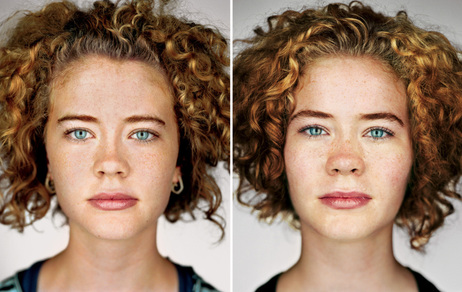
One of the photos that made photographer Diane Arbus famous was Identical Twins, Roselle, New Jersey, 1967; it reverberated in The Shining and probably influenced Mary Ellen Mark's twin photos.

It goes without saying that twins long have fascinated photographers — as well as scientists. How is it that identical twins with virtually identical DNA can be so different? Conversely, how is it that identical twins separated at birth can still have so much in common? An article in National Geographic's January issue explores the focus of recent research: How a third factor, beyond nature and nurture, might have a vital role in making us who we are. The term is epigenetics and the article explains it best.

Photographer Martin Schoeller must have jumped at the chance to shoot the portraits for this story. Once you know his style, you'll start to recognize his photos on the covers of major magazines — or in museums. I saw his enormous portraits for the first time at the National Portrait Gallery a while back. He uses a huge camera with a depth of field so famously narrow that the eyes are in focus and the nose is not.

In Schoeller's portraits, eyes are like an open book. His portraits are studies of the face's physical topography, but also of our irrepressible emotions — how they translate to the twinkle of an eye or the wrinkle on a forehead.

It's fascinating to see his style in this context. How identical are identical twins? What do you think?

--
gallery here: http://ngm.nationalgeographic.com/2012/01/twins/schoeller-photography and more here: http://ngm.nationalgeographic.com/2012/01/twins/miller-text

Molecular Anthropology Group - University of Oregon


My friend and Colleague Nelson Ting's Molecular Anthro page is now up and running - "like" it on facebook to stay up to date on his group's research and job opportunities!

Tuesday, December 6, 2011

Scientists a step closer to cloning mammoth


from Japantimes

The thighbone of a mammoth found in August in Siberia contains well-preserved marrow, increasing the chances of cloning one of the extinct beasts, Japanese and Russian scientists confirmed recently.

The teams from the Sakha Republic's mammoth museum in eastern Russia and Kinki University's graduate school in biology-oriented science and technology will launch full-fledged joint research next year to clone the giant mammal, which is believed to have become extinct about 10,000 years ago, they said.

By transplanting nuclei taken from the marrow cells into elephant egg cells whose nuclei have been removed through a cloning technique, embryos with a mammoth gene could be produced and planted into elephant wombs, as the two species are close relatives, they said.

Securing nuclei with an undamaged gene is essential for the nucleus transplantation technique, but doing so from mammoths is extremely difficult and scientists have been trying to reproduce a mammoth since the late 1990s, they said.

In the Sakha Republic, global warming has thawed its almost permanently frozen ground, leading to numerous discoveries of frozen mammoths. But cell nuclei are usually damaged or have not been kept in a frozen state even when they have been found in a good overall condition, a Russian museum official said.

This time, however, there is a high likelihood that biologically active nuclei can be extracted as the frozen marrow found when museum scientists cut open the thighbone Nov. 13 was fresh and in excellent condition, according to the official. The bone was found near Batagay in northern Sakha.

The technique for extracting nuclei, meanwhile, has improved dramatically in the past few years and some undamaged nuclei have been successfully taken from badly preserved mammoth tissue fragments, albeit at low rates, said the Kinki University team based in Osaka Prefecture.

The museum, located in the republic's capital, Yakutsk, soon notified the Japanese side, with which it has had close ties through joint research since 1997, including professor Akira Iritani and associate professor Hiromi Kato.

Iritani confirmed that the outstanding condition of the marrow has increased the chances of cloning a mammoth, and said the Japanese team will try to obtain elephant eggs for the research project, although he added this would not be easy.

Monday, November 7, 2011

NewYorker article on Neanderthals (and Svante Pääbo)


New Yorker article on Neanderthals

Wednesday, October 19, 2011

How Do Giant Pandas Survive on Bamboo?


Panda poop held clues to how bears break down plant fibers, study says.
From National Geographic
by RACHEL KAUFMAN

A new analysis of panda poop has finally answered an age-old question: How do giant pandas survive on a diet that's 99 percent bamboo when they have the guts of carnivores?

Plant-eating animals tend to have longer intestines to aid in digesting fibrous material, a trait the black-and-white bears lack.

What's more, when the giant panda's genome was sequenced in 2009, scientists found that the creature lacks the genes for any known enzymes that would help break down cellulose, the plant fibers found in bamboo and other grasses.

This led researchers to speculate that panda intestines must have cellulose-munching bacteria that play a role in digestion. But previous attempts to find such bacteria in panda guts had failed.

The new study looked at gene sequences in the droppings from seven wild and eight captive giant pandas—a much bigger sample than what was used in previous panda-poop studies, said study leader Fuwen Wei, of the Chinese Academy of Science's Institute of Zoology in Beijing.

Wei and colleagues found that pandas' digestive tracts do in fact contain bacteria similar to those in the intestines of herbivores.

Thirteen of the bacteria species that the team identified are from a family known to break down cellulose, but seven of those species are unique to pandas.

"We think this may be caused by different diet, the unique inner habitat of the gut, or the unique phylogenetic position of their host," since pandas are on a different branch of the tree of life than most herbivores, Wei said.

Humans Drove Pandas to Bamboo?

Even with help from gut bugs, pandas don't derive much nutrition from bamboo—a panda digests just 17 percent of the 20 to 30 pounds (9 to 14 kilograms) of dry food it eats each day. This explains why pandas also evolved a sluggish, energy-conserving lifestyle.

So how and why did pandas became plant-eaters in the first place?

Some scientists theorize that, as the ancient human population increased, pandas were pushed into higher altitudes. The animals then adopted a bamboo diet so they wouldn't compete for prey with other meat-eaters, such as Asiatic black bears, in their new homes, said Nicole MacCorkle, a panda keeper at the Smithsonian's National Zoo in Washington, D.C.

Pandas will eat meat if it's offered to them, MacCorkle added, but they won't actively hunt for it.

Wednesday, July 20, 2011

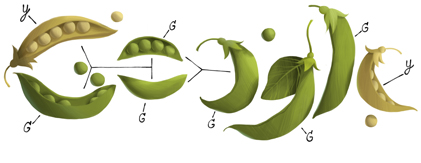
In celebration of Mendel's birthday Google has a great doodle :)

Just go to google.com today

Mystery of mole's second thumb solved


By Jennifer Carpenter

The extra digit plays a crucial role in mole digging proficiency

Scientists have discovered how one of the world's best diggers got its "extra thumb".

Comparing the mole's digits with those of its close relative, the researchers looked for molecular clues to the anatomical oddity.

The results show that the mole's second thumb is not a real digit but starts out as a wrist bone, the scientists report in Biology Letters.

The extra appendage helps propel the mole through its subterranean world.

The very early four-legged land vertebrates, such as Acanthostega and Ichthyostega, that dragged themselves from the muddy waters on to land had five, six, seven, even eight fingers. But evolution seems to have favoured the five-fingered.

And so today, whether they have paws, claws or hands, most vertebrates have five digits. The exceptions, such as hoofed animals and birds have all descended from five-fingered ancestors.

In today's world, the giant panda and the mole are anomalies among vertebrates: both have a second thumb, giving them a total of 12 digits.

A fake
Their extra thumbs are considered adaptations to their modes of life.

The panda uses its thumbs to better grip its favourite bamboo food, while the mole's shovel-like claws are probably an adaptation to its dirt-filled tunnels.

Now new research suggests that the mole's second thumb, just like the Giant panda's, is a fake.

Developmental biologist Christian Mitgutsch, and his colleagues, from the University of Zurich, Switzerland, looked at the hands of eight mole species, and compared them with those of their close relative, the shrew.
Skeletal image of hand (Credit: C.Mitgutsch/Zurich)

By looking at the developing paws of the mole, Dr Mitgutsch was able to see that genes that usually turned on at the beginning of digit development did not show up when the mole's thumb started to form.

What is more, these cells did not start to extend into a finger-like protrusion until after the five other digits were well on their way to being fully formed.

Them wrist bones
However, what clinched it for Dr Mitgutsch was when he and his team showed that the second thumb seems to grow from tissue that usually develops into wrist bone, and not finger bone.

All of the eight mole species had some form of extra thumb, Dr Mitgutsch explained, but some did not develop past a small milimetre-long bone at the bottom of their paws, while others, like the Iberian mole, Talpa occidentalis, had a second thumb that matched the length of its five other fingers.

The researchers suspect that the mole's hormones are responsible for the six-finger quirkiness.

Female moles possess both ovararian and testicular tissue, and therefore have high levels of testosterone compared to species where individuals are either one sex or the other.

Exposure to high levels of testosterone - a known bone builder - in the uterus has been linked to polydactylism, a condition where people are born with extra fingers and toes.

However, there is more work to do before researchers can point the finger at testosterone when it comes to the mole's extra digits.

Reference

Mitgutsch C, Richardson MK, Jiménez R, Martin JE, Kondrashov P, de Bakker MAG, Sánchez-Villagra1 MP, Sánchez-Villagra1 MR (2011) Circumventing the polydactyly ‘constraint’: the mole's ‘thumb’. Biology Letters doi: 10.1098/rsbl.2011.0494

Abstract
Talpid moles across all northern continents exhibit a remarkably large, sickle-like radial sesamoid bone anterior to their five digits, always coupled with a smaller tibial sesamoid bone. A possible developmental mechanism behind this phenomenon was revealed using molecular markers during limb development in the Iberian mole (Talpa occidentalis) and a shrew (Cryptotis parva), as shrews represent the closest relatives of moles but do not show these conspicuous elements. The mole's radial sesamoid develops later than true digits, as shown by Sox9, and extends into the digit area, developing in relation to an Msx2-domain at the anterior border of the digital plate. Fgf8 expression, marking the apical ectodermal ridge, is comparable in both species. Developmental peculiarities facilitated the inclusion of the mole's radial sesamoid into the digit series; talpid moles circumvent the almost universal pentadactyly constraint by recruiting wrist sesamoids into their digital region using a novel developmental pathway and timing.

Tuesday, July 5, 2011

BarcodingBushmeat.org


BarcodingBushmeat.org is a very cool forum whose purpose is to help coordinate in one place the information needed to better develop and apply DNA barcoding technology to the fight against unsustainable trade in wildlife.

To find out more visit their website and join the facebook cause here: http://www.causes.com/causes/286227-barcodingbushmeat-org

Thursday, June 30, 2011

Rhino DNA kits added to South Africa's Arsenal


From Rhino Conservation.org

South Africa’s embattled rhinos now have a new weapon on their side: 1,000 DNA kits have been provided to South African National Parks (SANParks) by the faculty of Veterinary Services of the University of Pretoria.

The kits are expected yield a higher conviction rate for rhino crimes, according to Dr. Cindy Harper, Head of Veterinary Genetics Laboratory (VGL) at the Faculty of Veterinary Science.

"The ability to obtain a full DNA profile from rhino horn allows us to match recovered horns to specific poaching incidents."

SANParks CEO, Dr David Mabunda, noted that DNA profiling would allow prosecutors to be tougher on rhino crimes.

"This will certainly go a long way in changing the trend of suspects found in possession of rhino horn only being charged with possession as the horns will be linked to a carcass lying somewhere in a national park or game reserve."

Read the entire release at SANParks receives kits to fight rhino poaching .

DNA analysis at work
Indeed, it was DNA evidence that led to at least three successful convictions over the past 13 months.

For example, in June 2010, a Vietnamese rhino horn smuggler was sentenced to 10 years in prison after the rhino horns in his possession were found to be a DNA match to rhinos that were killed a few days earlier.

So far this year, DNA analysis has been instrumental in two cases which put a total of four rhino killers in jail.

In April 2011, DNA evidence helped put two killers behind bars for a combined total of 19 years.

Earlier this month, DNA analysis of the rhino and horns helped secure the convictions of two Mozambican nationals, who were sentenced to a combined total of 16 years in prison.

Killing continues
SANParks announced that the year’s rhino death toll had already reached 173 as of June 6th.

Since that time, a female rhino was killed on a private game farm in Hoedspruit. The assailants also shot and wounded her four-month-old calf.

However, the number could be as high as 186, according to sources outside the media.

Tuesday, June 28, 2011

US apartment complexes genotyping residents' dogs to match up to uncollected poops

I have always been fascinated by this idea since reading about years ago. It always seemed financially unfeasible on a large scale but this makes perfect sense. The program "poo prints" is the brain child of BioPet Vet labs and more info can be found on their website -MA

DNA tests provide the poop on bad dog owners
By NINA GOLGOWSKI
from CNN

A New Hampshire apartment complex is mandating that residents submit pet DNA samples.

Why? To check if any of them are abandoning their dogs' waste on the property.

"Ninety-eight percent do what they're suppose to do," property manager Debbie Violette said of her residents with dogs, "but there are some that don't and you don't know who that is. That'd be pretty foolish if they did that right in front of me."

Timberwood Commons in Lebanon, New Hampshire, says it is among a growing number of apartment complexes implementing PooPrints.

That's a program that matches samples of unclaimed dog waste to DNA collected through pets' mandatory mouth swabs in the hope of imposing greater responsibility among pet owners.

Violette says her violators will first receive a warning if caught, paying a $60 fee to cover the DNA costs. However, if it happens again, it's a lease violation and the offender will be forced to live somewhere else.

"They have a choice to rent here or not. If you live in that community you have to live by those rules and regulations," Violette said. "It's a privilege."

She said she got the idea from a residential community in Boston. Eric Mayer, director of franchise development with BioPet Vet Lab, says the program is currently assisting rental complexes in multiple states, with increasing interest as far away as Canada and Germany.

The tests bought through PooPrints, a subsidiary of BioPet Vet Lab in Knoxville, Tennessee, match the DNA already captured to a sample of each pet's waste. Poop that isn't scooped can then be analyzed.

According to Mayer, apartment complexes that impose a pet deposit or fee on residents could potentially cover the testing costs incurred with the initial DNA registration. The cost of the DNA analysis each time a sample is tested could theoretically be paid through a fee on convicted freeloaders.

It's a service Violette admits to be potentially costly, but with more than 30 dogs on her property, some as large as a St. Bernard, "it's really not about the money for us," she said, "it's about having a nice place to live."

And reaction has been positive, she said.

"I did have one resident that thought it was completely over the top, who's not a pet owner," Violette said. But after considering the possibility of stepping in a mess he himself didn't leave behind, "he changed his mind," she said.

Violette sees long-term benefits in the PooPrints system, saying it could reunite lost pets and owners, especially in the aftermath of a natural disaster.

Mayer says he remains focused on both environmental and human health benefits through the system.

"It's a huge problem with growing environmental impact," Mayer said of the waste. The PooPrints website estimates a single pet creates 276 pounds of waste per year. "We want people to be responsible and not leave things behind. Down the drain means it's going into your lakes, rivers and streams," he added.

New DNA-based Panda census to begin!


China to use droppings to count endangered pandas
from Reuters
Thanks to Zoran A for the link!

China will use analysis of panda droppings as it embarks upon a once-in-a-decade census of the endangered animal, state media said on Monday.

Authorities are training some 70 trackers in southwestern China who will begin their work this week and end the survey by late July, Xinhua news agency said.

"The trackers will collect panda droppings for DNA analysis, which will allow zoologists to track individual pandas and accurately estimate the number of pandas living in the wild," it quoted wildlife official Chen Youping as saying.

The census will count not only how many wild pandas there are, but also their living conditions, how old they are and the state of their habitat, Xinhua added.

The last census 10 years ago counted 1,596 wild pandas in China, most of them in Sichuan province, it said.

A 2004 census by the Worldwide Fund for Nature revealed there were 1,600 pandas in the wild.

Considered a national treasure, the panda is seen as having come back from the brink of extinction while remaining under threat from logging, agriculture and China's increasing human population.

Saturday, June 18, 2011

Science Ink - Awesome Nerd Tattoos


I love body art! Last year I blogged about the amazing wildlife tattoo gallery from the bushwarriors blog, and now I found the Science Tattoo Emporium which has a companion book out at the end of the is year. CLICK HERE to go to the gallery.

A few more of my faves:

Thursday, June 16, 2011

Police Dogs Can Distinguish Identical Twins


From ScienceMag
BY SARA REARDON

Being an identical twin might seem like a great way to fool a DNA test and get away with the perfect crime. But furry forensic experts can make sure justice is served. In a new study, researchers instructed a group of children, including two sets of identical twins and two sets of fraternal twins, to swab the insides of their cheeks and place the swabs in glass jars. Working with ten police German shepherds and their handlers from the Czech Republic police, the researchers then ran a mock crime scene investigation. The handler presented one twin’s scent to the dog and then told it to go find the matching scent in a lineup of seven jars, which included the other twin’s scent. In twelve trials per dog, none of them ever identified the wrong twin as a match, the researchers report online this week in PLoS ONE, even though the children lived in the same home, ate the same food, and had identical DNA. No word yet on whether these dogs will be getting their own CSI spinoff.

Reference

Pinc L, Bartoš L, Reslová A, Kotrba R (2011) Dogs Discriminate Identical Twins. PLoS ONE 6(6): e20704. doi:10.1371/journal.pone.0020704

Abstract
Earlier studies have shown variation among experimental attempts to establish whether human monozygotic twins that are genetically identical also have identical individual scents. In none of the cases were the dogs able to distinguish all the individual scents of monozygotic twins living in the same environment if the scents were presented to them separately. Ten specially trained police German Shepherd dogs of three Czech Republic Police Regional Headquarters were used for scent identification in our study. The dogs were supposed to match scents of two monozygotic pairs (5 and 7 years old) and two dizygotic twin pairs (8 and 13 years old). Scents were collected on cotton squares stored in glass jars. Dog handlers were blind to the experiment details. In each trial (line-up), one scent was used as a starting scent and the dog was then sent to determine if any of the 7 presented glass jars contained a matching scent. Scents of children of similar ages were used as distractors. In the matching procedure, the dogs matched correctly the scent of one twin with the other, as well as two scents collected from every single identical and non-identical twin to prove their efficacy and likewise, the presence of the matching twin scent in any given glass jar. All dogs in all trials distinguished correctly the scents of identical as well as non-identical twins. All dogs similarly matched positively two scents collected from the same individuals. Our findings indicated that specially trained German Shepherd dogs are able to distinguish individual scents of identical twins despite the fact that they live in the same environment, eat the same food and even if the scents are not presented to them simultaneously.

Wednesday, June 15, 2011

daughters inherit slutiness from fathers (in zebra finches)

"Casanova gene" in female songbirds
Females inherit "infidelity gene" from their fathers
Max Planck Society Press Release

It is assumed that many bird species are monogamous, yet infidelity is a widespread phenomenon. The advantage for the male seems obvious as in this way he can increase the number of his offspring. A female, however, mostly faces costs. The cuckolded partners often reduce their parental care. In addition, the extra lovers also may transmit diseases. Nevertheless, some females actively seek such contacts. Researchers at the Max Planck Institute for Ornithology in Seewiesen investigated a large number of zebra finches and found a possible explanation for this behaviour. In a genetic long-term study they found that females inherit the disposition for their infidelity from their fathers.

For quite some time it was common thinking that most bird species lead a strictly monogamous way of life. Yet, using molecular genetic methods scientists have found over the past 20 years that many juveniles do not originate from their social fathers. Initially, the explanation for these extra-pair paternities seemed plausible. The males could enhance their reproductive success through a higher number of offspring and females received high quality genes when they were keeping an eye out for attractive mates.

Recently, scientists have cast doubt on this explanation as the actual benefits for the females were not as high as expected by theory. To the contrary, the negative aspects even prevailed. The cuckolded males often reduce their parental effort and also support from extra-pair mates cannot be expected because they rather help their own mate. Therefore the question remained as to why some females actively seek other males for extra-pair matings.

Behavioural ecologist Wolfgang Forstmeier and colleagues at the Max Planck Institute for Ornithology in Seewiesen have now found a possible explanation for this phenomenon. Within a period of eight years the researchers investigated the sexual behaviour of over 1500 zebra finches. At first, unmated male and female birds were subjected to a test of their sexual motivation or libido. Afterwards a subset of the finches was transferred into aviaries in order to test how socially monogamously mated individuals behaved to each other within a large group. Using a video surveillance system the researchers could observe how mated females were reacting to advances of their own partner and of stranger males. In addition, the researchers conducted genetic paternity analysis by using a microsatellite marker method in order to determine the number of offspring that a male had sired in a foreign nest. They also indentified the number of offspring that a female produced together with an extra-pair male.

The result was surprising. Apparently the readiness of females to engage in extra-pair contacts was inherited from their fathers that had been cheating on their partners as well. The predisposition for infidelity shows a moderate, but evolutionarily crucial, genetic basis. Since the readiness for infidelity is passed on from the fathers to the daughters the researchers arrived at a new interpretation of female infidelity. “It is not essential that there is an evolutionary benefit for the females”, says Wolfgang Forstmeier, author of the study. “It is rather sufficient that the male ancestors had benefits that resulted from their promiscuity. A “Casanova-gene” will increase its frequency within a population as long as the benefits to the male gene carriers outweigh the costs for the female gene carriers”.

Whether the hypothesis of a correlated evolution of male and female infidelity can be transferred to the situation in humans is still open for speculation. There is no doubt, however, that there is a genetic basis for many aspects of human sexual and pair-bonding behaviour. “The question to what extent it is the same genes that influence female and male behaviour in a similar way has to be answered in follow-up studies”, says Forstmeier.

Reference
Forstmeier W, Martin K, Bolund E, Schielzeth H, Kempenaers B (2011) Female extrapair mating behavior can evolve via indirect selection on males PNAS doi: 10.1073/pnas.1103195108

Abstract

In many species that form socially monogamous pair bonds, a considerable proportion of the offspring is sired by extrapair males. This observation has remained a puzzle for evolutionary biologists: although mating outside the pair bond can obviously increase the offspring production of males, the benefits of such behavior to females are less clear, yet females are known to actively solicit extrapair copulations. For more than two decades adaptionist explanations have dominated the discussions, yet remain controversial, and genetic constraint arguments have been dismissed without much consideration. An intriguing but still untested hypothesis states that extrapair mating behavior by females may be affected by the same genetic variants (alleles) as extrapair mating behavior by males, such that the female behavior could evolve through indirect selection on the male behavior. Here we show that in the socially monogamous zebra finch, individual differences in extrapair mating behavior have a hereditary component. Intriguingly, this genetic basis is shared between the sexes, as shown by a strong genetic correlation between male and female measurements of extrapair mating behavior. Hence, positive selection on males to sire extrapair young will lead to increased extrapair mating by females as a correlated evolutionary response. This behavior leads to a fundamentally different view of female extrapair mating: it may exist even if females obtain no net benefit from it, simply because the corresponding alleles were positively selected in the male ancestors.

Wednesday, June 1, 2011

hip hop evolution videos

Baba Brinkman is planning a whole series of hip hop evolution videos which will be showcased on http://rapguidetoevolution.co.uk/

"Yes, you know I’m tryin’ to be the Hip-hop version of Richard Dawkins
Even though his attitude can sometimes be a little pompous"


Thanks to Linda V for the link!

Baba Brinkman fb page

nerd joke of the day


From memebase

Saturday, May 14, 2011

Biologists Mothers' Day Song

Thanks to Deborah M and Tracy K for the link. A bit late but very educational ;)


Sunday, April 3, 2011

VERY IMPORTANT SCIENTIST OF THE MONTH : OLAF THALMANN


Climate change and evolution of Cross River gorillas
Max Planck Press Release

Two species of gorillas live in central equatorial Africa. Divergence between the Western gorillas (Gorilla gorilla) and Eastern Gorillas (Gorilla beringei) began between 0.9 and 1.6 million years ago and now the two species live several hundred kilometres apart. An international team of researchers including Olaf Thalmann of the University of Turku in Finland and Linda Vigilant of the Max Planck Institute for Evolutionary Anthropology in Germany found that the divergence of Western lowland gorillas and the Critically Endangered Cross River gorillas (Gorilla gorilla diehli) occurred more recently, about 17,800 years ago, during the Pleistocene era

An evolutionary model of the two subspecies of Western gorillas was generated using microsatellite genotyping of living gorillas and 100-year-old museum specimens. This data showed that, although Cross River gorillas diverged from Western lowland gorillas about 17,800 years ago, the two subspecies continued to intermittently interbreed. Olaf Thalmann and his co-authors suggest that climate change during the Pleistocene era caused the forests to expand, permitting the Western gorillas to expand their range. When the forest contracted again the gorillas were separated into two populations which began to diverge. Successive rounds of climate change resulted in periods when the two subspecies could interbreed followed by repeated episodes of isolation of the Cross River population.

The model indicates that gene flow finally stopped between the two subspecies approximately 420 years ago. Over the last 320 years there has been a 60% decrease in the numbers of Cross River gorillas causing a loss of genetic diversity within the population. Thalmann said, “The number of Cross River gorillas has continued to decrease, probably due to anthropogenic pressure, such as destruction of their habitat or hunting by humans. There are thought to be fewer than 300 individuals left.” He continued “It is unclear what effect this loss of genetic diversity will have on the long term viability of Cross River gorillas. But, given that this bottleneck occurred so recently, it is possible that if the population was allowed to expand the loss of diversity could be stopped.”

---
Reference
Olaf Thalmann, Daniel Wegmann, Marie Spitzner, Mimi Arandjelovic, Katerina Guschanski, Christoph Leuenberger, Richard A Bergl and Linda Vigilant (2011) Historical sampling reveals dramatic demographic changes in western gorilla populations. BMC Evolutionary Biology. 11:85doi:10.1186/1471-2148-11-85

Abstract
Background

Today many large mammals live in small, fragmented populations, but it is often unclear whether this subdivision is the result of long-term or recent events. Demographic modeling using genetic data can estimate changes in long-term population sizes while temporal sampling provides a way to compare genetic variation present today with that sampled in the past. In order to better understand the dynamics associated with the divergences of great ape populations, these analytical approaches were applied to western gorillas (Gorilla gorilla) and in particular to the isolated and Critically Endangered Cross River gorilla subspecies (G. g. diehli).

Results
We used microsatellite genotypes from museum specimens and contemporary samples of Cross River gorillas to infer both the long-term and recent population history. We find that Cross River gorillas diverged from the ancestral western gorilla population ~17,800 years ago (95% HDI: 760, 63,245 years). However, gene flow ceased only ~420 years ago (95% HDI: 200, 16,256 years), followed by a bottleneck beginning ~320 years ago (95% HDI: 200, 2,825 years) that caused a 60-fold decrease in the effective population size of Cross River gorillas. Direct comparison of heterozygosity estimates from museum and contemporary samples suggests a loss of genetic variation over the last 100 years.

Conclusions
The composite history of western gorillas could plausibly be explained by climatic oscillations inducing environmental changes in western equatorial Africa that would have allowed gorilla populations to expand over time but ultimately isolate the Cross River gorillas, which thereafter exhibited a dramatic population size reduction. The recent decrease in the Cross River population is accordingly most likely attributable to increasing anthropogenic pressure over the last several hundred years. Isolation of diverging populations with prolonged concomitant gene flow, but not secondary admixture, appears to be a typical characteristic of the population histories of African great apes, including gorillas, chimpanzees and
bonobos.

--
More Press: