Showing posts with label DRC. Show all posts
Showing posts with label DRC. Show all posts
Saturday, November 19, 2011
Bonobos - chimpanzees' gentle cousins
Go here to watch a video from the MPI about bonobo research and conservation at Lui Kotale, DRC.
Monday, July 11, 2011

Thursday, April 28, 2011
Virunga Forests Going to Pot
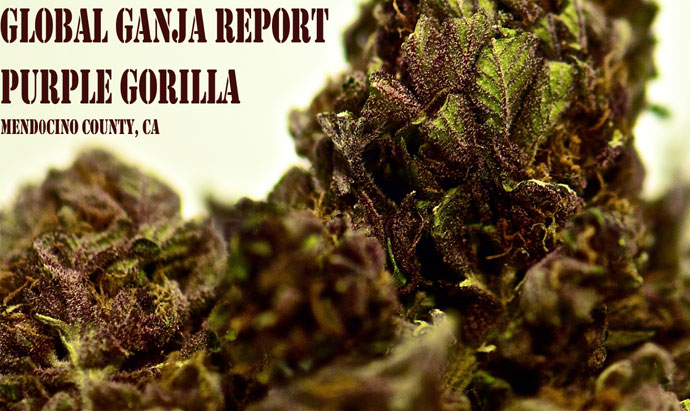
Marijuana Trade Threatens African Gorilla Refuge
Pot-growing rebels in Virunga National Park clashing with rangers.
by STEFAN LOVGREN
from National Geographic News
The battle over the war-ravaged Virunga National Park, home to some of the world's last wild mountain gorillas, is heating up.
In early April a ranger in the park, in the eastern part of the Democratic Republic of the Congo, was shot to death by militias—the eighth ranger to have been killed in the past three months.
And rebels who have been fueling the illegal charcoal business, which destroys critical gorilla habitat, now appear to have turned to an additional criminal activity: growing marijuana.
"The same people are involved," said Innocent Mburanumwe, the warden in charge of the southern sector of Virunga, where the mountain gorillas live.
A crackdown on the charcoal and marijuana businesses in 2009 was very successful. But the Rwandan militia living in the park, known as FDLR, seems to have reorganized and stepped up its activities, Mburanumwe said.
"The most recent attack is by far the most worrying, as it appears the rebels may be changing their tactics, and are currently getting the better of the wildlife authority," Rob Muir, of the Frankfurt Zoological Society's office in Goma, DRC, said via email.
Virunga Forests Going to Pot
The latest trouble has been occurring in the volcanic Nyamulagira region of the park, away from the gorilla sector, which has so far remained calm.
With the Congolese government absent in much of eastern Congo, the rangers have been left to fight the ragtag militias, poachers, and bandits who have turned Virunga—Africa's oldest national park—into a battleground for decades.
Charcoal is illegally produced in the park by cutting down wood, then slowly burning it for six days inside a kiln made of wood and covered with dirt, according to the park's website. People then sell the charcoal in Goma, or trade it for guns and bullets. In 2007, people involved with the charcoal trade killed seven gorillas. (See a National Geographic interactive time line of the turmoil in Virunga.)
The FDLR rebels, remnants of the 1994 Rwandan genocide, are based in the forest and provide "security" for traders, who transport the illegal charcoal from forest kilns to the main road to be sold.
Villagers provide the FDLR with money, food, cell phone airtime, and medicine in exchange for being allowed into the forest to make the charcoal, the rangers say.
When the charcoal has been removed, the area may be cleared and seeded with marijuana, usually by the FDLR. Rebels will come back to harvest, dry, and sell or exchange the pot, often for uniforms, bullets, and guns, according to the rangers.
"The charcoal trade is destroying the forest, and the marijuana comes in after it," said LuAnne Cadd, a spokesperson for the park service.
In March two people were caught with marijuana plants that had been grown in the forest.
Rangers Need to Rethink Security
Patrols are aimed at eradicating the charcoal business, not going after the marijuana traders. But in the most recent incident, rangers patrolling the Kibumba area in Nyamulagira found not only a charcoal kiln but also a lot of marijuana plants.
A team of 15 rangers began a patrol in Kibumba, specifically looking for charcoal kilns, when they came under fire by an unknown number of men believed to have been FDLR rebels. Ranger Magayane Bazirushaka was killed in the attack.
"It seems likely that the rebels established a charcoal fire to draw the rangers into an area where they could be easily ambushed, and then sat and waited," the Frankfurt Zoological Society's Muir said.
"If this is indeed the case, the rangers will need to rethink their current law enforcement strategy, increase their intelligence and surveillance networks, and diversify their operations on the ground," he said.
"The bottom line is that the park is now under greater pressure than it has been for many years, and this is directly linked to the efforts to uphold and enforce the law."
Gorilla Population Up Despite Strife
Despite the turmoil, the mountain gorilla population in the Virunga region—which straddles the borders of the DRC, Rwanda, and Uganda—has increased by 26 percent in the last seven years and now totals 480.
Emmanuel de Merode, Virunga's director, said rangers are now planning to launch new operations to stop illegal marijuana trade.
"Perhaps the most remarkable outcome of this terrible war," de Merode said, "is the unwavering determination of our rangers on the ground not to give up on the efforts to bring stability and the rule of law back to Virunga."
Friday, April 15, 2011
Kahuzi Biega highland sector gorillas stable

The good news, is that the higland sector Kahuzi Biega gorilla population seems to be at least stable. We know that even these direct count nest surveys are unreliable and contain a large amount of error (see Guschanski et al 2009), so I am a bit suspicious of any hard number or claims of increase that this press release reports. But it is great news that this population seems to be doing fine depsite the human conflict that surrounds its habitat . Major kudos to the rangers and teams who are doing these censuses despite such violent and dangerous circumstances.- MA
From eureka alert - WCS press release
Recent census in war-torn DR Congo finds gorillas have survived, even increased
Census team led by Wildlife Conservation Society, ICCN braves insecurity of imperiled Kahuzi-Biega National Park
A census team led by the Wildlife Conservation Society and the Insitut Congolais pour la Conservation de la Nature (ICCN) in Kahuzi-Biega National Park in the Democratic Republic of Congo today announced some encouraging news from a region plagued by warfare and insecurity: a small population of Grauer's gorillas has not only survived, but also increased since the last census.
The census, conducted late 2010 in the highland sector of Kahuzi-Biega National Park, revealed the presence of 181 individual Grauer's gorillas, up from 168 individuals detected in the same sector in 2004.
A "cousin" to the more famous mountain gorilla, the Grauer's gorilla is the largest subspecies of gorilla in the world, growing up to 500 pounds. The Grauer's gorilla (also known as the eastern lowland gorilla) is the least known subspecies, due in large part to the 15 years of insecurity in the eastern Democratic Republic of Congo. The gorilla is listed as "Endangered" on the International Union for Conservation of Nature's (IUCN's) Red List and may number fewer than 4,000 individual animals.
"We had several close calls with armed militias during the survey," said Deo Kujirakwinja, WCS's Albertine Rift Coordinator in DRC. "Thankfully, no one was hurt, and our census result is positive news for the conservation community."
The census team surveyed the 600-square-kilometer highland sector of the park. The lowland sector has been largely inaccessible to researchers due to the frequent presence of militia. Census teams used nest counts—gorillas make a nest each night—along with the size of nearby dung (the size of which indicates how many adults, juveniles, and infants occur in a group) to estimate the total number of gorillas in the area.
"Given the insecurity that has been present here for so long, we were not sure what we would find," said Radar Nshuli, Chief Park Warden for Kahuzi-Biega. "We were very happy to see that all the efforts that our staff and partners have been taking are leading to a growth in the population."
The Wildlife Conservation Society's field staff have been monitoring the region's gorillas since the 1950s, when preeminent field biologist George Schaller first surveyed the distribution of what would later become classified as Grauer's and mountain gorillas. Since then, surveys have revealed that in the highland sector of Kahuzi Grauer's numbers climbed from 223 animals in the 1970s to 250 in the early 1990s before crashing to 130 in 2000 following the outbreak of civil war in the region.
"Given we were unable to survey the entire highland sector, we are hopeful that our minimum count of 181 might actually be higher than this," said Dr. Andy Plumptre, Director of WCS's Albertine Rift Program. "We hope to be able to survey some of the areas we were unable to visit in the near future."
"This census finding gives us great hope for the future of the Grauer's gorilla," said Dr. James Deutsch, Director of WCS's Africa Program. "It's also a testament to the courage of our colleagues working to protect a World Heritage site in this challenging landscape."
Grauer's gorillas are one of four recognized gorilla sub-species, which also include mountain gorillas, western lowland gorillas, and Cross River gorillas. The Wildlife Conservation Society is one of the only conservation groups working to safeguard all four subspecies.
Friday, March 25, 2011
Bloodhound Anti-poaching Dogs for Virunga - March 2011

The Virunga National Park facebook page has a great album and information on their new bloodhound anti-poaching dogs. Go HERE to see the gallery and read more.
From the site:
These are photos of the first few weeks with our new bloodhound dogs.
The first week, world-renowned bloodhound trainer, Dr. Marlene Zähner, and Robert Williams escorted the six dogs to Congo. They stayed a week to help get the dogs settled, and Marlene worked with the new dog handlers, teaching them everything she could in a week about caring for dogs and training them how to control a dog on a walk in the forest.
A week after they left, Stella, one of the 3-month old dogs, got sick. She was examined by a vet and put on antibiotics with care instructions. She seemed to get better but not well over the next week, and exactly one week later, she crashed. Although we still don't know what it was, it showed signs of possible pneumonia and it seemed that her lungs were filling with liquid and she struggled to breathe. She refused to lie down because she couldn't breathe, even though she was so exhausted she literally fell asleep in the sitting position and fell over several times. Dr. Jan Ramer from Mountain Gorilla Veterinary Project (MGVP) rushed over from Rwanda and administered some drugs that helped to release the liquid in her lungs and she survived the night. She now seems mostly recovered to our great relief. Stella has become a favorite with her sweet disposition, and we are grateful she survived and to all who cared for her - the handlers and Dr. Jan in particular, with lots of email and phone advice from Marlene in Switzerland.
These dogs will be trained by Marlene for anti-poaching. It's an important program and will take time with on-going expenses for care and training. If you would like to assist in this program, you can donate on the blog toward monthly for the expenses or with one-time gifts. Go here and find the item on the right side of the blog to contribute. Thank you for your support!
http://gorillacd.org/blog/
Thursday, February 17, 2011
Tuesday, December 7, 2010
Love in DRC ♥
I know this is a touch off topic, but this video from the NYTimes about primatologist Laura Darby Brown and her partner Adam Singh is just so sweet and also has some nice footage from Northern DRC and highlights the plight of the orphaned chimpanzees around Bili/Aketi. Congratulations to the newlyweds & thanks to Cleve H for the link!-MA
Monday, November 29, 2010
Oil extraction may happen in/around Virungas
Oil extraction does not have to be a horribly invasive and destructive force if done properly. If managed properly (and if one wants to be as optimistic as possible) oil income could really boost up the standard of living around the park and within the country. On the more skeptical side, one must realize that it will probably happen no matter what, and that there are smart ways to extract oil and protect the park and its inhabitants (horizontal drilling comes to mind). The seismic surveys are already a bad sign that things are not being done as well as they could be (boo)...In any case, it will be interesting to see how it plays out, since its one of the only places where long-term conservation revenue might trump oil revenue...Thanks to Chrissie E for the link! -MA

UN urges Congo to ban oil drilling in gorilla park
From International Business Times
The United Nations' cultural arm UNESCO has appealed to Congolese President Joseph Kabila to guarantee there will be no oil exploration in the forest home of rare gorillas where two UK-listed firms hold drilling rights.
SOCO International and Dominion Petroleum were awarded a presidential decree to Block 5 of east Congo's Albertine Graben in June. Plans for a seismic survey include exploding dynamite, despite the fact that the rebel-heavy area overlaps with the protected Virunga National Park.
In a letter seen by Reuters, UNESCO chief Irina Bokova warned Kabila of "extremely damaging repercussions" of oil activity and asked him to ensure no exploration took place in the park, which is also home to chimpanzees, lions, elephants, and migratory birds so rare it has special wetland status.
"I call on you to guarantee that no oil exploration or production will be committed at the heart of the Virunga national park," she said in the letter dated August 6, which noted past commitments by Congo to protect the World Heritage site.
Local environmentalists argue that any exploration would be contrary to Congo's own laws.
"Congolese legislation does not authorise mineral and petrol production in national parks," said a November 15 letter seen by Reuters to Environment Minister Jose Endundo from the Congolese Institute for the Conservation of Nature (ICCN).
It noted SOCO's environmental impact assessment, required by law, made no reference to the park's status as a protected zone.
DONORS TO EXPRESS CONCERN
Separately, a World Bank official said it and other donors were planning to express concern to the government and question how oil development was compatible with Congo's commitments.
Calls to Kabila's office for comment went unanswered on Friday. However, Endundo played down the concerns.
"We'll do everything to preserve the park but the Congolese people also have to benefit from the riches under the soil," he told Reuters by telephone.
Endundo noted that if oil activities were excluded from the park, he might seek compensation along the lines of a pact signed by Ecuador in August, under which the Andean nation expects payments from rich nations in return for not drilling for oil in a wildlife reserve in the Yasuni National Park.
Operator SOCO, which has 38.25 percent of the block, and Dominion, with 46.75 percent, told Reuters in July they would start seismic exploration this year with a view to production after three years. Congo has the remaining share.
Company maps seen by Reuters indicate drilling will take place throughout the park and the companies have sent in teams.
"I don't see any problem if it's done correctly," Roger Cagle, deputy CEO and chief financial officer for SOCO told Reuters by telephone, adding its partner Dominion was already working in Uganda's Queen Elizabeth National Park.
"We've paid for the opportunity to explore a previously unexplored block; we're not expecting it to be a moving feast because it hasn't been sold to us as that," said Cagle, adding the company's presence could increase security of the park.

UN urges Congo to ban oil drilling in gorilla park
From International Business Times
The United Nations' cultural arm UNESCO has appealed to Congolese President Joseph Kabila to guarantee there will be no oil exploration in the forest home of rare gorillas where two UK-listed firms hold drilling rights.
SOCO International and Dominion Petroleum were awarded a presidential decree to Block 5 of east Congo's Albertine Graben in June. Plans for a seismic survey include exploding dynamite, despite the fact that the rebel-heavy area overlaps with the protected Virunga National Park.
In a letter seen by Reuters, UNESCO chief Irina Bokova warned Kabila of "extremely damaging repercussions" of oil activity and asked him to ensure no exploration took place in the park, which is also home to chimpanzees, lions, elephants, and migratory birds so rare it has special wetland status.
"I call on you to guarantee that no oil exploration or production will be committed at the heart of the Virunga national park," she said in the letter dated August 6, which noted past commitments by Congo to protect the World Heritage site.
Local environmentalists argue that any exploration would be contrary to Congo's own laws.
"Congolese legislation does not authorise mineral and petrol production in national parks," said a November 15 letter seen by Reuters to Environment Minister Jose Endundo from the Congolese Institute for the Conservation of Nature (ICCN).
It noted SOCO's environmental impact assessment, required by law, made no reference to the park's status as a protected zone.
DONORS TO EXPRESS CONCERN
Separately, a World Bank official said it and other donors were planning to express concern to the government and question how oil development was compatible with Congo's commitments.
Calls to Kabila's office for comment went unanswered on Friday. However, Endundo played down the concerns.
"We'll do everything to preserve the park but the Congolese people also have to benefit from the riches under the soil," he told Reuters by telephone.
Endundo noted that if oil activities were excluded from the park, he might seek compensation along the lines of a pact signed by Ecuador in August, under which the Andean nation expects payments from rich nations in return for not drilling for oil in a wildlife reserve in the Yasuni National Park.
Operator SOCO, which has 38.25 percent of the block, and Dominion, with 46.75 percent, told Reuters in July they would start seismic exploration this year with a view to production after three years. Congo has the remaining share.
Company maps seen by Reuters indicate drilling will take place throughout the park and the companies have sent in teams.
"I don't see any problem if it's done correctly," Roger Cagle, deputy CEO and chief financial officer for SOCO told Reuters by telephone, adding its partner Dominion was already working in Uganda's Queen Elizabeth National Park.
"We've paid for the opportunity to explore a previously unexplored block; we're not expecting it to be a moving feast because it hasn't been sold to us as that," said Cagle, adding the company's presence could increase security of the park.
Tuesday, November 23, 2010
New MPI Primatology Book: Among African Apes Stories and Photos from the Field
 Among African Apes
Stories and Photos from the Field
Edited by Martha M. Robbins, and Christophe Boesch
Description:
These compelling stories and photographs take us to places like Bwindi Impenetrable National Park in Uganda, Ivindo National Park in Gabon, and the Taï National Park in Côte d’Ivoire for an intimate and revealing look at the lives of African wild apes—and at the lives of the humans who study them. In tales of adventure, research, and conservation, veteran field researchers and conservationists describe exciting discoveries made over the past few decades about chimpanzees, bonobos, and gorillas. The book features vivid descriptions of interactions among these highly intelligent creatures as they hunt, socialize, and play. More difficult themes emerge as well, including the threats apes face from poaching, disease, and deforestation. In stories that are often moving and highly personal, this book takes measure of how special the great apes are and discusses positive conservation efforts, including ecotourism, that can help bring these magnificent animals back from the brink of extinction.
Contents:
1. Discovering Apes - Martha M. Robbins
2. Life and Death in the Forest - Christophe Boesch
3. Encounters with Bili Chimpanzees in the Undisturbed Gangu Forest - Cleve Hicks
4. Is Blood Thicker Than Water? - Gottfried Hohmann and Barbara Fruth
5. Our Cousins in the Forest—or Bushmeat? - Christophe Boesch
6. Discovering Chimpanzee Traditions - Crickette Sanz and David Morgan
7. Keeping it in the Family: Tribal Warfare between Chimpanzee Communities - Josephine Head
8. Winona’s Search for the Right Silverback: Insights into Female Strategies at a Natural Rain Forest Clearing in Northern Congo - Thomas Breuer
9. The Long Road to Habituation: A Window into the Lives of Gorillas - Chloé Cipolletta
10. Among Silverbacks - Martha M. Robbins
11. The Diversity of the Apes: What Is the Future? - Christophe Boesch
"Some of the most devoted primatologists offer a wonderful collection of first-hand accounts and splendid photographs that make us feel like we're beside them watching our relatives in the forest."Click here to go to buy it and find out more-Frans de Waal, author of Our Inner Ape and Chimpanzee Politics
0
comments

 Labels:
africa,
bonobos,
central african republic (C.A.R.),
chimpanzees,
congo,
DRC,
gabon,
gorillas,
ivory coast,
lit,
MPI-EVA,
primates,
uganda
Labels:
africa,
bonobos,
central african republic (C.A.R.),
chimpanzees,
congo,
DRC,
gabon,
gorillas,
ivory coast,
lit,
MPI-EVA,
primates,
uganda
 Labels:
africa,
bonobos,
central african republic (C.A.R.),
chimpanzees,
congo,
DRC,
gabon,
gorillas,
ivory coast,
lit,
MPI-EVA,
primates,
uganda
Labels:
africa,
bonobos,
central african republic (C.A.R.),
chimpanzees,
congo,
DRC,
gabon,
gorillas,
ivory coast,
lit,
MPI-EVA,
primates,
uganda
Saturday, October 23, 2010
wtf: Croc escapes on board DRC plane, panic spreads, plane crashes.

Original post from Jeune Afrique (in french)
from News.com.au
Crocodile on plane kills 19 passengers
(There is also video of the crash here)
A STOWAWAY crocodile on a flight escaped from its carrier bag and sparked an onboard stampede that caused the flight to crash, killing 19 passengers and crew. The croc had been hidden in a passenger's sports bag - allegedly with plans to sell it - but it tore loose and ran amok, sparking panic. A stampede of terrified passengers caused the small aircraft to lose balance and tip over in mid-air during an internal flight in the Democratic Republic of Congo. The unbalanced load caused the aircraft, on a routine flight from the capital, Kinshasa, to the regional airport at Bandundu, to go into a spin and crash into a house.
A lone survivor from the Let 410 plane told the astonishing tale to investigators.
Ironically the crocodile also survived the crash but was later killed with a machete by rescuers sifting through the wreckage.
British pilot Chris Wilson, 39, from Shurdington, near Cheltenham, Glocs was acting as the plane's first officer alongside Belgian pilot Danny Philemotte, 62, who was owner of the plane's operator Filair. The plane smashed into an empty house just a few hundred metres from its destination.
"According to the inquiry report and the testimony of the only survivor, the crash happened because of a panic sparked by the escape of a crocodile hidden in a sports bag,” news organisation Jeune Afrique reported.
"One of the passengers had hidden the animal, which he planned to sell, in a big sports bag, from which the reptile escaped as the plane began its descent into Bandundu."The terrified air hostess hurried towards the cockpit, followed by the passengers." The plane was then sent off-balance "despite the desperate efforts of the pilot", said the report. "The crocodile survived the crash before being cut up with a machete."
The plane was a Czech-made Let L-410 Turbolet, one of more than 1,100 produced as short-range transport aircraft and used mainly for passenger services.
Friday, September 24, 2010
Bonobo conservation via community development
 adult literacy class
Into the Congo: saving bonobos means aiding left-behind communities, an interview with Gay Reinartz
BY JEREMY HANCE
Unlike every other of the world's great apes—the gorilla, chimpanzee, and orangutan—saving the bonobo means focusing conservation efforts on a single nation, the Democratic Republic of the Congo. While such a fact would seem to simplify conservation, according to the director of the The Bonobo and Congolese Biodiversity Initiative (BCBI), Gay Reinartz, it in fact complicates it: after decades of one of world's brutal civil wars, the DRC remains among the world's most left-behind nations. Widespread poverty, violence, politically instability, corruption, and lack of basic infrastructure have left the Congolese people in desperate straits.
"From a place of privilege, I have had the opportunity to look upon a society essentially reduced to its simplest, most fundamental term—survival. In Congo, I have witnessed wider extremes of cruelty and kindness, exploitation and generosity, revenge and forgiveness," Gay Reinartz told mongabay.com in an interview. While developing and directing BCBI—a program established through the Zoological Society of Milwaukee (ZSM)—Reinartz has spent years working closely with Congolese communities in order to improve lives and, hopefully, ensure the long-term survival of the bonobo.
From the moment Reinartz first met a troop of bonobos as they arrived at the Milwaukee Zoo, she was smitten. "They were charming," she says of that encounter. Bonobos are most closely related to chimpanzees, but have been considered a separate species since the 1930s. While bonobos have some notable physical differences from chimpanzees, it is their behavioral differences that have really grasped the public imagination, especially their reputation of being lovers, not fighters.
"Bonobos have a playful nature. The idea that bonobos are a peace loving society is true—but to a certain extent," Reinartz explains. "This trait is relative and must be seen in comparison to other great ape species. The media have overplayed bonobos as peaceniks. While it’s true that bonobos show less aggression, that they have less big-male domination, that 'wars' have not been observed, they do fight. […] Nevertheless, the bonobo has evolved ways to deal with social tension and reduce aggression or conflict—that being social sexual interactions—having intimacy and intercourse for reasons other than reproduction—and empathy."
To save the world's least known great ape, the BCBI has developed a number of initiatives. The organization has trained Congolese field workers to survey bonobo and other large mammal populations in Salongo National Park, providing baseline data for before and after conflict erupted in the region. The surveys are also studying different bonobo densities in a number of sites in the park, variously affected by poaching.
BCBI has also established programs to support protective measures in the park, including setting up an anti-poaching patrol, training park guards, and coming through with supplies and funds for park guards in emergencies. Reinartz says the situation is incredibly difficult for park guards, and often dangerous especially when facing elephant poachers.
"There are fewer than two hundred park guards who are responsible for patrolling this entire area. They lack training, guns, means of transportation, communication, and basic forest equipment. There is approximately one gun per four men. They are no match for the well-armed elephant poachers who come in brandishing AK-47s."
The biggest current threat to bonobos and most of the wildlife in the park is hunting: the great apes are killed for bushmeat as well as trapped in snares meant for other big mammals. Given the poverty of the region, and few ways to make money, the bushmeat trade has boomed in the Democratic Republic of Congo.
"So, how do we convince them not to hunt? We have to give communities incentives to do something else and begin to build greater awareness. At the same time then, the park guards have to do their job in law enforcement. The two approaches must work from either side simultaneously—one with the other," says Reinartz.
Giving communities incentives not to hunt includes working on providing new economic and education opportunities, both of which are basically non-existent in the region. BCBI has established a farming cooperative with a local NGO, helping villagers can learn to grow their own food and hopefully start up markets to sell the extra. The organization has also set-up primary schools, including providing materials and paying local teachers, and adult literacy courses. In such a region, if conservation is to succeed, conservation programs have to become humanitarian programs, filling in the role of a crippled government, a battered economy, and a region still suffering from bouts of violence. Part of the battle, says Reinartz, is convincing people that conservationists can be trusted, that BCBI won't abandon communities if times get rough again.
"For many people, even though they might understand why and regret that elephants, bonobos and other animals have vanished from their communal forests, they consider conservation efforts as just another way they are being cheated and neglected. To change these attitudes will take a long time and program consistency to overcome generations of negative conditioning and hopelessness," she says, adding that "what surprises me is that they aren’t more cynical than they are."
Even in the face of war and poverty, Reinartz is clearly amazed at the generosity and strength of many of the Congolese people.
In a September 2010 interview Gay Reinartz spoke about the uniqueness of the bonobo, the challenge of saving a species in one of the world's most forgotten places: the Congo, and of combining conservation work with humanitarian programs.
Reinartz will be presenting at the up-coming Wildlife Conservation Network Expo in San Francisco on October 3rd, 2010.
To learn more, read the INTERVIEW WITH GAY REINARTZ at mongabay.com
0
comments
Labels:
bonobos,
development,
DRC,
economics,
education,
hunting,
poaching,
society,
very important scientist
Labels:
bonobos,
development,
DRC,
economics,
education,
hunting,
poaching,
society,
very important scientist
Saturday, September 11, 2010
Elephant poaching in Semliki Wildlife Reserve, Uganda...

From New Vision Online via the Far Horizons Facebook Page
Elephants killed in Semliki wildlife reserve
BY GERALD TENYWA
Two elephants have been killed in Toro-Semliki wildlife reserve in western Uganda by poachers who crossed over from the Congo.
Sources said one of the poachers was intercepted with elephant ivory and was being held by the Uganda Peoples Defence Forces. The sources added that the elephants were butchered on Wednesday and the carcasses were discovered the following day.
“It is unusual for poachers to cross over from the DR Congo and kill endangered species undetected,” the source said. In a separate interview, John Makombo, the acting head of the Uganda Wildlife Authority (UWA), said the poacher who is being held is a Ugandan from Ntoroko and not a Congolese.
“UWA is working with security operatives to identify the ownership of the gun recovered from the poacher,” he said. “It is possible that he was working for someone from Congo which has a porous border. Many poachers prefer working in Congo and use Uganda as a trafficking route.”
He also said UWA will share information with a watchdog called the Monitoring of the Illegal Killing of Elephants and the Lusaka Task Agreement Force, which polices wildlife crime. Uganda has 5,000 elephants and the number is increasing after the population had slumped in the 1970s due to political and civil unrest.
Poachers killed a lot of wildlife including elephants, which are key tourist attractions. The black and white rhinos were driven into extinction.
Elephants are categorised as endangered species, according to the World Conservation Union, meaning that they are likely to disappear if nothing is done to protect them and their habitats. Locally, a kilo of ivory goes for sh120,000 [~ $50 US dollars]. The value in the Far East is about $600.
Although last week’s incident is the first case of killing elephants in Semliki, elephants in Queen Elizabeth National Park cross over to Congo.
“This is an ecological system and that is why Uganda and the DR Congo collaborate in managing the animals,” said Okello Obongo, the chief park warden.
“Large mammals do not know boundaries and the most important thing is to protect them irrespective of where they are,” said Obongo.
---
The Far Horizons posted the following statement today:
"We condemn the recent poaching of elephants in Semiliki Valley Wildlife Reserve, and support the quick action taken by Uganda's armed forces to apprehend the poachers and recover the ivory. Poaching in East Africa has seen a sharp increase in the last two years and we will be looking to support efforts to counter the l...ooming threat posed by the influx of so called "investors" that are fuelling the trade."
Tuesday, July 13, 2010
NYTimes interview with Brian Hare and Vanessa Woods

From the NYTimes.com
Why Bonobos Don’t Kill Each Other
By CLAUDIA DREIFUS
Brian Hare, an assistant professor at the Duke Institute for Brain Sciences at Duke University, and Vanessa Woods, a research scientist in the Department of Evolutionary Anthropology at Duke, do comparative studies on the cognitive development of bonobo apes, chimpanzees and humans. Ms. Woods, 33, a former journalist from Australia, has just published a book about their marriage and work, "Bonobo Handshake: A Memoir of Love and Adventure in the Congo." We spoke last month after they had appeared at the World Science Festival in New York City. An edited version of the conversation follows:
Q. VANESSA, YOU’RE NOT A TRAINED PRIMATOLOGIST. HOW DID YOU COME TO WORK WITH BONOBOS?
Vanessa: By a series of happy accidents. For much of my 20s, I didn’t know what I wanted to do with my life. So I went to Africa and did a little of everything. I worked with chimpanzees for a bit and then I did a little bit of filming and I worked a bit on children’s books. When I met Brian in 2004, I was 27 and volunteering at a chimp sanctuary in Uganda. Brian was testing the chimpanzees’ capacity for cooperation and sharing. Then Brian got invited to the Congo to perform the same experiments on bonobos, our other close ape relations. Would I come along as a helpmate? I hated the idea. My mother, the world’s biggest feminist, always said, “Never follow a man — do your own thing.” I knew almost nothing about bonobos. I thought: “Aren’t those the apes that have a lot of sex?”
Brian: That’s what most people know about bonobos: they have a lot of sex. That’s not what’s interesting about them. The No. 1 reason they are interesting is that they don’t kill each other. The question I was in Africa chasing was: why will a chimp get into a severe fight with another — perhaps kill or maim it — while a bonobo, in the same situation, won’t? I’m basically an anthropologist. And in looking at the psychological and social propensities of our close relatives, learning about their differences in behavior, maybe we’ll be able to make some inferences about what happened during human evolution.
Q. WHAT KINDS OF EXPERIMENTS DID YOU DO?
Brian: The type of experiments that developmental psychologists try on human subjects to see how they’d behave in certain situations. With the apes, I designed tests and games where they could obtain treats — apples, bananas — if they engaged in acts of cooperation. The chimps, it turned out, would only cooperate if they were teamed up with others of equal status. If you put them with subordinate or superior status chimps, they became intolerant. When you had equal-status chimps together on a test, they were able to solve conflicts of interest, negotiate successfully and recruit collaborators. But when we changed one simple thing, we’d crush their ability to cooperate. We took separate piles of treats and combined them into one. Immediately, the chimpanzees started competing with each other and all cooperation fell apart. Later, when we were in the Congo, we posed the same question to the bonobos. The piles of food were merged. No problem. Everyone shared.
My doctoral thesis adviser at Harvard, Richard Wrangham, thinks this may be because chimpanzees evolved in a situation of food scarcity while bonobos developed in the giant salad bowl of the Congo basin where there was abundance.
Vanessa: Another thing: bonobos are matriarchal. If it’s usual for female chimps to get pushed around and battered by males, bonobo females run things. Once, while in the Congo, I witnessed Tatango, this young male bonobo, start to do what the chimps in Uganda regularly did: he went up to the alpha female, Mimi, and backhanded her across the face. She gave him the most withering look. Within seconds, five unrelated females chased him into the forest. Poor guy. They almost took his testicles off. After that, he never made another problem. Bonobo females seem to know that if they stick together, the males can’t dominate. Brian’s gender was actually a problem when we first arrived in the Congo. He walked right up to the bonobos, did all these loud displays, which usually fascinates chimpanzees and makes them want to play with you. The male bonobos were terrified of Brian and the female ones would have nothing to do with him. I had to run the experiments because they seemed to accept me more easily. Once that became clear, my role became larger than that of a “helpmate.” With time, the work became mine, too.
Q. WHERE EXACTLY DID YOU PERFORM THESE EXPERIMENTS? I’M UNDER THE IMPRESSION THAT BONOBOS ARE DIFFICULT TO RESEARCH BECAUSE THEIR HABITAT IS IN THE WILDS OF THE CENTRAL AFRICAN RAIN FOREST.
Brian: Well, we went to the semiwild. There’s this amazing conservationist, Claudine Andre, who founded a sanctuary in Kinshasa for bonobos orphaned by the bush meat trade. She’d convinced the Congolese to let her use this 100-acre wood with lily ponds and forests that once had been a bucolic retreat for Mobutu Sese Seko. Working with the orphans in the sanctuary, they were much more like wild animals than the captive bonobos one might study at a zoo. They were obviously much easier to see and interact with than animals in the forest.
Q. HAVE YOU FOUND ANSWERS TO THE SCIENTIFIC QUESTIONS YOU’VE BEEN ASKING?
Brian: Tentative answers. The research is ongoing. Some of the differences between chimps and bonobos have to do with what happens to them during their development. Essentially bonobos and chimps have similar behaviors as youngsters. Like bonobos, juvenile chimps are very tolerant, peaceful. When they go through puberty, they change. So what happens to adolescent bonobos? Nothing! They don’t change. Their levels of play, their levels of sharing and sex, it all keeps going. They are Peter Pans.
Q. HOW ENDANGERED ARE BONOBOS?
Vanessa: Very. There are probably about 10,000 remaining in the wild. Nobody really knows. It’s hard to get in there and count them all. There’s very little agriculture in the Congo. And a lot of hunting. Bush meat is how people get their protein. And unfortunately, bonobos are really prized meat for hunters because they live in communities. If you’ve found one, you’ve found thirty that you can shoot and kill all at the same time. Of course, bonobos aren’t the answer to feeding the Congolese people. There are 68 million Congolese and 10,000 bonobos. The people need aid, some kind of agricultural program so that the farming becomes sustainable, and peace.
Saturday, June 19, 2010
Nicholas D Kristof OpEd on African parents prioritizing boozing over their children's education

A plea for microfinance in subsaharan Africa: Although its uncomfortable to admit, this is happening in some of the poorest parts of Africa, parents (predominantly fathers) prioritize booze/cigs/petits nanas over their children's education. A really great NYtime OpEd report by Nicholas D Kristof.
I can't embed the vid so you can go to Nicholas D Kristof's facebook page to view the video (or the DNApes facebook page) or watch it on the NYTimes Website
Wednesday, June 9, 2010
Be the first! Garamba NP's (DR-Congo) 1st ecotourism lodge opens
Once a rebel haunt, Congo's Garamba opens to tourism
By THOMAS HUBERT
KINSHASA (Reuters) - The Democratic Republic of the Congo's Garamba National Park, once known as a haunt for militias and a vicious Ugandan rebel group, is open for tourism, the park's main Western donor said.
Spain's ambassador to Congo, Felix Costales, told Reuters in a weekend interview that Garamba had opened a tourist camp funded by Spain at the end of May, with 10 lodges, and that armed groups had been cleared from much of the 12,000 square km (4,600 square miles) reserve that is open to tourists. "We are now in a situation in which we can easily save the park," he said, suggesting that tourism would bring in the necessary funds and road access to monitor it.
Nestled in Congo's northeast, on the border with Sudan, Garamba was listed as a UNESCO World Heritage site in Danger in 1996, largely because it houses 30 of the world's last remaining white rhinos. Its vast grasslands, forests and swampy depressions also housing hippos, elephants and giraffes, lost their tourist appeal around that time as Congo descended into chaos, leaving its wildlife prey to rampant poaching.
In 2005 Uganda's Lord's Resistance Army (LRA) crossed into the park and set up camp after losing a Sudanese government-backed haven in neighbour South Sudan. Costales said the rebel group -- infamous for mutilating civilians and abducting children -- no longer posed a threat, as operations by Congolese, Ugandan and U.N. troops in the past 18 months had uprooted them from Garamba.
Spain had spent about 700,000 euros last year making tracks and equipping and training park rangers. French ambassador Pierre Jacquemot visited the park with Costales last month and came back declaring it safe. Officials are hoping revived tourism can help save the park's rare species from extinction at the hands of poachers.
Unlike the sometimes overcrowded game parks of Kenya, remote Garamba is only reachable by plane for most visitors. "There are few places in the world that are still as pristine as Garamba," Costales said. Tour operators were considering trips combining Garamba and Epulu, home to the antelope-like okapi, and Virunga National Park, housing some of the last mountain gorillas.
Thanks to Cleve H for the link!

By THOMAS HUBERT
KINSHASA (Reuters) - The Democratic Republic of the Congo's Garamba National Park, once known as a haunt for militias and a vicious Ugandan rebel group, is open for tourism, the park's main Western donor said.
Spain's ambassador to Congo, Felix Costales, told Reuters in a weekend interview that Garamba had opened a tourist camp funded by Spain at the end of May, with 10 lodges, and that armed groups had been cleared from much of the 12,000 square km (4,600 square miles) reserve that is open to tourists. "We are now in a situation in which we can easily save the park," he said, suggesting that tourism would bring in the necessary funds and road access to monitor it.
Nestled in Congo's northeast, on the border with Sudan, Garamba was listed as a UNESCO World Heritage site in Danger in 1996, largely because it houses 30 of the world's last remaining white rhinos. Its vast grasslands, forests and swampy depressions also housing hippos, elephants and giraffes, lost their tourist appeal around that time as Congo descended into chaos, leaving its wildlife prey to rampant poaching.
In 2005 Uganda's Lord's Resistance Army (LRA) crossed into the park and set up camp after losing a Sudanese government-backed haven in neighbour South Sudan. Costales said the rebel group -- infamous for mutilating civilians and abducting children -- no longer posed a threat, as operations by Congolese, Ugandan and U.N. troops in the past 18 months had uprooted them from Garamba.
Spain had spent about 700,000 euros last year making tracks and equipping and training park rangers. French ambassador Pierre Jacquemot visited the park with Costales last month and came back declaring it safe. Officials are hoping revived tourism can help save the park's rare species from extinction at the hands of poachers.
Unlike the sometimes overcrowded game parks of Kenya, remote Garamba is only reachable by plane for most visitors. "There are few places in the world that are still as pristine as Garamba," Costales said. Tour operators were considering trips combining Garamba and Epulu, home to the antelope-like okapi, and Virunga National Park, housing some of the last mountain gorillas.
Thanks to Cleve H for the link!
Tuesday, June 8, 2010
More orphan eastern lowland gorillas being airlifted to sanctuary by UN
from UNEP.org
New Gorilla Airlift Sparks Calls for Stronger Controls on Natural Resource Smuggling in Greater Congo Basin & Beyond
UN Peacekeepers in DR Congo are planning a new gorilla rescue airlift next month, in what may be one of the first operations conducted under their new mandate. As of 1 July, the UN Peacekeeping Mission in DR Congo (MONUC) will convert to a stabilization mission, as per a recent decision by the UN Security Council.

New Gorilla Airlift Sparks Calls for Stronger Controls on Natural Resource Smuggling in Greater Congo Basin & Beyond
UN Peacekeepers in DR Congo are planning a new gorilla rescue airlift next month, in what may be one of the first operations conducted under their new mandate. As of 1 July, the UN Peacekeeping Mission in DR Congo (MONUC) will convert to a stabilization mission, as per a recent decision by the UN Security Council.
The rescue is being carried out amid concerns for the future of the endangered species and recommendations by the United Nations Environment Programme (UNEP) and INTERPOL to strengthen the capacity of the UN Mission and law enforcement bodies to combat cross-border environmental crime in the Greater Congo Basin and gorilla range states.
The operation, planned for mid July, is the second to be conducted by UN forces in DR Congo as part of a wider effort to combat the illegal cross-border trade in baby gorillas, which has intensified in recent years with the proliferation of armed groups in the region.
The first rescue mission was conducted by the peacekeeping mission (MONUC) on 27 May, when four eastern lowland baby gorillas, seized from poachers, were flown to safety by UN helicopters to a sanctuary in Kasughu in North Kivu, DRC. The second airlift will involve transporting another six babies to the sanctuary. Together, the orphaned gorillas are hoped to form a new "family" of ten. The ultimate objective is to rehabilitate the gorillas and to reintroduce them back in their natural environment.
Last Stand for the Gorilla
According to the UNEP report, entitled "The Last Stand for the Gorilla", unless urgent action is taken to strengthen the enforcement of environmental law and counter poaching, endangered gorillas may largely disappear from the Greater Congo Basin, in the next fifteen years.
Previous projections by the UN Environment Programme (UNEP), made in 2002, suggested that only 10 per cent of the original ranges would remain by 2030.
These estimates now appear too optimistic, given the intensification of pressures including illegal logging, mining, charcoal production and increased demand for bushmeat, of which an increasing proportion is ape meat.
The Greater Congo Basin, including the Virunga mountain range, is considered one of the world's most resource-rich but troubled regions.
Silent Victim
In the context of recent wars and continued unrest, the environment remains the silent victim of conflict in the region.
Natural resources are systemically exploited or illegally-harvested. Minerals such as diamonds, gold, cassiterite and coltan - used in laptops and mobile phones - as well as timber, end up crossing borders, passing through middle men and companies before being shipped onto countries in Asia, the European Union and the Gulf.
With militias controlling border crossings, profits made from such illegal trade - worth several hundred million US dollars annually - are central to fuelling the conflict and the commission of serious violations of human rights and the environment. The report estimates that militias make between $14 million and $50 million on road and border taxes alone.
In March, UNEP called on the international community to expand MONUC's capacity to combat such violations and halt environmental crime by strengthening the Mission's mandate to encompass security and control of border crossings - with regard to the export of illegally exploited natural resources financing the conflict.
Crucial to the task is transboundary collaboration with national and international law enforcement agencies and the mobilization of resources to support law enforcement, including investigations of complicit companies in recipient countries
Success Story
Within the Virunga mountain range - which includes Rwanda, DRC and Uganda - especially in Rwanda's Volcanoes Park, the population of the critically endangered mountain gorillas has increased by 17% over the past fifteen years, thanks to intensified patrolling and conservation efforts carried out by the government and supported by international conservation groups and UN agencies.
The total number of mountain gorillas worldwide has now reached an estimated 700 individuals.
According to Juan Carlos Bonilla, of the Dian Fossey Gorilla Fund International., "The only type of gorilla that is known to be increasing is the Mountain Gorilla found in areas governed by intense transboundary conservation."
The success of the Virunga experience is attributable to intensified law enforcement and the implementation of wealth-sharing agreements between range states, including the sharing of revenues from ecotourism and gorilla-related activities.
A Future for the Gorillas and the People
The fate of the great apes is closely tied to the fate of humans. Gorillas inhabit some of the last remaining tropical rainforests - ecosystems that not only assist in supplying water, food and medicine but also play a global role in carbon sequestration, thus combating climate change.
Speaking in Kigali, the capital of the 2010 World Environment Day celebrations, Achim Steiner, UN Under-Secretary General and UNEP Executive Director said,
"The fragile recovery of mountain gorilla populations in the Virunga range and Volcanoes National Park is evidence that success is possible. But the overall resources and regulatory frameworks available for the enforcement of overall cross-boundary conservation need to be stepped up."
He added, "Violations of international environmental law during armed conflicts is a serious concern in the Greater Congo and beyond. Species and ecosystems, already under stress, can become seriously over-exploited for a variety of reasons. The first responsibility of the UN is towards the people and communities affected. However, sustaining the peace will in part depend on ensuring a healthy natural resource base given its links to livelihoods, combating poverty and role in building stable societies".
Combating Environmental Crime
Christian Nelleman, lead author of the UNEP report said, "Enforcement has worked in saving the mountain gorillas in the Virungas for now. But without adequate law enforcement not only the Eastern Lowland gorillas, but also elephants and rhinos are in danger. "
He pointed out "We are observing no indication that the poaching and illegal looting of natural resources is ending. In fact, we are now observing a dramatic rise in poaching across large parts of Africa and Asia including for rhino horn, elephant ivory and other nature-based products. Strengthened law enforcement and especially support to INTERPOL is urgently needed to address this transnational crime."
David Higgins, Manager of INTERPOL's Environmental Crime Programme, said "INTERPOL can only be effective in its efforts to combat environmental crime if it has adequate international support; currently this support is growing but for some species it may be too late. Ultimately it is the responsibility of each individual country to enforce their laws and INTERPOL is there to support them in this."
"What criminals are doing to the African gorillas should not be tolerated by the global community, they are pushing a fragile population and species closer to the edge of extinction and it is everybody's responsibility to stop them before it is too late," added Higgins.
Natural Resources: the Wealth of the Poor
Gorillas live in eleven countries in Africa with some of the highest population densities, lowest literacy rates and standards of living and continued armed conflict. The challenges that such intense poverty and insecurity bring to wildlife conservation can be overwhelming. Poverty reduction, healthcare and promotion of conservation education are irrevocably linked to environmental protection.
Steiner said, "Tackling poverty, by minimizing the theft of natural resources and maintaining the multi-billion ecosystem services of the tropical forests, is central to efforts that aim at reversing the loss of economically and culturally-important wildlife."
A Way Forward
Securing the necessary funds to support law enforcement and trans-boundary collaboration on environmental crime during time of conflict is a responsibility not only for all countries in the Greater Congo basin but for the international community at large.
As MONUC's peacekeeping mandate comes to an end with the withdrawal of up to 2000 troops by the end of June, it is hoped measures to enforce implementation of environmental law will be stepped up in the region, in support of stabilization and the sustainability of peace.
Conservation can be a driver of peace and security. Any peacebuilding effort fundamentally depends on the natural resource base and its governance structure. Their damage and destruction can undermine livelihoods, act as a driver of poverty and forced migration, and trigger further conflict.
Notes to Editors
- In Rwanda, approximately 7% of the gorilla ecotourism revenue is invested in community projects- ensuring that local communities are active partners in conservation.
- 'The report 'The Last Stand of the Gorilla - Environmental Crime and Conflict in the Congo Basin' can be accessed at www.unep.org or at http://www.grida.no/publications/rr/gorilla, including high and low resolution graphics for free use in publications including in French for the first time.
- The Last Stand of the Gorilla - Environmental Crime and Conflict in the Congo Basin' was financed by the Government of France and the Great Ape Survival Partnership (GRASP) established by UNEP and UNESCO. The report is released by UNEP and INTERPOL and for the first time in French on June 4th, 2010 In Kigali, Rwanda, just before World Environment Day, For more information on the Great Ape Survival Partnership (GRASP) please visit www.unep.org/grasp
- The UN force in DR Congo, known as MONUC, is the world's largest peacekeeping operation with more than 20,000 personnel. The Security Council agreed to rename it the UN Organization Stabilization Mission in DRC, or MONUSCO, from 1 July. For more information on the UN Mission in DR Congo, please visit www.un.org/en/peacekeeping/missions/monuc/
- 2010 is the UN International Year of Biodiversity
- For more information on the Dian Fossey Gorilla Fund International., please visit www.gorillafund.org/
For more information, please contact:
Nick Nuttall, UNEP Spokesperson, Cel.: + 254 733 632755 / +41 79 596 57 37, E-mail: nick.nuttall@unep.org
Shereen Zorba, Head, UNEP Newsdesk, Cel: +254 713601259 , E-mail: shereen.zorba@unep.org
Tuesday, May 25, 2010
Book Review: Vanessa Woods' Bonobo Handshake
 From pbs.org
What We're Reading: Bonobo Handshake
By Susan K Lewis
The beautiful woman on the book jacket cavorting with a baby bonobo might make Bonobo Handshake look like family-friendly fare. But primatologist Vanessa Woods' powerful new memoir is no Curious George (unless you can imagine The Man in the Yellow Hat swept up in a passionate romance and living with endangered apes in war-torn Congo).
I came across Woods' book in the course of doing research for an upcoming NOVA scienceNOW website on animal cognition, and it is indeed a window into the emotions and psychology of our nearest primate relatives, bonobos and chimps. But more than that it's a revealing look into the mind and heart of a young woman finding her way as a scientist and a conservationist.
The book is an appealing read even for people not usually drawn to science (hardcore science fans might, in fact, be turned off by the personal drama) and an eye-opening reality check for anyone interested in doing research with primates. I would love for my own young daughters to read it someday, but not much about this book is G-rated.
Let's start with the title. What, exactly, is a "bonobo handshake"? Here's a hint: "Kikongo ... sticks his penis through the bars, waving it wildly at the bonobos outside munching on papaya and manioc leaves, begging for a bonobo handshake." It turns out that when bonobos greet one another--even strangers from another troop--they are as likely to rub each other's genitals as we humans are to shake hands. (In contrast, when chimps encounter unfamiliar chimps, they often react with murderous rage.) As the primatologist Frans de Waal famously puts it, bonobos are the "make-love-not-war" primate.
Sex among bonobos is less about procreation than recreation--it's the means for resolving conflicts when tensions flare; it's the glue that holds social groups together. And while bonobo sex resembles a hippie lovefest, the sex life of chimps is more like Law & Order: Special Victims Unit. What makes chimps and bonobos so different? And which of our primate cousins are we humans more like?
Woods offers a personal glimpse into the studies exploring the cognitive differences between chimps and bonobos (some of which are covered in NOVA's "Ape Genius.") She got involved in the research after visiting a chimp sanctuary in Uganda in 2005, where she fell in love with a charming post-doc fresh out of Harvard named Brian Hare. Hare is now an assistant professor at Duke as well as Woods' husband.
Woods' book raises but wisely doesn't attempt to definitively answer the question of whether we are more bonobo than chimp. The backdrop of her love affair--both with Hare and with the orphan bonobos of the Lola ya Bonobo Sanctuary--is a country wracked by a war in which children are recruited to take up machetes and rape is a favorite weapon.
Unlike our simian cousins, however, we humans may have more control over which of our emotional sides to favor--the altruistic or the vicious. And many of the resilient characters Woods encounters in the Congo give us reason to hope: Through her, we meet a remarkable man named Mugwagu, who has survived the squalor of refugee camps with dreams of becoming a doctor, and a gutsy conservationist named Claudine Andre, who has turned the former weekend retreat of dictator Mobutu Sese Seko into a refuge for bonobos and people alike.
Wednesday, May 19, 2010
"Extreme cold and rainy conditions" suspected as cause of 4 mountain gorilla deaths
 From WWF
Four gorillas die in Volcanoes National Park
WWF is saddened by the death of four mountain gorillas in Rwanda’s Volcanoes National Park. The mother and three infant gorillas were part of an estimated 380 members of the highly endangered Virunga mountain gorilla population.
On Sunday, May 16, trackers from the Karisoke Research Centre visiting the Pablo group reported they had found a dead female and her baby—Mutesi— alive but very weak. As the trackers went to find the rest of the group they then discovered another dead baby gorilla. Fortunately, the second baby’s mother was found a day later with no signs of illness.
The trackers immediately alerted the Rwandan Development Board which mobilized veterinarians to try and save the ailing baby Mutesi. In the quickly fading daylight, the veterinarians decided to move towards the park to link up with the trackers. Their valiant efforts to administer antibiotics and warm her up were futile. Baby Mutesi was hardly breathing; she died about two hours later.
“Each baby mountain gorilla is a source of great hope and is monitored very closely,” says Eugene Rutagarama, Director of the International Gorilla Conservation Program (IGCP), a coalition of the African Wildlife Foundation, Fauna & Flora International, and W WF. “We are all shocked and saddened by the death of these baby gorillas as well as the adult female, and by the grave implications for the mountain gorilla population as a whole.”
Cause of deaths unknown at this time
While the cause of death has yet to be determined, the gorillas are thought to have died because of the extreme cold and rainy conditions. The gorillas’ current range is high on Mt. Karisimbi, and at high altitude it will be even colder. There are no signs of foul-play. However, all the dead gorillas were taken to the Mountain Gorilla Veterinary Project laboratory for necropsy in order to determine the possible causes of the deaths.
There only about 680 mountain gorillas in the wild making them one of the world’s most highly endangered great apes.
About half the population lives in the Virunga Volcanoes, a chain of active and inactive volcanoes that straddles the borders of Rwanda, Uganda, and the Democratic Republic of the Congo (DRC). The other half lives in Bwindi Impenetrable Park in Uganda.
Since the four dead gorillas were discovered, the Rwanda Development Board and Karisoke Research Centre staff have identified all other gorilla groups in Volcanoes National Park to confirm that there have been no further casualties.
“We can thankfully report that for all other research and tourism gorilla groups all individuals were identified,” says Maryke Gray, IGCP’s technical advisor. “There were no missing gorillas and no gorillas were found to have serious health problems.”
Results of latest census may provide hope for the future
The news of the gorilla deaths is casting a pall over enthusiasm being generated by a mountain gorilla census being conducted across the Virunga Volcanoes. Facilitated by IGCP and funded by WWF, a team of 80 park officials and other experts over two months collected data on gorilla activity as well as faecal samples for genetic analysis and health.
The results are now being analyzed and are expected to be released in October 2010. The last census of mountain gorillas in the Virunga Volcanoes, conducted in 2003, revealed the population had increased 17 percent since the previous census in 1989. Conservationists are hoping to see another rise this time around.
Related link: Virunga mountain gorila census to begin
Monday, May 17, 2010
James Brooks is making a difference in the lives of gorillas and gorilla rangers
 from the Me to We website:
Me to We is a new kind of social enterprise for people who want to help change the world with their daily choices. Through our media, socially responsible choices and leadership experiences, we support Free The Children's work with youth creating global change.
Right now Me to We has candidates in 6 categories who are eligible to win 5000$ for the charity of their choice. James Brooks, in the 13-17 year old Youth in Action category, has been supporting the gorilla rangers in Eastern DRC and will donate his prize money to his cause if he wins the Me to We contest. Please consider supporting him or any of the worthy candidates by clicking here.
James's lifelong passion for apes and monkeys led him to establish www.apeaware.org, a website dedicated to saving apes from extinction. After learning about the plight in Eastern Democratic Republic of the Congo, James founded 1000Classrooms and challenged his peers to help raise funds for poultry collectives so the widows of slain park rangers could sell eggs to makes ends meet. Through his efforts, James has raised enough money to buy 25,000 eggs and has engaged thousands on the issue of ape preservation.
Friday, April 9, 2010
Gorilla numbers still declining
Is Chinese Economic Demand Killing Africa's Gorillas?
by Nick Wadhams
from Time magazine online
Perhaps the worst misfortune to befall the world's gorillas is that they live in some of the most resource-rich and lawless parts of the planet. Their forest homes in Africa are rich in timber, gold, diamonds and coltan, the mineral used in electronics like cell phones, and the scramble to get at those minerals has been joined by ragtag militias, national armies, multinationals and governments alike.
That means it is an unusually bad time to be a gorilla. A new U.N. report warns that most of the remaining gorillas in Africa could go extinct within 10 to 15 years in the Greater Congo Basin, the swath of forest and savanna that stretches from Africa's Atlantic coast across the Democratic Republic of Congo (DRC) to Rwanda and Uganda in the east.
The races for timber, gold and coltan are largely to blame for habitat loss, said the report. Militias sell their goods to middlemen and corporations that ignore the destruction caused by the resource trade, and they must be held accountable for the loss of biodiversity in the region. "Companies involved, also multinationals, have shown little or no concern regarding the origins of the resources obtained," says the report, co-authored by the U.N. Environment Program and Interpol. Militia groups that control mining in parts of Congo keep afloat with "an influx of arms in exchange for minerals and timber through neighboring countries, including the continued involvement of corrupt officials and subsidiaries of many multinational companies."
Along with habitat loss, the apes face threats from human population growth and a surge in the bush-meat trade — locals and organized traders killing wildlife to eat and sell — along with the spread of the Ebola virus, estimated to have killed about a third of the world's gorillas in the past 15 years. (Read why Ebola is killing gorillas.)
A similar report in 2002 estimated that only 10% of the gorillas' habitat would remain by 2032. But the authors say even that dire prediction was optimistic. At the time, researchers did not predict the rise in Chinese demand for timber or the extent of mining in Congo. "Ten years ago, when we did the other report, China and the rest of Asia were not major players in Africa, and now China has up to 40% of the wood-and-mineral trade," Christian Nellemann, a U.N. Environment Program official and the report's lead author, tells TIME. "We have new satellite imagery, new scientific evidence. We have new alarming reports on Ebola and transnational crime taking place in eastern DRC."
Local people have shed taboos about eating gorilla meat, so the bush-meat trade is on the rise. Mining and logging camps hire professional poachers to feed their workers and the refugees who have fled nearby conflict. Though gorillas still make up a tiny percentage of the trade, losses can be devastating, because the gorilla numbers are so low and their communities are so tightly knit.
There are two species of gorilla in the Greater Congo Basin: the western and eastern gorilla. Each species has two subspecies. Nellemann says the most threatened of those is the eastern lowland gorilla, which lives mostly in eastern Congo's North and South Kivu regions. Those areas have seen some of the worst of the fighting between the Congolese army and various rebel groups in recent years, as well as mining for metals such as gold and coltan. In 2009, scientists found a previously unknown group of 750 eastern lowland gorillas, but their numbers are still down from about 17,000 in the mid 1990s to 5,000 today.
The report does point to one hopeful recovery: that of the iconic mountain gorilla in eastern Congo's Virunga National Park. Mountain-gorilla numbers rose from about 250 in the 1950s to some 380, thanks mostly to stepped-up ranger patrols that target poachers and loggers who cut down wood for charcoal. "It has been a success story, but it doesn't make them any less vulnerable," says Emmanuel de Merode, director of Virunga National Park. "We're dealing with an unusual situation, where we have very low numbers in a single location. It's like having all your eggs in one basket, and that makes them very vulnerable beyond the success we've been having these last few years."
The case of the mountain gorilla is unique, in part because Virunga is a highly visible flagship park that has no trouble getting money or attention. At the same time, conservationists say it may provide a lesson: De Merode and his team essentially decided to do everything themselves, relying on the park rangers rather than the government to go after the rebels threatening the apes. Given that government troops sometimes trade with rebels or take part in the mineral and charcoal trades, they could actually be part of the problem.
The report focuses on the iconic gorillas of eastern Congo. But researchers say the western gorillas, though greater in number, are dying at a much faster rate. That's because they don't attract nearly the attention that Virunga's mountain gorillas do and live in areas where poachers escape punishment easily. "The most critical challenge that we face in central Africa is undoubtedly a lack of law enforcement," says David Greer, coordinator of the African Great Apes Program at the World Wildlife Fund. "In no uncertain terms, it's the ubiquitous impunity in this region. Nobody is held accountable, and there's no deterrent for killing protected species."
Subscribe to:
Posts (Atom)


 Posts
Posts


