Showing posts with label oxytocin. Show all posts
Showing posts with label oxytocin. Show all posts
Thursday, November 3, 2011
Monday, January 3, 2011
Autism and Oxytocin

If you are a long time reader you know I am a bit obsessed with oxytocin, this report came from the NPR today but I am a little confused because excessive oxytocin has also been linked with autism depending on which sideo of the brain the receptors are expressed in, see here: http://www.springerlink.com/content/m87262r738u36385/ -MA
From NPR
Scientists Test 'Trust Hormone' For Autism Fight
by JON HAMILTON
For decades, parents of children with autism have been searching for a drug or diet to treat the disorder. People with autism have impaired feelings of trust and empathy, and early studies show that the hormone oxytocin could help.
Their latest hope is the hormone oxytocin. It's often called the trust hormone or the cuddle hormone. And just to be clear, it has nothing to do with the narcotic oxycontin.
But some children with autism are already being treated with oxytocin, even though it's not approved for this purpose.
The Trust Hormone
It's no wonder parents of children with autism have high hopes for oxytocin. So do a lot of researchers, like Jennifer Bartz at Mount Sinai School of Medicine in New York.
"I think it definitely has promise ... and that's why we're studying it," Bartz says.
The body releases oxytocin to produce contractions during labor and lactation in nursing mothers. Doctors also give it to help with childbirth. A few years ago, researchers realized that oxytocin also affects the brain.
Bartz says a dose given in a nasal spray seems to promote feelings of trust and empathy and bonding in both men and women. Those same feelings are often impaired in people with autism.
"Autism is associated with deficits in social cognition and social functioning," Bartz says. "People have thought, 'Well, perhaps oxytocin might be a good treatment for those deficits in autism.'"
So Bartz and others have been testing this idea. One study in her lab looked at people's ability to recognize emotions in others. She says people with autistic traits usually aren't as good at this as other people.
"But on oxytocin, their performance was indistinguishable," she says. "So we were really excited about this because it really suggests that it might be especially helpful for this population."
Too Early To Tell
But so far there are only a few small studies, and none with young children. Sue Carter, a biologist at the Brain-Body Center at the University of Illinois at Chicago, says that's not much to go on.
"If I had an autistic child, I would not try this because I wouldn't want my child to be one who we later discovered had been harmed in some way," she says.
Oxytocin affects the part of the nervous system that controls functions like heart rate, breathing and digestion. Prescription versions carry warnings about side effects, including bleeding and seizures.
Carter says that's just from short-term treatment with the hormone.
"The big problem here is that there isn't any research to speak of at all on the long-term effects of oxytocin, the effects of repeated treatments, at least in children," she says.
Carter says it's possible that long-term treatment could cause a child's body to produce less oxytocin of its own or become less responsive to the hormone.
New Study In Younger Children
Geraldine Dawson, chief science officer for the advocacy group Autism Speaks and a researcher at the University of North Carolina at Chapel Hill, says there's a pressing need for rigorous scientific studies of the hormone.
"Some physicians are already administering oxytocin to children sometimes as young as 2 years of age," she says. "So it's very important that we good science behind that. Is it really effective? Which children is it most effective for? And importantly, are there any adverse effects?"
So Autism Speaks is funding a new study in which autistic children as young as 3 will receive oxytocin. But results are many months off.
---
NPE side note:
Treating Autism?— by Eliza Barclay
Long before oxytocin became the "cure du jour," parents and doctors began experimenting with a variety of treatments for children with autism. While some behavior and communication approaches have been thoroughly studied and are approved by the American Academy of Pediatrics, many other popular treatments are not.
According to the U.S. Centers for Disease Control and Prevention, up to a third of parents of children with autism have tried complementary or alternative medicine for their kids. And while researchers are beginning to study some of these speculative treatments in controlled trials, many remain controversial and a few are potentially dangerous.
Some of the most popular, but untested autism treatments:
* Vitamin supplements
* Probiotic supplements
* Gluten-free (or wheat free) diet
* Casesin-free (or milk protein free) diet
* Yeast-free diet
* Chelation (a procedure that removes heavy metals like lead from the body)
* Hormones, like secretin, which controls digestion
While the CDC and other health agencies caution against unproven treatments, there are opportunities to participate in medical research trials for treating autism. Parents interested in learning more about clinical trials for experimental treatments can contact the Autism Treatment Network, which connects families with researchers.
0
comments

 Labels:
captive studies,
cognition,
disease,
homo,
hormones,
interspecies cuddling,
oxytocin,
society
Labels:
captive studies,
cognition,
disease,
homo,
hormones,
interspecies cuddling,
oxytocin,
society
 Labels:
captive studies,
cognition,
disease,
homo,
hormones,
interspecies cuddling,
oxytocin,
society
Labels:
captive studies,
cognition,
disease,
homo,
hormones,
interspecies cuddling,
oxytocin,
society
Wednesday, July 14, 2010
Successful long term relationships need cuddling and sex
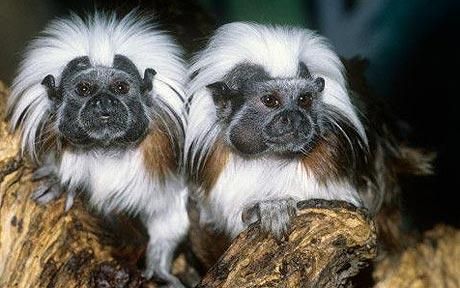 From UW-MAdison news
Hormone study finds monkeys in long-term relationship look strangely human
by DAVID TENENBAUM
Monkeys in enduring relationships show a surprising correspondence in their levels of oxytocin, a key behavioral hormone, according to research published online June 28 in the journal Hormones and Behavior.
While measuring oxytocin in the urine of 14 pairs of cotton-top tamarins, Charles Snowdon, a University of Wisconsin-Madison professor of psychology, observed a wide range of hormone levels.
But he also saw a striking correspondence among the couples: When one mate had a high level of oxytocin, so did the other, and vice versa.
Furthermore, partners with a high level of oxytocin performed correspondingly more cuddling, grooming and sex, while those with low levels of oxytocin spent less time on these relationship-building activities.
The hormone oxytocin was originally studied for its role during childbirth, when it helps cement the mother-child emotional attachment. More recently, it has been linked to many other attachments. "Only in the past 20 years have we started to think more broadly about oxytocin's social function in forming and maintaining long-term relationships," says Snowdon.
In monogamous mammal species, he says, "We see that oxytocin in parts of the brain in females leads to pair-bonding." An oxytocin nasal spray makes people more willing to trust strangers. Oxytocin rises after orgasm, massage and petting. "All this together suggests that oxytocin would play some role in creating strong pair bonds in these cotton-top tamarins, who are socially monogamous," says Snowdon, "and that the amount of cuddling, grooming, stroking and sex might be related directly to the oxytocin level."
In the new study, Snowdon, Toni Ziegler, a scientist at the Wisconsin National Primate Research Center, and their collaborators measured urine samples for oxytocin and recorded behavioral activity three times a week for three weeks, and then noticed the surprising correspondence between both members of the pairs.
Predictably, the study showed that high oxytocin among females was associated with more cuddling and stroking, and that among males, the major element was the amount of sex.
Snowdon may have been the first to respond "Isn't that familiar!" to this part of the results: It doesn't take a high-tech lab to notice that women and men have different emotional and physical needs, and the monkeys seem to echo this need.
But he noticed something else: The high-oxytocin monkeys seem to know how to soothe their partners. In previous studies, after monkey pairs were mildly disturbed either by removing one animal for a half hour or by introducing the scent of another female, both partners increased cuddling and sex as though to mend the relationship.
In the current study, the partners seem to know what the other partner needed. "Males in a high-oxytocin relationship were more likely to initiate cuddling, and females were more likely to initiate sex," Snowdon says. "These males were initiating the behavior that the female needed for high oxytocin, and the females with high oxytocin were initiating the behavior that male partner needed for high oxytocin."
Snowdon says this "monkey version of 'kiss and make up' suggests that sex and affiliative behavior may play an important role in maintaining a relationship."
Stroking, sex and cuddling are critical parts of what it means to be a cotton-top tamarin, and to be human, Snowdon says. "Here we have a nonhuman primate model that has to solve the same problems that we do: to stay together and maintain a monogamous relationship, to rear children, and oxytocin may be a mechanism they use to maintain the relationship. Therapeutically, I'd suggest this would have relevance to human couples."
Subscribe to:
Posts (Atom)


 Posts
Posts


