translate

Site update

Since I have been really terrible at updating the blog (but pretty good at keeping up with the facebook blog posts) I've added the widget below so that facebook cross posts to the blog.

You shouldn't need to join facebook but can just click on the links in the widget to access the articles. If you have any problems or comments please mail me at arandjel 'AT' eva.mpg.de.
Showing posts with label ecotourism. Show all posts

Tuesday, January 10, 2012

Angelique Todd, the gorillas' friend


Congrats to Angelique!

By
From the Telegraph
Angelique Todd left Tunbridge Wells for the central African rainforest to study western lowland gorillas. Now she is on speaking terms with a male called Makumba


Angelique Todd, a 43-year-old mother from Tunbridge Wells, has been called the 'gorilla whisperer' for the effect she has on Makumba. This is misleading because when she sees Makumba she doesn't actually whisper, she makes a soothing sighing noise, accompanied by clucking. It's like an invisible barrier between her and the gorilla. He may come close – really close – but Todd stays calm, no matter what. And Makumba, 400lb of alpha male, turns away.

We are deep in the African rainforest, in the Central African Republic (CAR) near the border with Congo-Brazzaville. The air is thick with sweat bees. Makumba is a few yards from where we are standing, eating termites, popping them in like snacks, and I am close enough to see some escape down his chin. A hundred feet above our heads, in the tangled vines up a tree, is another gorilla.

The thing about being so close to wild gorillas is that you must not run if they come at you. You are supposed to stand still and look at the sky. I ask Todd if Makumba has ever charged her. 'Oh yes, many times,' she replies. 'All silverbacks have different ways of being scary. Makumba charges really close to you, and then he jumps even closer. It's rather shocking.'

Todd has achieved something remarkable. As the head of the Primate Habituation Programme (PHP) in the Dzanga-Sangha Forest Reserve in the CAR, she has accomplished what had eluded scientists for decades – habituated western lowland gorillas for both tourism and research. Habituation means gaining the trust of wild gorillas so they don't run away. And this is significant because although western lowland gorillas are the sort most commonly found in zoos, little is known about them in the wild.

Todd is not the first to win the trust of this subspecies, but few have matched her success (or can claim, as she does, to manage a staff of 46 BaAka pygmies). Her achievement derives partly from persistence. To say it took her a long time is an understatement. She joined the World Wildlife Fund's gorilla habituation programme in the CAR as a young research assistant in 2000. She first spotted Makumba and his family later that year – he has three 'wives' and 10 children. His initial response was to disappear; for two years she hardly saw him at all. Every day she trekked for hours into the forest and only saw 'fleeing backsides'. By the time the job was finally done in 2007, Todd was 38, had been promoted to head of the programme – and Makumba had become her life.

The next day I meet Todd in her office near Bayanga, a dusty village. The capital, Bangui, is a 10-hour drive away. Outside in the trees, monkeys squawk. Inside, exposed wires hang from the plaster above my head. Todd, a girlish woman with round cheeks and wide blue eyes, is drinking tea from a plastic cup with a lid to keep the bugs out and smoking a cigarette. She likes to do both, very regularly, throughout the day.

She is tough: her job combines sweaty treks – she spends about three days a week in the field with the gorillas – with three days doing admin in the office (Sunday is her day off). She has had malaria 25 times, dengue fever and a bot fly infestation. 'They burrow into your skin. They were all over my body, just hundreds.' Almost every day she is bitten or scratched by something – driver ants, thorny vines, leeches. Her forearms and ankles are covered in scars and scabs. 'We've had researchers who have always wanted to study gorillas and they come here and walk straight back out again. They can't cope.'

Home for her and her partner Nestor and their daughter Poppy, nearly two, is a house near Bayanga which is equipped with In the Night Garden DVDs, Sainsbury's Gold Leaf tea and the music from Fiddler on the Roof – reminding you that she is a creature as much of Tunbridge Wells as of the African rainforest. 'My mum is very concerned about ballet lessons for Poppy,' she says.

This is a woman who, aged 25, had her thumb, a finger and a large part of her right forearm bitten off by a chimpanzee when she was working as a keeper in Port Lympne Wild Animal Park, Kent. She was standing outside the chimp's cage when it grabbed her arm, pulling it through the bars. Now the arm is fully functioning but badly scarred.

This proved the making of her. 'It made me more determined to come to Africa and do what I really wanted to do.' Working for WWF, her aim is to locate main groups, learn about their habits and biology, and get them used to humans so she (and her guides) can introduce the gorillas to other visitors – tourists, wildlife photographers, researchers. To this end she has spent the past 10 years living in a country not everyone has heard of ('I said to friends, I'm going to the Central African Republic, and they said, "Yeah, but where in central Africa?" '), doing a job many thought too difficult. 'No one wanted to work in the conditions of the lowlands,' says Dr Richard Carroll, a vice-president of WWF. 'It's tough out there.' Now Todd has been named a WWF 'true conservation hero'.

When Carroll first visited the Dzanga Sangha region as a PhD student and researcher for WWF-US in the early 1980s he was appalled by what he found – 'Lots of gorillas and elephants, but also poachers' camps on every stream.' The rainforest had been impenetrable for thousands of years, but new roads, built largely by logging companies, had created another kind of opportunity.

Bushmeat, the common term for tropical wild game, which includes monkeys, gorillas, chimpanzees, cane rats and other animals, is a popular and potent source of protein in this part of Africa. The carcases of slaughtered apes are sent, for huge profit, to markets in Kinshasa and Yaounde, and for that matter, on aircraft to Paris and New York.

'I was very worried,' Carroll continues. 'There were carcases of elephants everywhere. The hunting would have led to an empty forest.' Carroll had planned to habituate gorillas as research for his PhD. 'But I couldn't justify it if the next person they saw came along with a gun.'

So he shelved that idea and along with Michael Fay, from the Wildlife Conservation Society, spearheaded a conservation drive focusing on an area of rainforest straddling the south-west of the CAR, Congo-Brazzaville and Cameroon. The Dzanga-Sangha Forest Reserve and the Dzanga-Nodki National Park were created in 1990. Dzanga-Nodki is supposedly free of chainsaws, hunters, poachers and miners – the Congo basin has diamonds, gold and coltan (used in mobile phones) – while the Dzanga-Sangha reserve is designated as the place for locals to hunt for food.

There was another part of the strategic plan. Carroll argued that the way to save the lives of hundreds of apes and elephants, to stop trees from being chopped down and to help locals and marginalised groups – in this instance, the BaAka pygmies, traditional hunter-gatherers who depend on the forest for food – was 'responsible' tourism. Which means sharing, not exploitation.

Joining forces with the CAR government, 'We established a legal framework so all [wildlife] tourism revenue that came into the area would be shared with the local community to emphasise that wild animals are more valuable than dead ones,' Carroll explains. The split was 40 per cent for community associations; 50 per cent for salaries for local people working in the park; 10 per cent for national-level conservation programmes.

In addition, the BaAka pygmies were recruited as gorilla trackers. 'No gorilla would be habituated if it wasn't for their skills,' Carroll says. Adult BaAka males are 4ft tall and weigh about 90lb, and it's only when you watch them at work that you realise how superior they are. Walking a mile through the forest takes us the best part of an hour.
A BaAka does it in no more than 20 minutes (in flip-flops). Their heightened senses can even pinpoint individuals from footprints left in mud.

Not everyone is persuaded by gorilla tourism. Some believe it makes gorillas vulnerable to human diseases. A common cold, for example, can be life-threatening to a wild gorilla. But Carroll remains upbeat. 'This isn't tourism for tourism's sake,' he stresses. 'It's tourism for conservation's sake, for cultural survival's sake – for the BaAka people – and to keep the forest intact.'

Angelique Todd was an independent, strong-minded child in a musical family. But she and her older brother Sean preferred the outdoors. Their love of nature was shaped by family holidays in Pembrokeshire, walking the coastal path. (Sean is now a professor of marine mammal physiology and behaviour at Maine University.) Born in Surrey, Todd went to the independent Sutton High School and achieved the Queen's Guide Award, the ultimate honour in guiding.

She read zoology at Aberystwyth, where she became interested in parasites and spent a year of her four-year course studying faeces, firstly of wildcats at Kilverstone Wildlife Park (now Banham Zoo) in Norfolk. 'But as much as I love cats, when you study them in the wild, you don't see them at all. They are such elusive animals, it gets a little bit frustrating. And I was studying cat poo, basically.'

She became fascinated with primates after befriending a spider monkey called Eric at Kilverstone and working with PhD students studying howler monkeys in Costa Rica. She returned to Aberystwyth to finish her degree, then did a masters in primate conservation biology at Manchester University while volunteering at Port Lympne, owned (with its sister park, Howlett) by John Aspinall, the late millionaire conservationist and gambler. In April 1994 Todd was outside a cage feeding chimpanzees when Bustah, a 33-year-old chimp, made a sudden grab at her sleeve. 'He bit my thumb first, then my finger and then started on the rest of my arm.' Eventually a member of the public managed to distract the chimp long enough for Todd to make her escape.

The first thing she said after a five-hour operation to repair her arm was, 'Don't let them touch Bustah,' recalls her mother, Isabella, who lives near Tunbridge Wells. 'Angelique was afraid it would have repercussions for the chimp. But Aspinall was too fond of his animals to put them down. Bustah was sent to a wildlife park in South Africa.'

Todd says Aspinall was 'very sorry and said, "Sue me for all you can". And he invited me and my family around for cream tea and cucumber sandwiches. So I did sue him, because it was a simple health and safety issue – there was a huge gap in the cage.' She was awarded £75,000 damages. After repaying debts – a student loan and £26,000 to the government for sickness and housing benefit while she was off work – she spent £25,000 on a deposit for a house.

Her father died two years after the accident. 'There were a few problems with finances. We lost our family home, so I bought a house with my mum near Tunbridge Wells.' The remaining £7,000 funded her early years in the CAR.

Gorilla tourism is not new in Africa. Since 1970, when the American zoologist Dian Fossey became internationally renowned for her work with mountain gorillas (the hairier type that live in the Virunga Mountains where Rwanda, the Democratic Republic of Congo and Uganda meet), some 40 groups have been habituated. The 'mountain gorilla tourism model' is generally accepted as the main reason why mountain gorillas survive today.

But tourism built around western lowland gorillas is another matter. 'Mountain gorillas live in hills and you get those long-distance views so the gorillas can see you and see that you are not threatening to them, and that is a really important component of habituation,' Carroll explains. 'In the lowlands, where you can't see forest for the trees, you can come upon a gorilla a yard away before either of you knows it, which is dangerous.'

Even walking in tropical forest is a job in itself. There is hardly a path that does not require a machete, and nowhere outside the main track where anybody over 5ft tall can stand upright. You not only have to bend double, but you must also keep your head up, looking out for elephants.

The other hurdle is that unlike mountain gorillas, western lowland gorillas don't live in stable families. So one day you could see individuals A, B and C, and the next day individuals D, E and F, and ABC are off somewhere else. You can't guarantee you will see the same individuals over and over again. The upshot has been many attempts to habituate lowland gorillas, but few successes.

Dr Diane Doran-Sheehy, an associate professor of anthropology at Stony Brook University, New York, habituated two groups at the Mondika Research Centre, along the border of the CAR and Congo-Brazzaville, in 2004 as part of a research project. And one of the leading experts on western lowland gorillas, Magdalena Bermejo of the University of Barcelona, habituated the first group of lowland gorillas in central Africa, at the Lossi Gorilla Sanctuary in Congo-Brazzaville, in 2001, with JD Rodriguez-Teijeiro. She studied eight families (two for responsible tourism). But they went on to lose more than 90 per cent of their gorillas to an Ebola virus outbreak.

Some years earlier, in 1997, Bai Hokou, a profoundly remote camp in the Dzanga-Ndoki National Park, became the HQ for WWF's Primate Habituation Programme. Originally built by Dr Carroll in the mid-1980s, and now Todd's home in the field, Bai Hokou is a collection of wooden cabins and very basic facilities – the shower, for example, is a waterfall. The nearest shops are a two-hour drive through the wilderness, so staff live off a diet of tinned sardines and Laughing Cow cheese.

In 1998 the PHP came under the direction of Chloe Cipoletta, a primatologist who had previously habituated chimpanzees off the Ivory Coast. Later that year, Cipoletta started working with a small group of gorillas close to the camp. But in 1999 the group's silverback was attacked, probably by a leopard. Half of his forehead was ripped off and his back badly scratched. He recovered (although he was killed in 2004 by a male gorilla in a fight over a female), but the group of four females and their offspring started disintegrating.

In 2000 Todd, by now studying for a PhD, joined Bai Hokou as a research assistant. The deal was that she could collect data in exchange for habituating a second group of gorillas. She first spotted Makumba in November that year. The silverback was asleep in a clearing in dense forest and his daughter was playing with some oleander. Todd remembers the scene in almost mystical terms: 'I thought, oh my God, this is paradise.'

For gorillas, habituation comes in stages: fear; avoidance; aggression; and finally, indifference. By 2003 Todd and her pygmy trackers had worked through the fear and running away stage. It was at this time that Makumba's behaviour changed. 'He started being aggressive,' Todd recalls, 'but I didn't feel particularly worried. It wasn't until around March that he became highly aggressive. We work as a team and the other guides were getting some rather bad charges and I was thinking, it's fine, it's fine, and then one day he gave me a really, really bad charge and it was very scary.'

She says she can normally stop him from charging by talking. 'Not that he understands what I'm saying, it just makes him forget what he's doing – that's my theory, anyway. So yes, he knows my voice. I'm the only one who talks to him. All the trackers think I'm absolutely dippy.' By 2007 she had built a rapport with all of Makumba's family. 'The females are the most elusive,' Todd says. 'They take up to seven years to habituate.'

Todd has since habituated another gorilla group and trained other guides, who help her fulfil the original plan of gorilla tourism. The way it works is that three tourists at a time are taken into the forest to observe the wild gorillas for an hour or so, from a distance of about 20ft, at a cost of about $300 per person. The maximum is 12 tourists a day. 'We've had people cry with joy at seeing such a fabulous sight,' she says. 'Others are so petrified they don't say a thing.'

It is very labour-intensive. A staff of 50 (excluding the BaAka) work from two camps: Bai Hokou and Mongambe. Trackers are required to monitor the gorillas 24 hours a day, 'because if we lose them we spend days finding them again'. Guides are needed for the tourists. And the PHP has become a magnet for scientists, documentary filmmakers and wildlife photographers. 'Each camp costs $100,000 to run, and gorilla revenue last year was around $80,000 – that is why we're so reliant on donor funding. But we've doubled the size of the programme to the point where we can see it could be sustainable and bring in revenue.'

One evening, I walk up a dirt track to Todd's house, an airy, modern building that is anomalous in its size and amenities – fridge, electric lights – but is still surrounded by deep forest and wild elephants. This has been her home since having Poppy. She met Nestor, 37, an administrative assistant for WWF, in the late 1990s. Their relationship started in 2007. Nestor is from the Bantu tribe, and hadn't seen snow before the day he landed at Heathrow in January last year to attend the birth of his daughter.

Nestor works in Bangui, which is 300 miles away. They see each other once a month; otherwise they use Skype. Once a fortnight he sends a car with vegetables and nicer cheese than Laughing Cow.

Todd is frank about how motherhood has changed her. 'For me the ideal life is to be in the forest, but now I have a more village-based lifestyle, which is hard. For the first three months after having Poppy, I tried to live on the camp [at Bai Hokou] but it turned out to be too difficult. We had some elephants push their trunks through our windows, and then of course we had scorpions, cockroaches and centipedes, and I hadn't counted on that panicky feeling of protective mum.'

But there are still difficulties in raising a child here: fear of conjunctivitis and intestinal worms, malaria and TB. And there are constraints from spending her time among Bantu people. 'There's a belief that you must not carry a child on your shoulders after four o'clock because it makes them vulnerable to spirits in the air. I respect it.'

She works six days a week, nine hours a day (she has a nanny with a giant smile, Mama Ange, a local mother of five). She started today by distributing pay to the BaAka (£2 a day: above the national average), then drove to Bai Hokou in her Toyota pickup, led a seven-mile trek to Makumba, and will soon be writing a PowerPoint presentation for a group of German donors arriving tomorrow, before replying to emails for tourist requests. Right now Poppy is 'playing' with Pinky the kitten, and during moments of high tension, Todd leaps from her seat to intervene. She is feeling tired and thoughtful as she drinks her beer. 'There are definitely tough times,' she says. 'But to gain the confidence of a gorilla family in the wild is a real honour.' She smiles, showing a rare willingness to acknowledge her achievement.

And the future? 'If it was just me, I'd stay here for the rest of my life, but Poppy will need schooling and at some point I will have to move on.' But not just yet. Makumba is 31 and all the books say wild gorillas live to about 35 years. 'My plan is to stay here. It will be very difficult when Makumba dies. I want to be here while he's around.'

Monday, December 5, 2011

Sierra Leone shields forest from mining

thank to jessica GS for the link and congrats to everyone that works and has worked with the Gola forest project for their success!

from news24


Sierra Leone has conferred protected national park status on a remote tract of forest that has attracted attention for its iron ore mining potential.

The creation of the 71 000ha Gola Forest National Park near the border with Liberia is aimed at preserving the largest remaining fragment of the Upper Guinea rainforest in Sierra Leone. It is the second such park in the West African country.

The area is home to 300 species of bird, 600 butterfly species and 45 species of mammals, including some 300 chimpanzees.

Around 140 000 people live in the area, whose park status was confirmed in a ceremony on Saturday with President Ernest Bai Koroma.

Iron ore production was restarted in Sierra Leone in November and shipments in 2012 could start transforming the local economy. The International Monetary Fund expects gross domestic product to leap by around 50% in 2012 as a result of iron.

Tourists

"The mining threat still exists; but the president has been absolutely resolute that mining will not come into the park," said Tim Stowe of Britain's Royal Society for the Protection of Birds, one of the project backers.

Local people also search for diamonds and gold in the Gola Forest. Koroma said illegal miners would face consequences - a prospect which dismays some of the area's inhabitants.

"This is the place we used to go to get our money to carry on our lives," said Musa Taimeh, a 40-year-old from Tunkia chiefdom. "We cannot go to farm there, we cannot go to log; we cannot go to mine diamonds."

Sierra Leone receives very few tourists, with many foreigners still put off by associations with a bloody civil war that ended nine years ago.

Supporters of the park admit they expect few visitors initially, but hope soon to cover running costs by using the value of the forest's ability to cleanse the atmosphere of carbon dioxide as an off offset for emissions of greenhouse gases elsewhere.

The opening of the park coincides with a major scandal over allegations of corruption in the use of local natural resources.

A documentary film alleged two men in the office of Sierra Leone's Vice President Samuel Sam Sumana accepted bribes from undercover reporters in return for a promise that the vice president would back an illegal logging project.

The government has said it is investigating the allegations, which have been denied by Sam Sumana's office.

Thursday, December 1, 2011

Congo is walk in the park for area gorilla researcher

Thanks to Cleve H for the link!
from my suburban life.com
By Joe Sinopoli

Michael Stucker’s journey into the heart of the Congo jungle actually started as a wide-eyed boy, jockeying to get a better view of the animals at Brookfield Zoo.

“It was that gaze, the gaze of the gorillas,” he said. “And that struck a chord and made me want to learn more about them and protect these animals.”

Now 34, Stucker finds himself quietly stalking Western Lowland gorillas on their own ground — not as a hunter, but as a conservationist of the largest of the primates.

Stucker soon will head from Brookfield back to the Republic of Congo and Nouabale-Ndoki National Park as a volunteer researcher for the New York-based Wildlife Conservation Society. Founded in 1885, the society manages about 500 conservation projects in more than 60 countries across the globe.

The Riverside Brookfield High School graduate — who also holds two bachelor’s degrees in psychology and primate behavior and ecology from Central Washington University in Washington state — became enamored with the great apes as a college student.

He was an intern caretaker there with the Chimpanzee and Human Communication Institute, home of Washoe, the first chimp to learn sign language. During Stucker’s final semester, he was asked to prepare a lengthy presentation on gorillas.
And that, as they say, was all it took.

Stucker fired off a resume to the WCS’s Mondika Research Center at Nouabale-Ndoki National Park three months after he graduated college in August 2009 and arrived in the Congo on Jan. 1, 2010, as a volunteer research assistant. He stayed there for 16 months and is now counting the days until he returns May 26 as a paid staff member and site manager/project coordinator.

“I’ve been enjoying the luxuries of life and appreciating running water, telephone and Internet access and eating when and whatever I like,” he said.

A day in the jungle

Michael Stucker’s day starts early in the jungle.

At 4:30 a.m., he’s up and about checking the camp, making sure the cooks are preparing food and the rest of the staff has rolled out of their cots and shaken the scorpions from their shoes.

He then puts on his nurse’s cap and tends to the medical needs of the camp staff, including 10 pygmies from the Ba’Aka tribe, two Congolese assistants and one armed guard. Cuts and scrapes are cleaned, medicated and dressed. After all, this is Africa, and something that starts as small as a scratch can quickly get infected.

By 6:30 a.m., the contingent breaks into teams, each with three trackers and one of the assistants. One team begins the job of tracking the gorillas, which takes anywhere from60 to 90 minutes.

At that point, one of the trackers is sent back to camp for Team 2, which then sets out to relieve Team 1. The relief team then heads back to camp at 5 p.m. after quietly following the gorilla group for the day.

During that time, the teams collect data on behavior, diet, copulation and interactions between the primates. Stucker analyzes and enters the data, which is then relayed back to a conservation biologist with the Wildlife Conservation Society for review.


Tourism helps fund primate research
Ecotourism plays a substantial role in the sustainability of the park. Run by the Congolese Ministry of Forestry Economy and the Environment and WCS, the ecotourism program provides revenue essential to the animals’ welfare and running of the camp, as well as anti-poaching efforts.

Groups are formed that allow two to four tourists to view gorillas for one hour per day, so as not to stress the animals, Stucker said. The group keeps a minimum of 70 meters from gorillas, and everyone is required to wear a surgical mask to minimize infecting animals with airborne diseases. Gorillas are particularly susceptible to human respiratory diseases.

In camp, rations for humans are limited. Breakfast is bread and water, lunch and dinner are usually rice and beans, spaghetti or canned corned beef. In fact, everything is canned.

Family and friends are missed

Stucker, who served in the U.S. Marines from 1996-99, said his military training laid the foundation for how he endures the hardships of living in the bush, such as the heat and poor sleeping conditions.

“Mainly, it helps with the separation from family and friends,” he said of his training.

His mother, Mary Stucker, said her son has always had an adventurous spirit, along with a love of animals. But mothers are required to worry about their children, even Marines.

“At one point, we thought he had malaria and we were very frightened,” she said. “But that wasn’t the worst of it. He also had an infection in his arm from his wrist to his elbow. People from several different churches were praying for him. God answered our prayers.”

RBHS science teacher Dave Monti inspired Stucker to go for his dream while he was a sophomore. The two recently reconnected for the first time since Stucker’s high school graduation.

“I didn’t hear from him until last year when he was in Africa,” Monti said. “I always encouraged him to follow your passion, and if you’re lucky, you can make it your career. It was very exciting to hear the things he was doing.”

Wednesday, November 3, 2010

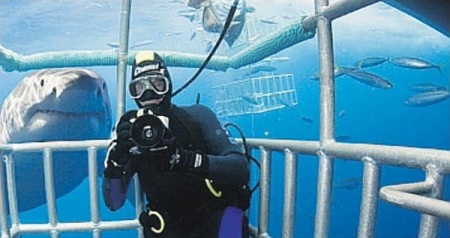
Shark eco tourism: multi-layered, economically-viable appraoch to conservation

Today Carol R posted some pics of her recent (caged) shark diving experiences in Mexico. My initial reaction was "never me" and "terrifying". Then this article was posted on bush warriors and it reminded me, as with all thing in life, that I need to be open-minded about these things! This is a really inspiring article about how one man, is winning the shark conservation war, with a multi-layered approach involving vigilance, law enforcement and eco-tourism. Thanks to Carol and bush warriors for reminding me to always check my prejudices. - MA
PS: There are LOTS more pictures in the original article on the Bush Warriors website.


Sharks, Tourism, and Conservation: The Truth About Shark Diving
From the Bushwarriors blog

Selling shark tourism as a way to inspire appreciation for these misunderstood predators is one thing, but if the business is done right, it can accomplish much more than an increased affinity for these animals. Of course, changing society’s attitude towards these creatures is imperative to their survival. However, shark tourism operators also have the potential to offer protection to these big fish, in addition to supporting shark research and conservation efforts. And they can make money while they do these things!

The majority of mainstream media attention focuses on instilling a fear of these creatures with sensationalized headlines that include words like “shark attack”, “monster”, and even “Killer Shark Looms Offshore Waiting for Next Victim”. However, the truth of the matter is that every single day we are some 217,000 sharks closer to losing these ocean-balancing organisms forever. Shark diving opportunities provide people with a chance to gain a new understanding for these animals. When done properly, it brings people as close to these predators as one can safely get. Such an experience can change a person’s life and give them motivation to protect these animals.

Imagine the power of these experiences, if they were to educate people on the largely unknown state of the current shark crisis. Beyond education, what if shark tourism clients were provided a way to literally become involved in protecting and conserving sharks, and even assisting with their research? This is entirely possible, and it’s already being done in some places.

Canadian national, Mike Lever, is a veteran in the cage diving business and is one of the largest shark cage diving operators on the Pacific coast of Mexico, but he’s much different than the majority of his competitors. After seeing the devastating effects of overfishing and shark finning, Lever has built his business in a way that provides protection for these amazing creatures, a purpose for the shark tourism industry that is largely overlooked and neglected.

As a large challenge in halting illegal fishing of sharks seems to lie in a lack of enforcement and patrols, Lever has purposefully placed his boats in a position that serves as a warning to anyone who dares to attempt to fish for or fin sharks in the areas where he operates. His and his clients’ mere presence serves as a deterrent to the these activities. The conservationist businessmen established this persona by confronting shark poachers head on.

In 2008, Lever chased a poaching vessel for four hours before he was finally able to convince the captain to return to the location where his crew had set an illegal fishing net. Sadly, Lever found that the boat was already loaded with numerous dead sharks and manta rays. However, when they got back to the site, they found sea turtles, dolphins, and 17 thresher sharks entangled in the poachers’ net.

“That was really distressing. They are gentle giants. It was like pulling over a truck in Africa and finding seven elephants,” commented Lever in his interview with the Vancouver Sun.

Though he expected a strong response from law enforcement, he was shocked to learn the authorities took no action at all and even rejected the claim that there were sharks and mantas onboard the ship. Lever waged war against the sharks’ enemies and made a lot of noise with a widely seen TV show that depicted the event. As expected, Mexico responded promptly and beefed up their patrols… at least until the noise died down.

Lever says the fishermen stayed away from the shark-concentrated area where he conducts his cage diving tours for almost a year. He now flies his own aircraft on random patrols over the area to discourages illegal shark fisheries, while his shark tour boats hold down the fort in the water. He’s setting a classic example of how other shark tourism operators can create a business that serves multiple purposes, aside from making money.

Additionally, this man has a profound respect for the predatory and unpredictable nature of these animals. He says he would never put sharks in a position that would allow them to become vilified, say by providing free-diving shark experiences in which someone could potentially be killed by a shark, for example.

One of the controversies surrounding shark tourism involves chumming, the practice of baiting sharks to an area by tossing blood and raw animal flesh into the waters. Doing this can change shark behavior and potentially create a dangerous situation. Some operators in Hawaii have recently come under scrutiny of the courts for this practice. Lever is opposed to this large-scale chumming, for the safety of his clients, as well as that of the sharks.

Lever has also created two conservation trust funds with the sole purpose of protecting the marine life of the areas where he conducts his tours: Guadalupe Island and Socorro Island. He successfully raised $160,000 through donations from his clients and from his personal income over the last two years, and uses the money to fund American and Mexican researchers studying sharks. Some of the projects the trust funds have supported include putting transmitter tags on the animals so they can be tracked, as well as deploying marine acoustic censors designed to monitor the sharks’ environment.

“You can’t save these animals if you don’t understand them,” Lever explains.

There are other ways for shark tourists to get involved in the conservation of these creatures, as well. Recall the development of a new scientific database that allows researchers to keep tabs on sharks and their populations using photos of their fins. Cage diving clients can easily contribute to this research by snapping photos of the sharks they see, which can then be stored in the new database. Not only would they get to enjoy their direct shark experience, but they can humbly assist with the collection of much-needed data.

Shark-based tourism holds far more potential than one would think. We recently told you about a report from a team of environmental economists that highlighted the success of this industry, as well as the increased value of alive sharks over those killed for their fins or flesh. Furthermore, the business creates jobs and generates revenue for the economy.

The questionable future of these incredible marine predators could benefit greatly from an increase in shark tourism, especially that which also seeks to protect these animals. After all, they could not be in make money without these animals, so why not repay them with these simple gestures? Converting shark fishermen to business in safe and ethical shark tourism could very well reverse the current trends threatening all shark populations with extinction.

To read more about Mike Lever’s story, click here.

Tuesday, October 19, 2010

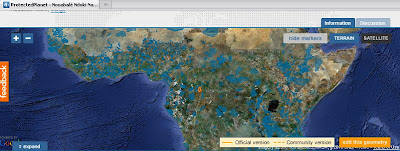
very cool new resource: protectedplanet.net


Check out this cool new UNEP/IUCN database, ProtectedPlanet.net on the globe's protected areas, which is wiki based (but with fact checking) so you can update the database with information that you have on some of the more remote areas.

from their website:
Be inspired by the most beautiful places on the planet. Explore the worlds national parks, wilderness areas and world heritage sites. Help us find and improve information on every protected area in the world. Protectedplanet.net lets you discover these incredible places through elegant mapping and intuitive searching. Protectedplanet.net wants you to contribute information about protected areas alongside national agencies and international organisations. Protectedplanet.net helps you understand what and where our natural resources are being conserved. If you are interested in analysing a global dataset on protected areas, you can download the data, today, here at protectedplanet.net.

Friday, August 27, 2010

Best Practice Guidelines for Great Ape Tourism

From the IUCN/SSC Primate Specialist Group:
We are pleased to announce that the next issue (the fifth) of the series “Best Practice Guidelines” for great ape conservation – Series Editor Liz Williamson, the PSG coordinator for the Section on Great Apes (SGA) – is being printed, and is now available, open access, in pdf on the Primate Specialist Group website.

“Best Practice Guidelines for Great Ape Tourism” by Elizabeth J. Macfie and Elizabeth A. Williamson, number 38 of IUCN’s series “Occasional Papers of the IUCN Species Survival Commission”. 78pp. 2010.

Our sincere congratulations to Liz Macfie and Liz Williamson, and to those who contributed -Marc Ancrenaz, Chloe Cipolletta, Debby Cox, Christina Ellis, David Greer, Chloe Hodgkinson, Anne Russon, and Ian Singleton, amongst many others.

Many organizations provided support for drawing up, editing and printing these guidelines, but we acknowledge here especially the US Fish and Wildlife Service – Great Ape Conservation Fund, and the Arcus Foundation and Conservation International besides.

Although specifically for great ape tourism, the ideas, principles, and recommendations provided in this document are pertinent and valid for all research, monitoring and tourism that involves proximity to primates in the wild. Those involved in habituating and following wild primate groups for research would do well to investigate the advice provided.
Best Practice Guidelines for Apes – IUCN/SSC Primate Specialist Group.
Series Editor E. A. Williamson.

Morgan, D. and Sanz, C. 2007. Best Practice Guidelines for Reducing the Impact of Commercial Logging on Great Apes in Western Equatorial Africa. Occasional Paper of the IUCN Species Survival Commission (34): 32pp. Series editor E. A. Williamson. IUCN/SSC Primate Specialist Group, Gland, Switzerland.

Morgan, D. and Sanz, C. 2007. Lignes directrices pour de meilleures pratiques en matière de réduction de l’impact de l’exploitation forestière commerciale sur les grands singes en Afrique centrale. Occasional Paper of the IUCN Species Survival Commission (34): 40pp. Série éditée par E. A. Williamson. Groupe de spécialistes des primates de la CSE de l’Union mondiale pour la nature, Gland, Suisse.

Beck, B., Walkup, K., Rodrigues, M., Unwin, S., Travis, D. and Stoinski, T. 2007. Best Practice Guidelines for the Re-introduction of Great Apes. Occasional Paper of the IUCN Species Survival Commission (35): 48pp. Series editor E. A. Williamson. IUCN/SSC Primate Specialist Group, Gland, Switzerland.

Beck, B., Walkup, K., Rodrigues, M., Unwin, S., Travis, D. and Stoinski, T. 2007. Lignes directrices pour de meilleures pratiques en matière de réintroduction des grands singes. Occasional Paper of the IUCN Species Survival Commission (35): 51pp. Série éditée par E. A. Williamson. Groupe de spécialistes des primates de la CSE de l’Union mondiale pour la nature, Gland, Suisse.

Beck, B., Walkup, K., Rodrigues, M., Unwin, S., Travis, D. and Stoinski, T. 2009. Panduan Re-introduksi Kera Besar. Terbitan tidak Berkala IUCN Species Survival Commission (35): 56pp. Editor Seri. E. A. Williamson. IUCN/SSC Primate Specialist Group, Gland, Switzerland. Diterjermahkan oleh Purwo Kuncoro, BOS Canada.

Kühl, H., Maisels, F., Ancrenaz, M. and Williamson, E. A. 2008. Best Practice Guidelines for Surveys and Monitoring of Great Ape Populations. Occasional Paper of the IUCN Species Survival Commission (36): 28pp. Series editor E. A. Williamson. IUCN/SSC Primate Specialist Group, Gland, Switzerland.

Kühl, H., Maisels, F., Ancrenaz, M. and Williamson, E. A. 2009. Lignes directrices pour de meilleures pratiques en matière d’inventaire et de suivi des populations de grands singes. Document occasionnel de la Commission de la sauvegarde des espèces de l’UICN (36): 32pp. Série éditée par E. A. Williamson. Groupe de specialists de primates de la CSE/UICN Gland, Suisse.

Hockings, K. and Humle, T. 2009. Best Practice Guidelines for the Prevention and Mitigation of Conflict Between Humans and Great Apes. Occasional Paper of the IUCN Species Survival Commission (37): 41pp. Series editor E. A. Williamson. IUCN/SSC Primate Specialist Group, Gland, Switzerland.

Hockings, K. and Humle, T. 2009. Lignes directrices pour de meilleures pratiques em matière de prevention et d’attenuation des conflits entre humains et grands singes. Document occasionnel de la Commission de la sauvegarde des espèces de l’UICN (37): 52pp. Série éditée par E. A. Williamson. Groupe de specialists de primates de la CSE/UICN, Gland, Suisse.

Hockings, K. and Humle, T. 2009. Panduan Pencegahan dan Mitigasi Konflik antara Manusia dan Kera Besar. Occasional Paper of the IUCN Species Survival Commission (37): 72pp. Series editor E. A. Williamson. IUCN/SSC Primate Specialist Group, Gland, Switzerland.


Macfie, E. J. and Williamson, E. A. 2010. Best Practice Guidelines for Great Ape Tourism. Occasional Paper of the IUCN Species Survival Commission (38): 78pp. Series editor E. A. Williamson. IUCN/SSC Primate Specialist Group, Gland, Switzerland.

Monday, August 16, 2010

Eco-tourism in Loango National Park still ongoing!


I posted last month on how Africa's Eden had halted eco-tourism activities in Loango National Park which had been reported as if Loango NP was being totally shut down (or at least all ecotourism was). WWF posted this update on their facebook page about ecotourism, conservation and research activities in Loango NP, including a link to Gavillo Lodge that still appears to be up and running. So for anyone who wants to see surfing hippos, it seems that it is still possible.

For more, go to Ecotourism in Gamba: the place for an unfogettable adventure

Thursday, July 29, 2010

*updated* Are wildlife conservation projects doing more harm than good?

*update*: Boo M drew my attention to the following related paper:
Wittemyer, G., Elsen, P., Bean, W.T., Burton, A.C.O., Brashares, J.S., 2008. Accelerated human population growth at protected area edges. Science 321, 123-126.

Abstract
Protected areas (PAs) have long been criticized as creations of and f...or an elite few, where
associated costs, but few benefits, are borne by marginalized rural communities. Contrary to
predictions of this argument, we found that average human population growth rates on the borders of 306 PAs in 45 countries in Africa and Latin America were nearly double average rural growth, suggesting that PAs attract, rather than repel, human settlement. Higher population growth on PA edges is evident across ecoregions, countries, and continents and is correlated positively with international donor investment in national conservation programs and an index of park-related funding. These findings provide insight on the value of PAs for local people, but also highlight a looming threat to PA effectiveness and biodiversity conservation.


---
original post (amended in light of above paper):
I have not yet read this book, but I am sure Ms. Duffy will be making a ton of new enemies with its release. If you can, try to take a step back and listen to what she is saying. I am not saying she is 100% correct but she makes some good points. Ecotourism won't work everywhere and in some places it is doing a lot of damage when people are under the assumption that they are contributing to the protection of our global resources. We need people to be brave and say that we are making mistakes. We then need people to learn from these mistakes and want to change and move forward. We need to think of alternatives to ecotourism and find new ways to make people care about the forests and the environment. -MA


From the Guardian
by AMELIA HILL
Wildlife conservation projects do more harm than good, says expert
New book claims western-style schemes to protect animals damage the environment and criminalise local people

Ecotourism and western-style conservation projects are harming wildlife, damaging the environment, and displacing and criminalising local people, according to a controversial new book.

The pristine beaches and wildlife tours demanded by overseas tourists has led to developments that do not benefit wildlife, such as beaches being built, mangroves stripped out, waterholes drilled and forests cleared, says Rosaleen Duffy, a world expert on the ethical dimensions of wildlife conservation and management.

These picture-perfect images all too often hide a "darker history", she adds. Her new book, Nature Crime: How We're Getting Conservation Wrong, which draws on 15 years of research, 300 interviews with conservation professionals, local communities, tour operators and government officials, is published today.

When wildlife reserves are established, Duffy says, local communities can suddenly find that their everyday subsistence activities, such as hunting and collecting wood, have been outlawed.

At the same time, well-intentioned attempts to protect the habitats of animal species on the edge of extinction lead to the creation of wild, "people-free" areas. This approach has led to the displacement of millions of people across the world.

"Conservation does not constitute neat win-win scenarios. Schemes come with rules and regulations that criminalise communities, dressed up in the language of partnership and participation, coupled with promises of new jobs in the tourism industry," claims Duffy, professor of international politics at Manchester University.

A key failure of the western-style conservation approach is the assumption that people are the enemies of wildlife conservation – that they are the illegal traders, the poachers, the hunters and the habitat destroyers. Equally flawed, she says, is the belief that those engaged in conservation are "wildlife saviours".

Such images, she argues, are oversimplifications. "The inability to negotiate these conflicts and work with people on the ground is where conservation often sows the seeds of its own doom," she adds.

"Why do some attempts to conserve wildlife end up pitting local communities against conservationists?" she asks. "It is because they are regarded as unjust impositions, despite their good intentions. This is vital because failing to tackle such injustices damages wildlife conservation in the long run."

Duffy stresses that her intention is not to persuade people to stop supporting conservation schemes. "Wildlife is under threat and we need to act urgently," she acknowledges. Instead, she says, she wants to encourage environmentalists to examine what the real costs and benefits of conservation are, so that better practices for people and for animals can be developed.

"The assumption that the ends justify the means results in a situation where the international conservation movement and their supporters around the world assume they are making ethical and environmentally sound decisions to save wildlife," she says. "In fact, they are supporting practices that have counterproductive, unethical and highly unjust outcomes."

Duffy focuses on what she says is the fallacious belief that ecotourism is a solution to the problem of delivering economic development in an environmentally sustainable way.

This is, she says, a "bewitchingly simple argument" but the assumption that such tourism necessarily translates into the kinds of development that benefits wildlife is far too simplistic.

"Holiday makers are mostly unaware of how their tourist paradises have been produced," she says. "They assume that the picture-perfect landscape or the silver Caribbean beach is a natural feature. This is very far from the truth. Tourist playgrounds are manufactured environments, usually cleared of people. Similarly, hotel construction in tropical areas can result in clearing ecologically important mangroves or beach building which harms coral reefs."

But the World Wildlife Fund for Nature, one of the four biggest environmental NGOs in the world, maintains that the loss of wildlife is one of the most important challenges facing our planet. As such, a powerful focus on conservation is necessary: "Conservation is essential so let's not throw the baby out with the bathwater," says a WWF-UK spokesman. "There are examples out there where ecotourism is working and has thrown a lifeline to communities in terms of economics and social benefits, as well as added biodiversity benefits.

"Let's have more of those projects that are working for everybody and everything," he adds. "There is no one

Tuesday, July 27, 2010

Eco-tourism halted in Loango National Park, Gabon

From Africa's Eden via Africa Geographic
Africa’s Eden SA, the main tourism operator at Loango National Park – the park described as Gabon’s "jewel in the crown" – has announced today that it has been forced to abandon its ecotourism operations at the park as of September 1st 2010.

The decision has been taken despite Africa’s Eden’s shareholder having invested more than 15 million euros over the past nine years in aviation access and tourism infrastructure and nature conservation: building accommodation, eco-camps, training Gabonese staff and eco guides and supporting research and monitoring studies for the conservation of Loango’s exceptional wildlife and biodiversity wealth. It means that Loango Lodge, which since 2001 has welcomed thousands of international tourists to discover Gabon’s wildlife rich forests and unspoiled coastline, is closing its doors indefinitely.

The move is a result of the failure of negotiations following a dispute between the Gabonese civil aviation authorities (ANAC) and Africa’s Eden’s sister company SCD Aviation which ran a regional airline charter company to transport tourists from the capital Libreville to the park. Even active support of key members of Gabonese government could not prevent the severe consequence of a malfunctioning civil aviation authority (ANAC) that failed to create the conditions necessary for regular and safe aviation transportation: SCD Aviation was consistently refused the renewal of its Air Operator’s Certificate (AOC) even though all requirements were met.

Another consequence of this problematic situation is the fact that the European Union blacklisted all Gabonese airlines in 2008 when a large number of deficiencies were reported with regards to the capability of ANAC “to perform their air safety oversight responsibilities”, as states the Commission of the European Commission. “More than 93% of the ICAO standards were not implemented”. This was the lowest percentage of all audited countries, and makes ANAC in Gabon one of the poorest performing civil aviation authorities in the world.

“We have made numerous attempts to resolve this dispute amicably for over a year now,” said Rombout Swanborn, founder of Africa’s Eden and SCD Aviation. “The ongoing events and consequences of not being able to operate our aircraft have financially crippled our organisation, leaving us with no choice but to take this drastic measure.” He added: “We are highly disappointed as a solution would have benefited all parties involved. In the end, the Gabonese people. ”

Legal action against the aviation authorities in Gabon has been initiated to seek compensation for the financial losses SCD Aviation and Africa’s Eden have undergone.

The focus of the international investment group behind Africa’s Eden will now shift towards its investments in sustainable development on the island of Príncipe , a tropical island off the west African coast, and in the Dzanga-Sangha Reserve in the Central African Republic. A separate press release can be expected on August 15th 2010 on the 35 Million Euro sized project that aims to create sustainable economic development for the full island of Principe based an ecotourism. Investments are foreseen in the island logistical, tourism and national park infrastructure.

For much more information go to Africa's Eden website and click here for a recent posting on Africa's Eden and ecotourism

Tuesday, June 22, 2010

Did you know: Plastic bags have been banned in Rwanda since 2006!

This is from 2006 (!) but is still being heavily enforced as I just found out from a friend headed to Rwanda (thanks Chrissie E!) - amazing and progressive! I think it reflects how strong of a role the environment plays in Rwanda's GDP as the mountain gorillas in Volcanoes national park attracts tourists to the small country (there are four habituated groups open to tourists, allowing for a total of 32 permits per day, each permit is $500 USD, plus travel,food and accommodations). Would be great if this attitude of environmental protection spread across other areas of Africa, I just hope we don't have to habituate many more great apes or disturb other wildlife populations for people to see how wonderful Africa's wilderness truly is. -MA

Trader wrapping cakes in plastic bags.
Some traders continue to use the banned plastic bags

From the BBC
Rwanda gets tough on plastic bags

Rwanda is cracking down on the use of plastic bags by shoppers, the environment minister has told the BBC. Drocella Mugorewera said that anyone using plastic bags is breaking a recent law on environmental protection aimed at cleaning up cities. She says that people must use paper bags instead. Some shoppers, however, prefer cheaper reusable plastic bags. Some Rwandans accuse government militias of using the law to steal goods being carried in plastic bags. One woman told the BBC's Geoffrey Mutagoma in the capital, Kigali, that local defence staff had thrown the glasses she was carrying in a plastic bag onto the ground.

Some market traders complain that products such as fish and meat cannot be carried in paper bags. Our correspondent says paper bags are up to five times more expensive than plastic ones.
He says that despite the ban, some hawkers continue to secretly sell plastic bags, hiding them in their pockets.

The environment minister admits that it will be impossible to completely end the use of plastic bags but she believes the measure to stop traders from importing and selling them will go a long way to protecting the environment. "In Rwanda we have not yet reached the same level of development with other some countries which use plastic bags," she said. "They have factories that recycle used bags. Even their citizens understand that it's wrong to throw rubbish anywhere. In our case we are still teaching our citizens."

In 2004, thousands of people were encouraged to take the day off work to help pick up some of the plastic bags which littered the country. Thousands of Rwandans have taken the day off work to pick up plastic bags as part of a government attempt to clean up the environment. Shops have been banned from giving plastic bags to their customers and police are reportedly stopping plastic-bag users in the street. Some supermarkets have been closed down for flouting the ban, said environment minister Drocella Mugorewera. "We want people to use traditional baskets instead," she said.

The government has always been keen to keep Rwanda clean and correspondents say the capital, Kigali, is much cleaner than other African cities, where thin blue plastic bags can been seen in fields and on trees fluttering in the wind. "We have a real problem with plastic and we are linking this with our efforts to protect our rivers and lakes," Ms Mugorewera told Reuters news agency.

But some shop-owners feel the government is being too heavy-handed. "The government is being unfair to small business owners, some of us cannot afford expensive packing materials, our clients are running away," said one kiosk owner.

Sunday, June 13, 2010

Creating eco- and cultural toursim in Waka National Park, Gabon

Visitors imagination will be captured by staying in this proposed temporary fly camp with a traditional Itudi flair. On a spectacular location overlooking the river, the tented camps sit on stilts high above fourou, connected by liana bridges reinforced by steel cable below. To ensure a powerful natural experience for visitors, no more than seven camps are planned.

The following are excerpts from the Waka National Park Phase 3 Development plan which can be found at http://www.gabun.es/waka_np.pdf. There are a lot of great pictures, design concepts and information about the planned tourism development in the pdf definitely worth a look! -MA
PEOPLE AND NATURE IN SYNCHRONY
Animals and plants are integral to Babongo culture, as with other indiginous cultures in the region. The natural history of the Massif is well-known to local tribes but has yet to be intensively studied by the scientific community. Local expertise is important for informing science, as tribes’ knowledge can offer background on how the area has changed and which animals and plants are present. This knowledge is also important in the development of ecotourism, to create visitor experiences that are relevant to the area.

Waka National Park, with the wide Ikobé valley, was created in the most mountainous area of the Massif du Chaillu - a southern geologic extension of the Monts de Cristal’s rich biological refugium. Densities of large mammals are highest in the south of the park, although the forest hunters of the north have always practiced a degree of sustainable hunting.

CULTURALlY SENSITIVE DEVELOPMENT

The challenge is to develop the park such that tourism is brought to the area without disturbing local cultures and sacred sites, or inadvertently stimulating unfair competition between local villages. Part of the solution is to give cultural orientations, and another part is to offer equal opportunities for involvement to villages.

A visitor Welcome Center in the buffer zone near Ikobey would be part of the new park entrance complex where outsiders can receive a full orientation and meet their Babongo or Tsogho forest guide for an overnight excursion with nomadic tourist camps in the forest. Local ethnic groups, traditionally agriculturalists, would participate in the hospitality business as well.

A major lodge is proposed in the center of the park above the river, reached by boat. From here visitors would radiate into the park with guides - in pirogues and on foot through the forest to find mandrills, elephants, and other animals. The best wildlife viewing is the south of the park, where relatively little hunting has taken place. Restricted sustainable hunting for some species would be allowed in the buffer zone. Management of Waka’s buffer zone is essential, including management of logging in adjacent concessions to prevent erosion into clear rivers and ecosystems.

Infrastructure improvements include lengthening the airstrip at Ikobey. Also proposed are ridgetop skytowers to provide views of the spectacular landscape at Waka.

DESIGN INSPIRED BY FOREST LIVING
A small lodge can combine local architectural styles with modern “green” practices. To enhance the tourist experience, local traditions in design and materials (such as basketweaving and liana bridges) should be woven into new architecture. An existing hotel near Koula-Moutou sucessfully uses traditional liana bridges for modern architecture. Details that highlight local culture will make a tourist’s trip to Waka extraordinary.

Deep in the park, a hotel has no good place for trash and therefore must develop ways to reduce and remove all waste, and recycle and reuse materials. All incoming refuse must be reduced and all garbage must leave the park. Staff and guests at the lodge should be well equipt to separate trash for for recycling, composting, and incineration. It is proposed that recylcing and composting take place in nearby Ikobey; Ikobey will benefit by using the compost to grow crops that are sold to tourist concessions. The park lodge should reduce use of water and power as well, with practices like washing guest linens weekly rather than daily - but always
washing before the arrival of new guests. Ecotourists will appreciate the integrity of good waste management practices.

To read more go to http://www.gabun.es/waka_np.pdf

Thanks to Boo M for the link!

Wednesday, June 9, 2010

Be the first! Garamba NP's (DR-Congo) 1st ecotourism lodge opens

Once a rebel haunt, Congo's Garamba opens to tourism
By THOMAS HUBERT

KINSHASA (Reuters) - The Democratic Republic of the Congo's Garamba National Park, once known as a haunt for militias and a vicious Ugandan rebel group, is open for tourism, the park's main Western donor said.

Spain's ambassador to Congo, Felix Costales, told Reuters in a weekend interview that Garamba had opened a tourist camp funded by Spain at the end of May, with 10 lodges, and that armed groups had been cleared from much of the 12,000 square km (4,600 square miles) reserve that is open to tourists. "We are now in a situation in which we can easily save the park," he said, suggesting that tourism would bring in the necessary funds and road access to monitor it.

Nestled in Congo's northeast, on the border with Sudan, Garamba was listed as a UNESCO World Heritage site in Danger in 1996, largely because it houses 30 of the world's last remaining white rhinos. Its vast grasslands, forests and swampy depressions also housing hippos, elephants and giraffes, lost their tourist appeal around that time as Congo descended into chaos, leaving its wildlife prey to rampant poaching.

In 2005 Uganda's Lord's Resistance Army (LRA) crossed into the park and set up camp after losing a Sudanese government-backed haven in neighbour South Sudan. Costales said the rebel group -- infamous for mutilating civilians and abducting children -- no longer posed a threat, as operations by Congolese, Ugandan and U.N. troops in the past 18 months had uprooted them from Garamba.

Spain had spent about 700,000 euros last year making tracks and equipping and training park rangers. French ambassador Pierre Jacquemot visited the park with Costales last month and came back declaring it safe. Officials are hoping revived tourism can help save the park's rare species from extinction at the hands of poachers.

Unlike the sometimes overcrowded game parks of Kenya, remote Garamba is only reachable by plane for most visitors. "There are few places in the world that are still as pristine as Garamba," Costales said. Tour operators were considering trips combining Garamba and Epulu, home to the antelope-like okapi, and Virunga National Park, housing some of the last mountain gorillas.

Thanks to Cleve H for the link!

Tuesday, June 1, 2010

Could gorilla ecotourism be doing more harm than good?

Evaluating conservation success has to be one of the biggest issues in conservation today. At least in dubious cases like these. From a conservation biology perspective, gorillas are flagship species, charismatic megafauna, used to promote conservation of an area due to their widespread appeal. Conserving them is not the goal per se, saving the ecosystem they inhabit is (of course they are part of that ecosystem and thus should prosper in the process). In many places, like the Virungas, if it wern't for gorilla ecotourism there is a good chance there would be no forest there at all today (and certainly no gorillas).
But now that gorillas have saved these areas and now that we know that ecotourism is affecting them, possibly stressing them and that they are probably getting disease from us, should we really continue?
There are other possibilities I can think of. It might not work everywhere, but at least in the Western gorilla range where there are naturally occur swampy clearings called "bais", it seems to work quite well. That is, the construction of platforms ("miradors") where tourists can sit and wait for gorillas to come to the bai to feed. The tourists are separated from the gorillas as they watch them from above, decreasing stress on the groups, avoiding the lengthy and costly habituation phase (which can take 5 years or more to achieve) and avoiding disease transmission (when hygiene and waste disposal rules are followed). One such example is Mbeli Bai in the Republic of Congo. It might not be up close and personal with gorillas but I think its a good compromise. - MA

From the East African via the Great Ape Trust Facebook page
Future of mountain gorilla trips in danger
By Paul Redfern

A stark choice faces Uganda and Rwanda over the future of ecotourist trips to visit the rare mountain gorillas, following a new report which warns that close encounters with humans are having an alarming effect on their behaviour.

The study in the American Journal of Primatology notes that tourists who come closer than 18 metres to the gorillas not only potentially threaten their health but also affect how the primates feed and interact with each other.

The mountain gorilla is on the verge of extinction, with less than 700 of these species found in the wild. Their very last redoubt is in the Bwindi Impenetrable National Park of southwest Uganda, and in the mists of the Virunga Mountains of the Great Lakes.

The Virunga sanctuaries are Mgahinga Gorilla (Uganda), Volcano (Rwanda) and Virunga (Congo) National Parks. Here, the mountain gorilla already faces the threats of habitat loss, pressures of men at war, poaching for the bushmeat trade and the emergence of new terrifying diseases like Ebola.

Now ecotourism trips to the sanctuaries have been added to the list.

The problem however is twofold. First, gorilla tourism brings in huge amounts of money. Uganda alone benefits to the tune of $496,667.94 a month from the sale of permit fees, aside from the money spent by tourists on hotels, lodges, travel and souvenirs.

On the other hand, foreign visitors have encouraged regional governments to invest in conservation. Their presence coupled with that of researchers has also acted as a strong deterrent to poachers.

One researcher, Michelle Klailova of Stirling University in the UK readily acknowledged that insisting that tourists stayed much farther away from the gorillas would make them less popular.

Even viewing the gorillas from more than 10 metres in Bwindi for example, would be almost impossible.

But the report says that the long-term consequence of the gorillas becoming over stressed could make them more aggressive and affect family groups wellbeing.

One recommendation is that tourists be forced to wear face masks near the gorillas in order to block any transmission of human diseases.

But critics warn such a proposal would be unpopular.“The prospect of wearing masks all the time while only being allowed distant glimpses of animals could have a detrimental impact on gorilla-watching holidays,” wrote Robin McKie, the Observer’s science editor.

Uganda boasts half the entire mountain gorilla population and is the most popular destination for gorilla tourism. The country’s two centres of mountain gorilla conservation — Mgahinga and Bwindi were gazetted as gorilla sanctuaries by the Uganda government in 1991.

---
Citation:
Klailova M, Hodgkinson C, Lee PC (2010) Behavioral responses of one western lowland gorilla (Gorilla gorilla gorilla) group at Bai Hokou, Central African Republic, to tourists, researchers and trackers. American Journal of Primatology DOI: 10.1002/ajp.20829

Abstract
Gorilla tourism, widely perceived as a lucrative industry, is propelled by strong market demand with programs in five countries and for three of four gorilla subspecies. Human presence may negatively affect wild gorillas, potentially lowering immunity and increasing the likelihood of acquiring human-borne disease. Yet, behavioral impacts of humans on wild gorilla behavior remain largely unexplored, particularly for western lowland gorillas. We evaluate the impact of tourist presence, human observer numbers (tourists, trackers, and researchers), and human observer distance on the behavior of one habituated gorilla group at Bai Hokou, Central African Republic. Behavioral data were collected for more than 12 months from January 2007. Of silverback aggressive events, 39% (N=229) were human directed, but 65% were low-level soft barks. Adult females, and one in particular, were responsible for the highest number of aggressive events toward humans. Humans maintained closer proximity to the silverback when tourists were present, although tourist numbers had no significant impact on overall group activity budgets or rates of human-directed aggression. However, as research team size increased, group feeding rates decreased. Close observer-silverback distance correlated with a decrease in his feeding rates and an increase in human monitoring. He directed less aggression toward observers at distances >10 m, although observers spent 48.5% of time between 6 and 10 m of the silverback. We discuss gorilla personality as a factor in human-directed aggression. We explore whether the current 7 m distance limit governing gorilla tourism, based on disease transmission risks, is sufficient considering the potential behavioral stressor of close human presence. We recommend increasing minimum observation distance to >10 m where possible, decreasing observer group sizes, particularly after a visit consisting of maximum numbers and restricting tourist access to 1 visit/day.

Sunday, May 16, 2010

Visiting Africa’s Eden By Nicholas D. Kristof


Below is Nicholas D. Kristof's latest op-ed piece while he is visting the Gamba Complex in Gabon (which includes Loango National Park).
“The parks are for foreigners, or for rich Gabonese,” she said. “They’re not for ordinary people like me.”
- village chief, Evelyne Kinga
I wonder more and more if eco-tourism is the answer. I can't see how it would change this attitude (which I also heard echoed in Cote d'Ivoire) and is bringing these wild animals into contact with humans (and human development) across their entire range, in all national parks, what we really want for our last untouched spaces? In this sense, carbon credits make so much more sense to me, especially in light of the fact that
"Gabon set aside the parks partly in hopes of diversifying its economy ...and becoming an African version of Costa Rica, bringing in revenue from tourism. But so far the economic bet isn’t paying off."
Nevertheless, the Gabonese government , along with Mike Fay and Lee White, have my utmost respect for their commitment to protected areas, for setting up the amazing National Park system across Gabon and for protecting our wild spaces even though harvesting them could bring them short term economic gains - MA

From the NYTimes.com
Visiting Africa’s Eden
By NICHOLAS D. KRISTOF
GAMBA, Gabon

The moment I fell in love with Gabon was when my companions and I walked along the beach at sunset: an endless strip of white sand with no one in sight as far as the eye could see in any direction. Then we spotted movement, and we realized we were sharing the beach after all.

With three elephants.

The elephants had an animated conversation among themselves, presumably about the rare sighting of human beings, then ambled off into the rain forest to tell their friends.

This is my annual win-a-trip journey, in which I take a university student with me on a reporting trip to Africa. The winner this year is Mitch Smith, a University of Nebraska student who had never been outside the United States before. (He is writing about his trip on my blog, nytimes.com/ontheground).

Readers have sometimes complained that my win-a-trip journeys focus on the wretchedness of the developing world — warlords, malnourished children, maternal mortality. Frankly, I’ve always thought these critics had a point. So Mitch and I are starting this trip by covering an African triumph: Gabon’s bold steps to preserve its natural heritage.

Gabon has plenty of problems, including corruption and misspent oil revenues, but it is also covered by dense, uninhabited forest teeming with wildlife. In 2002, the government set aside more than one-tenth of the country for national parks — in one step, making Gabon a leader in wildlife conservation.

“Gabon is definitely a special place,” said Sebastiaan Verhage, an official here with the World Wildlife Fund, which is helping Gabon preserve its parks. “Where else do you see elephants roaming on the beach, buffalo on the beach, hippos in the surf, humpback whales mating just off the coast, the most important leatherback turtle nesting site in the world, one of the few last refuges for lowland gorillas? Its name of ‘the last Eden,’ ‘the last paradise on earth’ — that’s not too far-fetched.”

The head of the national parks is Lee White, a conservation specialist of Scottish origin. And the technical director is an American, Michael Fay, who famously walked across Gabon in 2000.

President Ali Ben Bongo, who took over last year from his late father, seems enthusiastic about developing a “Green Gabon.” He told me he would like to deepen the environmental protections and build up infrastructure so that Gabon can become an eco-tourism destination.

For now, that’s a problem. Gabon set aside the parks partly in hopes of diversifying its economy (it is dependent on oil, which is slowly running out) and becoming an African version of Costa Rica, bringing in revenue from tourism. But so far the economic bet isn’t paying off.

Very few foreign tourists are coming, because of the distance and the lack of modern hotels. Mitch and I ate lunch at one of the restaurants aiming for tourists, and afterward saw the staff cleaning our plates in the lagoon.

What’s more, thick forest isn’t great terrain to spot wildlife. On one walk along an elephant trail, Mitch and I smelled elephants all around us but never actually spotted them. (Elephants here normally are curious but shy — unless they’ve been nibbling on a root prized among local humans for its hallucinogenic properties, in which case be sure to accord them right of way).

Still, following elephant footprints through an untouched forest is magical. Here in the rain forest, humans seem less the masters of the ecosystem than components of it, along with others. Like gorillas.

I ran into Chloe Cipolletta, a gorilla expert I had met in the Central African Republic in 2006 on my first win-a-trip journey. Ms. Cipolletta was advising on a plan to bring tourists to visit gorillas in Gabon, and she mentioned offhand that some primates self-medicate herbally.

Development experts have been raving in recent years about the health benefits of deworming people in poor countries — but gorillas are way ahead of us. There is a furry forest plant that gorillas occasionally eat, despite evident distaste, making faces and spitting bits of it out. So why do they eat it? Ms. Cipolletta said the plant turns out to be a natural medication that kills intestinal parasites, and the gorillas are deworming themselves.

One sobering truth is that the people who gush about gorillas or elephants usually are Americans and Europeans. For local people, many of them very poor despite the country’s oil wealth, conservation can be an inconvenience. While visiting Loango, we encountered an outspoken young village chief, Evelyne Kinga, who protested that she’d rather elephants were dead than eating her cassava plants.

“The parks are for foreigners, or for rich Gabonese,” she said. “They’re not for ordinary people like me.”

That’s a real tension, and I don’t know whether Gabon can pull this off and monetize its spectacular forest the way it could monetize timber. But for the world’s sake, I’m hoping that it will.

Thursday, January 28, 2010

Mount Cameroon National Park comes to being

from WWF (panda.org)

A new park created by the Cameroonian government that encompasses the highest mountain in West and Central Africa will help protect some of the rarest ecosystems in the Congo Basin. The government of Cameroon recently signed a decree creating the 58,178 hectare Mount Cameroon National Park, which includes the 4,095-metre high Mount Cameroon – also one of the largest active volcanoes on the African continent.

“A park of such importance will help animal populations to rebuild,” said Atanga Ekobo, Manager of WWF Coastal Forest Project, which covers the region. “It will also encourage the sustainable use of natural resources by introducing and promoting alternative sources of income to the local communities”.

Mount Cameroon is an important refuge and home to many species found nowhere else, including high numbers of plants. A very isolated population of forest elephant also lives there.

For many years, poor land-use planning, land clearance, increasing agriculture, and the bushmeat trade damaged the area’s forest resources and high biological diversity. But if well managed, the new park will both conserve the remaining natural richness of this fragile ecosystem and improve the livelihoods of local people, according to WWF.

About 300,000 people live the area, which provides them with large amounts of non-timber forest products, protects their water supplies and shelters sacred sites for many traditional communities. In addition, Mt. Cameroon has a great potential for eco-tourism, according to WWF. The conservation organization expects the creation of the park will increase this potential.

“Cameroon is once again showing its will to protect and properly manage the environment,” said Natasha K. Quist, Regional Director of WWF in Central Africa. “The park has been created in an area where human activity has been intense over the years and the management plan will be developed with the participation of local villagers to define how they can still use their natural resources.”

Creation of the new Mt Cameroon National Park is the result of intense efforts and collaboration since 2007 between MINFOF (Cameroon’s Ministry of Forestry and Fauna) and WWF, with the financial support of the German Cooperation (KfW). WWF Sweden also provided specific support to track and monitor activities of three forest elephants through radio-collars.

Wednesday, April 9, 2008

Very Important Scientist of the Month - Angelique Todd


Angelique Todd has a little video out on the german beer, Krombacher's, website. In it she talks about the process of habituating gorillas at Bai Hokou in the Dzangha-Sangha National park, central Africa.

CLICK HERE TO GO TO THE CLIP

Tuesday, January 29, 2008

Great Apes Endangered By Human Viruses

(Photo Credit: Sonja Metzger/Max Planck Institute for Evolutionary Anthropology)

from ScienceDaily.com

ScienceDaily (Jan. 26, 2008) — The opening of gorillas and chimpanzees reserves for tourism is often portrayed as the key to conserving these endangered great apes. There are also however serious concerns that tourism may expose wild apes to infection by virulent human diseases.

Commercial hunting and habitat loss are major drivers of the rapid decline of great apes, the researchers said. Ecotourism and research have been widely promoted as a means of providing alternative value for apes and their habitats. While close contact between humans and habituated apes has raised concerns about disease transmission, previous studies had only demonstrated the spread of relatively mild bacterial and parasitic infections from humans to wild apes.

A new study by researchers of the Robert Koch Institute (Berlin), the Max Planck Institute for Evolutionary Anthropology (Leipzig) and the Centre Suisse des Recherches Scientifiques (Ivory Coast) confirms the disease threat, finding the first direct evidence of virus transmission from humans to wild apes. The study also showed however that research and tourism projects strongly suppressed the poaching of chimpanzees. This protective effect outweighed the substantial chimpanzee mortality caused by human disease introduction.

Respiratory disease introduction by humans has long been suspected at sites where apes in the wild have been in close contact to humans but this is the first study to diagnose the disease agent and quantify the population impact. "We need to be much more proactive about instituting strict hygiene precautions at all ape tourism and research sites", says Fabian Leendertz, senior author of the paper and a wildlife disease epidemiologist at the Robert Koch Institute in Berlin. "One possibility for promoting compliance is a certification process similar to the green labelling system now used in the timber industry."

The study used a multidisciplinary approach involving behavioural ecology, veterinary medicine, virology and population biology to track human disease introduction into two chimpanzee communities at Taï National Park in Côte d’Ivoire, where researchers first began to habituate chimpanzees to human presence in 1982. Tissue samples taken from chimpanzees that had died in a series of outbreaks dating back to 1999 tested positive for two human respiratory viruses that are major sources of human infant mortality in the developing world, namely human respiratory syncytial virus and human metapneumovirus.

Viral strains sampled from the chimpanzees were closely related to pandemic strains concurrently circulating in human populations as far away as China and Argentina, suggesting recent introduction from humans into the chimpanzees. The authors also used clinical observations and demographic analyses to infer that similar respiratory outbreaks could date as far back as 1986.

The research project has however also had strongly positive effects. Longitudinal surveys showed that the presence of researchers had suppressed poaching activities in the surrounding area. Consequently, chimpanzee densities at both the research study site and a nearby chimpanzee tourism site were much higher than would be expected given their accessibility to poachers. "Researcher presence is confirmed to have a major positive impact on the protection of an area," says co-author Christophe Boesch of the Max Planck Institute for Evolutionary Anthropology (MPI-EVA) in Leipzig, who directs the research project at Taï. "However, it comes with some hygienic problems which need to be addressed."

"The study confirms that multidisciplinary research is needed to investigate different issues involved in ape conservation", said Paul N’Goran, a researcher at the Centre Suisse de Recherches Scientifiques en Côte d’Ivoire. "Our study shows the critical role that scientific research can play in monitoring the impact and effectiveness of conservation strategies."

Journal reference: Sophie Köndgen, Hjalmar Kühl, Paul K. N’Goran, Peter D. Walsh, Svenja Schenk, Nancy Ernst, Roman Biek, Pierre Formenty, Kerstin Mätz-Rensing, Brunhilde Schweiger, Sandra Junglen, Heinz Ellerbrok, Andreas Nitsche, Thomas Briese, W. Ian Lipkin, Georg Pauli, Christophe Boesch, and Fabian H. Leendertz. Pandemic Human Viruses Cause Decline of Endangered Great Apes. Current Biology, January 2008

Adapted from materials provided by Max-Planck-Gesellschaft.

Wednesday, January 2, 2008

Very Important Scientist of the Month: Olaf Thalmann


Meet the Relatives
Robert Langreth 01.07.08
From Forbes magazine

Gorillas are among our closest living relations. For $500 you can make a one-hour house call in their jungle habitat. Hunters, disease and habitat loss are decimating our closest living relatives--chimpanzees, orangutans, gorillas and bonobos. In West Africa the Ebola virus killed 5,000 gorillas in just one corner of the Republic of the Congo. Chimpanzees are hunted for their meat, considered a luxury in some parts. In Asia orangutans are being overrun by palm oil plantations and coffee farms.

One unlikely success story amid this gloom are the mountain gorillas of Rwanda, Uganda and the Democratic Republic of the Congo. By the late 1970s poaching and deforestation had reduced the gorilla population to 250. The late American naturalist Dian Fossey brought their plight to world attention, but it was two researchers working for the Wildlife Conservation Society, Bill Weber and Amy Vedder, who pioneered the idea of using ecotourism as a way to save the animals.

Thanks to ecotourism, 700 of these giant beasts are alive today, wedged into small parks surrounded by subsistence farms in one of the most populated parts of Africa. Park rangers even protected them during the 1994 Rwandan genocide. "There is no doubt the mountain gorillas would have been wiped out, were it not for ecotourism," says Allard Blom, a primatologist at the World Wildlife Fund in Washington, D.C. Threats, though, remain ever present. In July four mountain gorillas were shot execution-style.

Last year in Rwanda 14,000 visitors paid $500 each for a one-hour guided tour to see the primates. Virunga Lodge, completed on a hilltop near the gorilla park in 2005, gets several hundred customers a year, who typically pay $4,825 for an eight-day trip with multiple gorilla viewings in Rwanda and Uganda. "Rwanda is very much the flavor of the month," says safari operator Aris Grammaticas. "The gorillas are very sought after." He operates the $650-a-night (per person) Sabyinyo Silverback Lodge, which opened in September adjacent to the gorilla park.

Getting to Rwanda isn't easy. From Europe there are only a few flights a week to the
capital city of Kigali. You'll need lots of cash (there are no ATMs, and only a handful of hotels accept credit cards), a yellow fever vaccination, malaria preventatives and bug spray. Plastic bags are banned to prevent litter, and modern hotel rooms are in limited supply. But Rwandans are to a person courteous and friendly. Expatriates swear it is one of the safest places in Africa.

Sightseeing opportunities in Kigali are few and grisly. A well-done genocide museum pays tribute to the kids who died. At one massacre site near the capital, Nyamata Church, thousands of skulls, some with gaping holes in them, are piled high on basement shelves. Pink-uniformed prison work gangs, many of them former "genocidaires," are a common sight in the countryside.

Gorilla day begins for me with a 4:30 a.m. wake-up call at the Serena Hotel, then a
two-hour drive to the Volcanoes National Park, where gorillas live on the
Rwanda-Congo-Uganda border. There are seven gorilla families in Rwanda that tourists can visit. Each can be visited for only one hour a day and by a group of no more than eight people. Four other gorilla families can be seen in Uganda.

I'm angling to see the 38-member Susa family. But after the guides confer in Kinyarwanda, I end up assigned to the 9-member Sabyinyo clan. I'm cured of any disappointment, though, when our guide, Francis Bayingana, explains in broken English that this group boasts not just the biggest silverback, Guhonda, but also an infant only days old.

Gorillas are our closest relatives, after chimpanzees and bonobos, having diverged from our common ancestors 8 million years ago. Only 1.6% of their DNA differs from ours. The gentle vegetarians eat up to 45 pounds a day of things like bamboo shoots, wild celery and berries. They live in stable harems led by a male silverback, with several females and several children. Females have three to six kids over a lifetime and copulate every three hours when in heat. In the wild they live to about age 40.

They are thought to have once ranged across equatorial Africa. But about 1 million years ago the mountain gorillas were cut off from their cousins in West Africa, perhaps by drought, says Olaf Thalmann of the Max Planck Institute for Evolutionary Anthropology in Germany.

To get to the gorillas, my fellow tourists and I walk through farms to a low stone wall that marks the entrance to the park. There's no buffer zone between human and gorilla. Armed guards follow to protect both us and the gorillas. (In 1999 rebels murdered eight tourists in Uganda's Bwindi Impenetrable National Park.)

We climb over the fence and enter a thick bamboo forest, heading steeply uphill. Francis tells us to tuck our socks over our jeans (lest driver ants swarm up our legs) and to avoid touching the stinging nettles that are everywhere. One of the guides uses a machete to clear the way. The thick mud nearly sucks off my shoes. After half a mile we reach a clearing, where Francis points out elephant tracks. I try to tie my shoe on what looks like a big rock. It turns out to be a pile of dung.

We continue uphill for 500 yards. Suddenly there is a rustling of bamboo, and one gorilla appears; then another and another. The adults pay us no heed and are mostly interested in finding the next piece of roughage. But a curious youngster comes right up to us; he gets so close that the guards hurriedly tell us to back away. Then the gorillas disappear again into the woods, leading us on a slow-speed chase through the dense foliage for half an hour. Finally the family settles down for a midmorning rest on a vine-covered hill.

The 500-pound silverback, Guhonda, sits 15 feet away. He chews on a bamboo shoot and eyes us with world-weary boredom, as if we were tiresome in-laws. The youngsters somersault down the hill, some bouncing so close to us that we have to jump out of their way. Then, for the briefest moment, a mother gorilla opens her arms, revealing her tiny baby.

To read the original paper by Thalmann et al. cited in this paper go here or here
Thalmann O, Fischer A, Lankester F, Pääbo S, Vigilant L (2007) The complex evolutionary history of gorillas: insights from genomic data. Molecular Biology and Evolution 24: 146-158.