translate

Site update

Since I have been really terrible at updating the blog (but pretty good at keeping up with the facebook blog posts) I've added the widget below so that facebook cross posts to the blog.

You shouldn't need to join facebook but can just click on the links in the widget to access the articles. If you have any problems or comments please mail me at arandjel 'AT' eva.mpg.de.
Showing posts with label reintroduction. Show all posts

Friday, March 16, 2012

Ottawa to reintroduce iconic bison to Banff National Park


from the calgary herald
by CLARA HO

Banff could be the next home where the buffalo roam.

Federal Environment Minister Peter Kent is scheduled to make an announcement Friday with details about reintroducing “an iconic Canadian animal” to Banff National Park, which government officials have confirmed is bison.

Kent, minister responsible for Parks Canada, is expected to provide details on a public consultation process for the animal’s reintroduction to Banff.

While officials have not specified the breed of bison, the most recent Banff park management plan, from 2010, includes details on the reintroduction of the plains bison, described in the document as “a keystone species that has been absent from the park since its establishment.”

Last year the Eleanor Luxton Historical Foundation held a public meeting on its own plan to reintroduce plains bison to the park. The plan indicated that the Bow Valley and Red Deer Valley could support modest bison herds.

Harvey Locke, a Luxton foundation director, said Wednesday he’d be thrilled to see bison make a return.

Bison were hunted to near-extinction in the 1800s, during European settlement of the West.

“It’s a species that speaks to a terrible mismanagement of nature in the 19th century,” Locke said.

Since then the species has made a managed comeback, and is not widely distributed in the wild, he said.

Reintroduction of bison has been discussed since 1997, when the park’s buffalo paddock was closed following the Banff-Bow Valley study, which looked at maintaining the park’s ecological integrity while providing appropriate access to visitors.

“Bison is a native species to the Canadian Rockies,” Locke said. “For the park to be complete, it needs wild bison.”

Dave Ealey, spokesman with Alberta Sustainable Resource Development, said his department encourages efforts to re-establish the ecological balance of the park.

But the department, which is not involved with Friday’s announcement, is also interested in seeing what Parks Canada’s plans are for keeping the animals within park confines.

“These are large animals and the consequences of large, free-roaming bison in parts of the province, if they expand outside the national park boundaries, could be significant,” Ealey said.

There are ranchers not too far from the borders of Banff who could come into close contact with the large animals. Bison could also end up on public land frequented by industrial and recreational users.

And the animals could be a road hazard, depending on where they are released in the park, Ealey said, adding bison lingering on the roadways has been a problem for motorists at Elk Island National Park, east of Edmonton.

Alberta Sustainable Resource Development has extensive experience with bison re-establishment programs, specifically in the Hay-Zama area in northwestern Alberta, Ealey said.

“We’ve been doing ongoing work to try to manage the numbers of that particular population effectively because they just blossomed as a population success story,” he said. “Those are the sort of things we’re aware of when it comes to wildlife management and those types of reintroductions. So we’d like to know a little more about how that’s being approached (in Banff).”

Monday, November 28, 2011

Sloths only poop once a week

Potty training at the sloth orphanage from Lucy Cooke on Vimeo.


from vimeo:

filmed at the Aviarios del Caribe sloth sanctuary in Costa Rica which rescues orphaned baby and injured adult sloths, rehabilitates them and releases them back into the wild. It's a teaser for the documentary which follows the drama of life at the sanctuary over the course of a year.

Sloths have a number of biological anomalies and one of these is the fact that as adults they descend from the trees once a week to go to the loo. Orphaned baby sloths have to learn this behaviour if they are to be released into the wild and so the sanctuary staff have created their own potty training routine for the sloths.

For more sloth photos and videos follow the blog pinktreefrog.typepad.com/ or twitter twitter.com/amphib_avenger.

Saturday, November 19, 2011

Flying Rhinos: Photos You Don't See Every Day


These photos, which came to us via email from the World Wildlife Fund, show an amazing scene: Nineteen sedated black rhinoceroses were airlifted out of an area in South Africa, and spent about 10 minutes upside down in the air en route to a new home.

These thick-skinned mammals, weighing up to 3,000 pounds each, were being transported to the Limpopo Province in South Africa. Led by the WWF's Black Rhino Range Expansion Project, nearly 120 black rhinos have been relocated, with the hope that a new home will help protect the critically endangered species from poachers.

Flying Rhinos from Green Renaissance on Vimeo.


This new technique in removing rhinos from dangerous situations is gentler than previous methods, according to Dr. Jacques Flamand, World Wildlife Fund project leader. "The helicopter translocations usually take less than ten minutes, and the animals suffer no ill effect," he said in a statement. "All of the veterinarians working on the translocation agreed that this was now the method of choice for the well-being of the animals."

Poachers have been responsible for the demise of other rhino species as well. About 65,000 black rhinos thrived in 1970, according to the International Rhino Foundation, but less than 5,000 roam the planet today.

Friday, November 4, 2011

a bit of Friday cuteness: baby owls at wildcare being weighed

a bit of Friday cuteness

"These orphaned Screech Owls are being weighed in WildCare's Wildlife Hospital. They will stay in care until they're old enough to be released back into the wild. Orphaned birds like these are always raised with others of their own species and contact with humans is kept to an absolute minimum. These little owls are gaining weight and soon will be ready for release!"


Monday, July 4, 2011

TOTAL FAIL: Italians protest re-introduced endagered bear attacks by hosting bear-meat banquet. Party raided by police, everyone loses.


FRom the guaridan via Traffic
by TOM KINGTON
Italian police break up bear-meat banquet laid on by Berlusconi allies
Meal was a protest against reintroduction of bears to Dolomites, says Northern League

Police have broken up a banquet of bear meat hosted by Silvio Berlusconi's powerful coalition partner in northern Italy after government ministers and animal rights groups described the event as scandalous.

The order to down cutlery came as about 200 people lined up to devour grilled and stewed bear at a rally in Imer in the Italian Dolomites organised by the Northern League.

Organisers said they had bought the meat legally in Slovenia to get round a ban on bear hunting in Italy, but food safety officers from Italy's paramilitary carabinieri police objected to the lack of import documentation for the 50kg of meat.

Speaking at the event, Enzo Erminio Boso, a former League senator, said he suspected the raid had been arranged by members of Berlusconi's People of Liberty party who earlier demanded that League leader Umberto Bossi halt proceedings.

Foreign minister Franco Frattini and tourism minister Michela Vittoria Brambilla had condemned the bear feast as "a scandalous initiative", while environment minister Stefania Prestigiacomo described the get-together as "barbarous".

In his blog, Frattini said the banquet was particularly offensive since Italian bears were "almost extinct and we are trying with great effort to bring them back to the mountains that have hosted them for centuries".

The brown bear population has risen to about 35 in and around the Dolomites after 10 were reintroduced there a decade ago. But instead of celebrating their return, some locals have complained that the bears are attacking chickens and sheep. Claims made for lost livestock rose to ¤100,000 (£90,000) last year, and farmers were fed up, said Maurizio Fugatti, an MP for the devolutionist and anti-immigrant Northern League.

Hence the banquet, which, said Fugatti, had been planned to "send a clear signal to citizens who have the right to reconquer their territory and freely circulate".

To protect locals from marauding bears, he added, "we prefer to eat them like this."

Fugatti said half of the bear meat had been cooked for the cancelled banquet but the remainder was frozen and ready for a new dinner date should the paperwork be put in order.

"The idea was to attract attention to a bear repopulation plan which has got out of hand, resulting in locals being followed by bears through woods normally frequented by families. Even if the banquet doesn't happen, we have made our point," he went on.

The Northern League has long specialised in controversial statements and stunts. In 2007 Senator Roberto Calderoli proposed dissuading Muslims from building a mosque in Bologna by parading a pig across the chosen site, defiling it.

Massimiliano Rocco, an officer with the WWF in Italy, praised the police raid on the banquet: "If they wanted to provoke debate about the right way to manage the bears in the area, there was no need to illegally import the meat of a protected species."

Wednesday, June 1, 2011

Giant Tortoises Show Rewilding Can Work

Thanks to Caro D for the link!

'Rewilding with taxon substitutes', the intentional introduction of exotic species to fulfil key functions in ecosystems following the loss of recently extinct species, is highly controversial, partly due to a lack of rigorous scientific studies.In a paper published April 21 in Current Biology, Christine Griffiths of Bristol's School of Biological Sciences and colleagues present the first empirical evidence that rewilding can work.

Exotic giant Aldabra tortoises, Aldabrachelys gigantea, were introduced to Ile aux Aigrettes, a 25-hectare island off Mauritius, in 2000 to disperse the slow-growing ebony Diospyros egrettarum (Ebenaceae), which once covered the island, but today is critically endangered following intensive logging for firewood that lasted until the early 1980s.

To highlight the extent to which the ebony forest had been decimated, the researchers surveyed and mapped all ebony trees in an island-wide survey in 2007 and located a total of 3,518 adult trees. However, large tracts of the island remained denuded of ebony, particularly in the northern and eastern coastal areas nearest to the mainland where logging was most intense.

There had been no regeneration in these areas even though logging ceased thirty years ago because, with the extinction of the island's native giant tortoises, there were no large fruit-eating animals left to disperse the seeds of these critically-endangered trees.

The introduced Aldabra tortoises not only ingested the large fruits and dispersed large numbers of ebony seeds, but the process of passing through a tortoise's gut also improved seed germination, leading to the widespread, successful establishment of new ebony seedlings in the heavily logged parts of the island.

Christine Griffiths said: "Our results demonstrate that the introduction of these effective seed dispersers is aiding the recovery of this critically endangered tree whose seeds were previously seed-dispersal limited. Reversible rewilding experiments such as ours are necessary to investigate whether extinct interactions can be restored."

Professor Stephen Harris, co-author of the study, said: "Ecological restoration projects generally involve the plant community, as more often the animal components are extinct. There is, however, increasing evidence that restoration ecologists should be most concerned with the decline of species interactions, rather than species extinctions per se. Species interactions structure ecological communities, and provide essential ecosystem processes and functions such as pollination, seed dispersal and browsing, that are necessary for the self-regulation and persistence of a community."

Monday, April 18, 2011

***updated: Richard Branson translocating lemurs to Carribean Island

***update: I am reposting this since the telegraph came out with another piece on the subject today: Richard Bransons eco-island plans hit by row over non-native lemurs

It has been suggested to me several times that the only way to save apes is to move them to an island somewhere. My immediate reaction is always the conservation "party line" which is nicely outlined in the article below (its bad for endemic wildlife, the wrong type of foods will exist on the island so the animals won't be able to survive unassisted, where will you even get enough individuals to make a viable population, the money is better spent doing on the ground conservation, you aren't protecting biodiveristy just a single species with a translocation, etc etc). But at the same time, so many of these animals live in the harshest environments in the sense that they are being attacked from all directions, especially from anthropogenic effects, and from the poorest people who simply cannot afford the luxury of nature conservation. I have no idea what Mr. Branson's true intentions are, maybe he isn't trying to save a species and this is all for tourism and dollars, but I am keen on seeing what happens with this lemur translocation.
I know there are a lot of hopeful people and there have been many conservation success stories achieved by all the hard working NGOs out there. I hope that I am just too cynical, but I just don't see how wildlife in equatorial Africa is going to survive over the next 50 years if today's current trends continue. Despite heavy conservation efforts I have friends and colleagues coming back from the field (DRC, Cameroon and Equatorial Guinea, to name a few) where they say the forests are empty. Beautifully pristine and protected forests devoid of any wildlife. I think the chips are stacked against Mr. Branson but he is one of the few with the money and will to try something like this. It will either be the nail in the translocation argument's coffin or he will be a primate conservation pioneer. -MA


From BBC
BY RICHARD BLACK
Richard Branson's lemur plan raises alarm

Sir Richard Branson is to import lemurs to the Caribbean, where they will live wild in the forest on his islands.

The project has alarmed conservation scientists, who point out that many previous species introductions have proved disastrous to native wildlife.

But Sir Richard's team maintains that both the lemurs, which will come from zoos, and native animals will be fine.

Introducing species found on one continent into another for conservation purposes is virtually unprecedented.

Lemurs are found only on the African island of Madagascar and many species are threatened, largely because of deforestation.

The threat has grown worse since the toppling of President Marc Ravalomanana's government two years ago, which allowed illegal logging to flourish.

"We've been helping to try and preserve lemurs, and sadly in Madagascar because of the government being overthrown the space for lemurs is getting less and less," Sir Richard told BBC News from his Caribbean property.

"Here on Moskito Island we've got a beautiful rainforest - we brought in experts from South Africa, and they say it would be an absolutely perfect place where lemurs can be protected and breed."

Ring-tailed and red ruffed lemurs are two of the species in the plan. Both are on the Red List of Threatened Species.

Moskito (also spelled Mosquito) Island is one of two that Sir Richard owns in the British Virgin Islands (BVI). Several luxury houses, including one for the boss of the Virgin business empire himself, are being built on it.

His other island is Necker, home to an eco-tourism resort where a stay is priced at around $2,000 (£1,200) per day.
Continue reading the main story
“Start Quote

It's crucial that this move does not send the wrong message to people that it may be a good idea to keep lemurs as pets”

End Quote Christoph Schwitzer IUCN Primate Specialist Group

The plan has aroused a lot if interest locally, with the bulletin boards of BVI news websites buzzing with comments for and against, and politicians locking horns.

And it concerned conservation scientists contacted by BBC News.

"Maybe [Sir Richard] has got some people to say it is alright - but what else lives on the island, and how might they be affected?" asked Simon Stuart, chair of the International Union for the Conservation of Nature's Species Survival Commission (IUCN SSC).

"It's pretty weird - I would be alarmed about it and would want some reassurances."

Dr Stuart suggested the project could contravene the IUCN's code for translocations - designed to prevent the repetition of disastrous events such as the introduction of rabbits and cane toads to Australia.

Among other things, it says that translocations should never happen into natural ecosystems.

When they do happen into areas that have already been altered by human hand, there should be a controlled trial period with continual assessment.

In the past, it says: "The damage done by harmful introductions to natural systems far outweighs the benefit derived from them".
Sifaka Sifakas can jump, but not swim - still, some local people are concerned about them escaping

And Christoph Schwitzer, who co-ordinates the Madagascar work of the IUCN SSC Primate Specialist Group, said the lemurs should really be kept in some kind of confinement.

"The project would only be acceptable if he intended to keep them in a controlled environment - that is, in some kind of fenced-in enclosure where they cannot become a problem to the native fauna and flora," he said.

"It's crucial that this move does not send the wrong message to people that it may be a good idea to keep lemurs as pets for their own personal pleasure."

And he warned that there could be impacts on local wildlife.

While some species of lemur are faithful to a diet of fruit, others will grab whatever is around, including lizards and other small animals.

"There may be birds nesting, and if there are some of the lemurs would attempt to predate on their eggs - or there may be small invertebrates that they'd go for," said Dr Schwitzer.

Necker and Moskito Island are home to reptiles such as the stout iguana, the turnip-tailed gecko and the dwarf gecko that local conservationists have identified as being of specific concern.

Sir Richard told BBC News that an environmental impact assessment had been carried out for Moskito Island; but critics in the BVI said it did not include evaluation of "introduced exotic species".
Welfare benefits

Sir Richard's motivation for wanting to introduce the animals is not entirely clear.

They seem unlikely to make a significant difference to his eco-tourism business.
Ring-tailed lemurs Ring-tailed lemurs will be the first arrivals - adaptable feeders with a taste for bird eggs

One of his principal advisors is Lara Mostert, one of the managers of the Monkeyland Primate Sanctuary, a South African facility where many species of monkey and lemur live together in a patch of forest.

She said Sir Richard's lemurs would have a much better life than in the zoos where they currently live - some, she said, in "horrific" conditions.

"Unfortunately, primates have become rather like a business - the animals are seen as a commodity and apart from that they don't really have an identity," she said.

"And that's one of the things I like about Sir Richard's plan - he's not going to sell them."

She thinks the animals will thrive on Moskito Island.

Sir Richard sees the project as bringing conservation benefits, envisaging that at some point in the future, lemurs could be re-introduced from Moskito Island to Madagascar.

But captive breeding programmes already exist for this purpose.

Lara Mostert suggested Sir Richard's son "wanted a lemur after seeing the movie 'Madagascar'".

Despite the concerns, the plan has been approved by the BVI government and appears to be going ahead.

The first consignment, consisting of about 30 ring-tailed lemurs, is due to arrive within a few weeks, moved from zoos in Sweden, South Africa and Canada.

The much more imperilled red ruffed lemur may follow, possibly alongside some of the sifakas, famed for their calls and their jumping, may follow.

As threats to natural diversity multiply around the world, transporting species from place to place for conservation is one of the "extreme schemes" that conservationists are talking about and even beginning to implement.

But almost without exception, these translocations are taking place within the ecological region where the animal originated, rather than halfway across the planet.

Monday, December 6, 2010

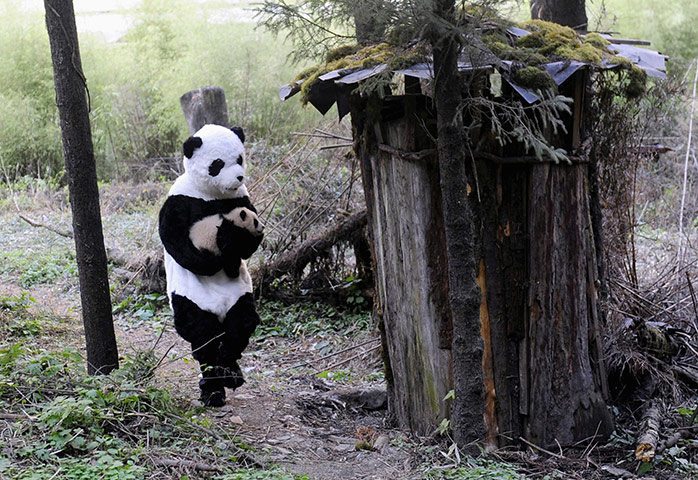
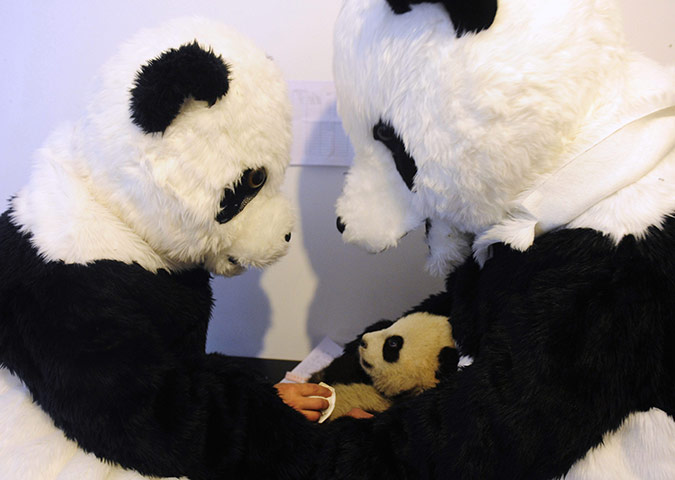
More Panda news: teaching pandas how to be whilst dressed as pandas

When I posted the other panda article this morning: Pandas: possibly the most complex breeding system ever - tricking moms into caring for twins kickstarts reintro program I did not expect Richard M. to post this album of how Chinese conservationists are teaching young pandas to survive in the wild...Who am I to judge, drastic times call for drastic measures and conservation needs thinking outside of the box. At the very least, its great for a Monday smile - MA

For more pictures go to the guardian.co.uk


Pandas: possibly the most complex breeding system ever - tricking moms into caring for twins kickstarts reintro program

Click on the BBC link or the to see some good footage from the program "Panda Makers"


From the BBC.co.uk
Giant panda breeding breakthrough in China
By ELLA DAVIES
A critical breakthrough has been made in efforts to save the giant panda, one that could kick-start attempts to reintroduce the animals to the wild.

Conservationists say they have perfected the difficult task of reproducing pandas, having reached their target of successfully raising 300 of the bears in captivity. The breakthrough, mainly by scientists at the Chengdu Panda Breeding Research Centre, China, should lead to the first panda being reintroduced into the wild within 15 years. The revelation comes after documentary makers were given unprecedented access to the research centre to film captive breeding activity over two years.

Just a few thousand wild pandas survive at best, and the species is classified as being Endangered. In a bid to protect the animal, scientists have attempted to breed captive pandas since the first such cub was born in 1963. But many obstacles stood in the way of achieving a stable captive panda population.

The first was the very short window of opportunity provided in the panda's natural reproductive cycle. Female pandas are only on heat for 72 hours a year, and can only actually become pregnant during a 12 to 24 hour window during this time. In order to correctly interpret the bears' breeding potential, caring for captive female pandas required close observation including daily urine samples to monitor hormone levels. Understanding the giant panda's natural patterns of reproduction was only the start of the challenge.

'Turned off'
Despite conservationists' best efforts to encourage mating, pandas were seemingly "turned off" by captivity. In Chengdu, the world's most successful panda breeding centre, researchers attempted to entice male pandas with the scent of suitable females on bamboo poles, mimicking wild scent-marking behaviour. Rare interactions between aroused pairs often ended in disappointment, however.

Male pandas have proportionately short penises meaning pairs must adopt a very exact position in order to mate. During their observations, researchers found that pandas demonstrated poor knowledge of this position. Researchers then employed methods ranging from sex education videos to viagra in order to stimulate natural behaviour. Most techniques failed, and many encounters between pandas turned aggressive and violent.

Scientists therefore had to rely upon artificial insemination, but their efforts were again subject to the pandas' peculiar reproductive cycle. Panda pregnancies can last anything from 11 weeks to 11 months and can remain undetected until shortly before birth. So researchers had to pay close attention to pandas following insemination procedures, ready to perform a crucial intervention whenever cubs were born.

Crucial intervention
The boon in panda numbers at the Chengdu centre has largely been attributed to the innovative "twin swapping" technique. More than half of pandas give birth to two cubs at a time but only care for one. It is assumed that as pandas cannot store fat, they lack the milk or energy to care for more than one cub at a time. Whenever a cub was abandoned after birth, keepers at the Chengdu centre swiftly moved it to an incubator. Panda mothers were tricked into caring for twins as staff stealthily rotated them between their mother and the incubators.

The survival rate of cubs rose to 98% through this combination of maternal care and artificial support. By the end of last year, the Chengdu Panda Breeding Research Centre alone had raised 168 cubs since its inception in 1987.

Hopes of reintroduction
Conservationists now believe captive numbers are strong enough to seriously consider wild reintroduction programmes. Using the profits made from loaning their pandas to zoos worldwide, pioneers have purchased precious panda habitat in the Sichuan mountains, southwestern China. With the goal of 300 captive pandas achieved, construction has started on the country's first dedicated panda reintroduction facility.

Panda Makers is broadcast on BBC TWO at 2000 GMT, Tuesday December 7th.

Sunday, November 21, 2010

Movie trailer: Born to be Wild

If I put aside my reservations about re-introduction and its role in conservation and the issues of zoonotic disease transmission, then this movie looks lovely. (Thanks to Tracy K for the link!) -MA


Friday, August 27, 2010

Best Practice Guidelines for Great Ape Tourism

From the IUCN/SSC Primate Specialist Group:
We are pleased to announce that the next issue (the fifth) of the series “Best Practice Guidelines” for great ape conservation – Series Editor Liz Williamson, the PSG coordinator for the Section on Great Apes (SGA) – is being printed, and is now available, open access, in pdf on the Primate Specialist Group website.

“Best Practice Guidelines for Great Ape Tourism” by Elizabeth J. Macfie and Elizabeth A. Williamson, number 38 of IUCN’s series “Occasional Papers of the IUCN Species Survival Commission”. 78pp. 2010.

Our sincere congratulations to Liz Macfie and Liz Williamson, and to those who contributed -Marc Ancrenaz, Chloe Cipolletta, Debby Cox, Christina Ellis, David Greer, Chloe Hodgkinson, Anne Russon, and Ian Singleton, amongst many others.

Many organizations provided support for drawing up, editing and printing these guidelines, but we acknowledge here especially the US Fish and Wildlife Service – Great Ape Conservation Fund, and the Arcus Foundation and Conservation International besides.

Although specifically for great ape tourism, the ideas, principles, and recommendations provided in this document are pertinent and valid for all research, monitoring and tourism that involves proximity to primates in the wild. Those involved in habituating and following wild primate groups for research would do well to investigate the advice provided.
Best Practice Guidelines for Apes – IUCN/SSC Primate Specialist Group.
Series Editor E. A. Williamson.

Morgan, D. and Sanz, C. 2007. Best Practice Guidelines for Reducing the Impact of Commercial Logging on Great Apes in Western Equatorial Africa. Occasional Paper of the IUCN Species Survival Commission (34): 32pp. Series editor E. A. Williamson. IUCN/SSC Primate Specialist Group, Gland, Switzerland.

Morgan, D. and Sanz, C. 2007. Lignes directrices pour de meilleures pratiques en matière de réduction de l’impact de l’exploitation forestière commerciale sur les grands singes en Afrique centrale. Occasional Paper of the IUCN Species Survival Commission (34): 40pp. Série éditée par E. A. Williamson. Groupe de spécialistes des primates de la CSE de l’Union mondiale pour la nature, Gland, Suisse.

Beck, B., Walkup, K., Rodrigues, M., Unwin, S., Travis, D. and Stoinski, T. 2007. Best Practice Guidelines for the Re-introduction of Great Apes. Occasional Paper of the IUCN Species Survival Commission (35): 48pp. Series editor E. A. Williamson. IUCN/SSC Primate Specialist Group, Gland, Switzerland.

Beck, B., Walkup, K., Rodrigues, M., Unwin, S., Travis, D. and Stoinski, T. 2007. Lignes directrices pour de meilleures pratiques en matière de réintroduction des grands singes. Occasional Paper of the IUCN Species Survival Commission (35): 51pp. Série éditée par E. A. Williamson. Groupe de spécialistes des primates de la CSE de l’Union mondiale pour la nature, Gland, Suisse.

Beck, B., Walkup, K., Rodrigues, M., Unwin, S., Travis, D. and Stoinski, T. 2009. Panduan Re-introduksi Kera Besar. Terbitan tidak Berkala IUCN Species Survival Commission (35): 56pp. Editor Seri. E. A. Williamson. IUCN/SSC Primate Specialist Group, Gland, Switzerland. Diterjermahkan oleh Purwo Kuncoro, BOS Canada.

Kühl, H., Maisels, F., Ancrenaz, M. and Williamson, E. A. 2008. Best Practice Guidelines for Surveys and Monitoring of Great Ape Populations. Occasional Paper of the IUCN Species Survival Commission (36): 28pp. Series editor E. A. Williamson. IUCN/SSC Primate Specialist Group, Gland, Switzerland.

Kühl, H., Maisels, F., Ancrenaz, M. and Williamson, E. A. 2009. Lignes directrices pour de meilleures pratiques en matière d’inventaire et de suivi des populations de grands singes. Document occasionnel de la Commission de la sauvegarde des espèces de l’UICN (36): 32pp. Série éditée par E. A. Williamson. Groupe de specialists de primates de la CSE/UICN Gland, Suisse.

Hockings, K. and Humle, T. 2009. Best Practice Guidelines for the Prevention and Mitigation of Conflict Between Humans and Great Apes. Occasional Paper of the IUCN Species Survival Commission (37): 41pp. Series editor E. A. Williamson. IUCN/SSC Primate Specialist Group, Gland, Switzerland.

Hockings, K. and Humle, T. 2009. Lignes directrices pour de meilleures pratiques em matière de prevention et d’attenuation des conflits entre humains et grands singes. Document occasionnel de la Commission de la sauvegarde des espèces de l’UICN (37): 52pp. Série éditée par E. A. Williamson. Groupe de specialists de primates de la CSE/UICN, Gland, Suisse.

Hockings, K. and Humle, T. 2009. Panduan Pencegahan dan Mitigasi Konflik antara Manusia dan Kera Besar. Occasional Paper of the IUCN Species Survival Commission (37): 72pp. Series editor E. A. Williamson. IUCN/SSC Primate Specialist Group, Gland, Switzerland.


Macfie, E. J. and Williamson, E. A. 2010. Best Practice Guidelines for Great Ape Tourism. Occasional Paper of the IUCN Species Survival Commission (38): 78pp. Series editor E. A. Williamson. IUCN/SSC Primate Specialist Group, Gland, Switzerland.

Monday, July 12, 2010

Unprecedented Turtle Egg Move Underway

From Discovery News
by JENNIFER VIEGAS
Just how do you relocate some 70,000 sea turtle eggs endangered by the Gulf spill? Very, very carefully.

THE GIST

* Preparations have begun to move sea turtle eggs from Northwest Florida to the state's central-east coast.
* It's hoped the unprecedented relocation will save sea turtle hatchlings from the Gulf oil spill.
* Eggs will be gathered by hand and transported in a temperature-controlled, air-cushioned FedEx vehicle.

Preparations are underway to relocate some 70,000 sea turtle eggs from nests on Northwest Florida beaches to the central-east coast of the sunshine state -- their destination: a temperature-controlled warehouse at Florida's Kennedy Space Center.

The egg relocation, described by authorities as "unprecedented," is meant to save the sea turtles, once they hatch, from currents in Northwest Florida that would likely carry the young turtles right to the Gulf spill's floating oil.

Scientists involved in the massive effort explain desperate times call for desperate measures.

"If we left the hatchlings to fend for themselves, they would face a certain death," said Robin Trindell, sea turtle management coordinator for the Florida Fish and Wildlife Conservation Commission (FWC), which is handling the effort in coordination with the U.S. Fish and Wildlife Service and the National Oceanic and Atmospheric Administration, as well as FedEx, which is handling the transportation.

"Relocating nests at any time is also very risky and would be considered only during an unprecedented disaster such as the Deepwater Horizon incident," Trindell told Discovery News.

Beginning in mid July, Trindell and her colleagues will start the painstaking work of carefully digging out an estimated 700 sea turtle nests by hand, with each nest containing approximately 100-120 eggs. The eggs will then be placed in special Styrofoam coolers containing dampened sand from the nests.

The coolers will go into what FedEx calls "Custom Critical air-ride, temperature-controlled vehicles." Those air-cushioned vehicles will transport the eggs some 500 miles east to a temperature-controlled warehouse at Kennedy Space Center near Cape Canaveral. There, researchers will monitor the eggs until they hatch. Once the hatchlings emerge from their eggs, they will be released on a nearby central-east coast Florida beach.

Researchers emphasized that the eggs, before hatching, will not be moved until they have incubated for at least 49 days at their original Northwest Florida nest sites.

Patricia Behnke of the FWC explained that it's believed "magnetic signals, tied to location, come into the sea turtle eggs when they are in the nest." These signals may remain with the sea turtles for decades, guiding females back to their place of origin, where they too may lay their eggs.

It's also possible that the adult sea turtles will return to the east coast of Florida to nest.

"Normally scientists like to have a lot of control tests to better predict outcomes, but they do not have that time luxury now," Behnke said. "The undertaking is risky, however it's felt that the risk of doing nothing and losing the hatchlings is even higher. Such extreme measures would never be undertaken under most other circumstances."

She pointed out that many Florida sea turtles, along with other animals, such as manatees, have already perished, due to a deadly winter cold snap that hit the state earlier this year. The impact of those deaths also remains unknown. Even turtles born under normal conditions face tough odds.

"Fifty percent of the hatchlings, which are just 1 to 2 inches long, don't make it anyway, so we are afraid of losing the entire colony of sea turtles from that region," said Behnke.

Nevertheless, Trindell, Behnke and their colleagues "remain hopeful." Jeff Trandahl, executive director of the National Fish and Wildlife Foundation, which is aiding the relocation efforts, is also hopeful that Florida's northern population of sea turtles can be saved.

"In light of the imminent threat to sea turtles, we felt it was important to help move this extraordinary project forward," Trandahl said.

He added, "Given our strong relationship with FedEx and our long-standing relationship with the federal agencies, we were able to move quickly to develop an effective plan. We'll continue to work with all parties so that this relocation offers the best hope for sea turtles' survival."

The sea turtle egg relocation project is expected to continue through October.

Monday, June 14, 2010

The majority of rehabilitated oiled birds survive. 1% survival rate debunked.

From the International Bird Rescue Research Center via the Association of Zoos and Aquariums facebook page
by JAY HOLCOMB, IBRRC's Executive Director:

Hi everyone. We are very busy here in Louisiana at the gulf oil spill, but doing well. We are washing the very oiled pelicans and other birds that you have seen on TV and most of them are doing very well. More on that aspect of our work later. I want to address a few issues that have come up in the media recently. First of all, let me say that this is the time during an oil spill that the skeptics come out. These “experts” are quoted and their opinions, no matter how ill researched or biased they are, become controversial and newsworthy. I spent much time during the Exxon Valdez oil spill, 21 years ago, and in every other oil spill since then addressing them and I now just consider this a part of the politics of an oil spill.

For those who are concerned about the survival rates of oiled birds, based on recent news coverage (or the outdated studies they cite), I’d like to address the topic head-on. I am writing from personal experience, as a veteran of more than 200 oil spills, and as a representative of one of the foremost oiled bird rescue and research organizations in the world. IBRRC and Tri-State Bird Rescue--who is leading the Gulf response effort--host a bi-annual conference on the Effects of Oil on Wildlife, and, as such, are well versed in the latest science. The “experts” that I am referring to rarely, if ever, attend this global forum for oiled wildlife professionals, nor do they attempt to learn about advancements and successes in oiled wildlife rehabilitation.

How well do birds survive in the wild when they have been oiled and rehabilitated?

Recent studies (a few of which are listed below) indicate that birds can be successfully rehabilitated and returned to the wild, where many survive for years and breed.

The papers cited by opponents of oiled bird rehabilitation—like Oregon’s biologist Brian Sharp’s infamous 1996 report "Post Release Survival of Oiled, Cleaned Seabirds in North America" Ibis. Vol. 138:222-228—tend to rely on anecdotal band returns (meaning there is no daily tracking method for individuals released and no control groups observed.) These surveys are misleading because they fail to consider some important variables: the protocols used to care for the birds in question, the experience of the organization caring for the oiled birds and basic things like how the bird’s health and water proofing were assessed prior to release.

Simply put, one would not lump together the survival rates of human patients receiving emergency trauma care between two hospitals like Mogadishu's Madina Hospital and New York's Bellevue Hospital. Yet surveys like Sharp's do just that, they lump together released birds treated at various centers, under different conditions, with different resources and experience levels.

Studies support oiled, properly treated sea birds

A growing number of studies using radio telemetry, satellite tracking and long-term breeding colony observations are more accurately illustrating the post oiling survival of sea birds:

Wolfaardt, A.C. and D.C. Nel. 2003, Breeding Productivity and Annual cycle of Rehabilitated African Penguin Following Oiling. Rehabilitation of oiled African Penguins: A Conservation Success Story.

Newman, S.H., Golightly, R.T., H.R. Carter, E.N. Craig, and J.K. Mazet 2001, Post-Release Survival of Common Murres (Uria aalge) Following the Stuyvesant Oil Spill.

Golightly. R.T., S.H. Newman, E.N. Craig, H.R. Carter and J.K. Mazet. 2002, Survival and Behavior of Western Gulls Following Exposure to Oil and Rehabilitation.

Anderson, D.W., F. Gress, and D.M. Fry 1996, Survival and dispersal of oiled Brown Pelicans after rehabilitation and release.

These studies indicate that many seabirds do survive the oiling and rehabilitation process successfully returning to their wild condition. And in some cases (when birds are located and observed in breeding colonies) have been shown to breed successfully for many years following their oiling, rehabilitation and release. These studies show that a bird’s survival is often based on how a specific species can cope with the stress of the entire process from oiling to rehabilitation, and that their overall survivorship across species is far greater than Sharp’s assertions. As survivorship may be correlated to individual species it is irresponsible to draw conclusions of survivability from one species to another, rather, in depth studies must be conducted for each species considered if we are to begin to answer this question with any measure of reliability.

Pelicans handle stress better than most birds

In regards to pelicans specifically, IBRRC works year-round with brown pelicans at our two rescue centers in California, treating, on average, 500 injured, sick and oiled pelicans every year. Our release rate on these animals is 80% or higher for general rehabilitation. Pelicans, like penguins, can tolerate the stress of rehabilitation much better than birds like loons and murres for example. All of our birds (including pelicans) are federally tagged upon release. Sightings and band recoveries indicate that a high percentage of them survive. One recent example was a brown pelican, oiled and rehabilitated, during the American Trader spill in 1990 in Southern California. This bird was sighted still alive in Newport Beach earlier this year, 20 years on, and is considered one of the oldest brown pelicans ever recorded.

While this is just one bird it is a good example of the type of band returns we see from oiled and non-oiled pelicans. Of course it’s important to also remember that it is these individual birds that make up populations. At the ‘New Carissa’ oil spill in Oregon in 1999, the snowy plover population in Coos Bay was 30-45 birds. We captured 31 and rehabilitated all of them. They are an intensely studied bird and each one is considered valuable to the species. Studies of the birds showed that there was no difference in the mortality of these previously oiled birds to those never oiled.

What gives IBRRC, and Tri-State Bird Rescue, the best chance to make a difference to threatened species during oil spills is the year-round dedication to saving individual lives that has been at the heart of our mission for nearly 40 years. This approach has helped us to develop teams of trained animal care and oiled wildlife professionals that understand the intricacies of this specific field of rehabilitation and continually strive to improve our techniques as well as build a more comprehensive scientific picture of our work over time.

Tuesday, June 8, 2010

More orphan eastern lowland gorillas being airlifted to sanctuary by UN

Image of ELG orphans at sanctuary from the gorilla doctors blog on wildlife direct

from UNEP.org
New Gorilla Airlift Sparks Calls for Stronger Controls on Natural Resource Smuggling in Greater Congo Basin & Beyond

UN Peacekeepers in DR Congo are planning a new gorilla rescue airlift next month, in what may be one of the first operations conducted under their new mandate. As of 1 July, the UN Peacekeeping Mission in DR Congo (MONUC) will convert to a stabilization mission, as per a recent decision by the UN Security Council.

The rescue is being carried out amid concerns for the future of the endangered species and recommendations by the United Nations Environment Programme (UNEP) and INTERPOL to strengthen the capacity of the UN Mission and law enforcement bodies to combat cross-border environmental crime in the Greater Congo Basin and gorilla range states.

The operation, planned for mid July, is the second to be conducted by UN forces in DR Congo as part of a wider effort to combat the illegal cross-border trade in baby gorillas, which has intensified in recent years with the proliferation of armed groups in the region.

The first rescue mission was conducted by the peacekeeping mission (MONUC) on 27 May, when four eastern lowland baby gorillas, seized from poachers, were flown to safety by UN helicopters to a sanctuary in Kasughu in North Kivu, DRC. The second airlift will involve transporting another six babies to the sanctuary. Together, the orphaned gorillas are hoped to form a new "family" of ten. The ultimate objective is to rehabilitate the gorillas and to reintroduce them back in their natural environment.

Last Stand for the Gorilla

According to the UNEP report, entitled "The Last Stand for the Gorilla", unless urgent action is taken to strengthen the enforcement of environmental law and counter poaching, endangered gorillas may largely disappear from the Greater Congo Basin, in the next fifteen years.

Previous projections by the UN Environment Programme (UNEP), made in 2002, suggested that only 10 per cent of the original ranges would remain by 2030.

These estimates now appear too optimistic, given the intensification of pressures including illegal logging, mining, charcoal production and increased demand for bushmeat, of which an increasing proportion is ape meat.

The Greater Congo Basin, including the Virunga mountain range, is considered one of the world's most resource-rich but troubled regions.

Silent Victim

In the context of recent wars and continued unrest, the environment remains the silent victim of conflict in the region.

Natural resources are systemically exploited or illegally-harvested. Minerals such as diamonds, gold, cassiterite and coltan - used in laptops and mobile phones - as well as timber, end up crossing borders, passing through middle men and companies before being shipped onto countries in Asia, the European Union and the Gulf.

With militias controlling border crossings, profits made from such illegal trade - worth several hundred million US dollars annually - are central to fuelling the conflict and the commission of serious violations of human rights and the environment. The report estimates that militias make between $14 million and $50 million on road and border taxes alone.

In March, UNEP called on the international community to expand MONUC's capacity to combat such violations and halt environmental crime by strengthening the Mission's mandate to encompass security and control of border crossings - with regard to the export of illegally exploited natural resources financing the conflict.

Crucial to the task is transboundary collaboration with national and international law enforcement agencies and the mobilization of resources to support law enforcement, including investigations of complicit companies in recipient countries

Success Story

Within the Virunga mountain range - which includes Rwanda, DRC and Uganda - especially in Rwanda's Volcanoes Park, the population of the critically endangered mountain gorillas has increased by 17% over the past fifteen years, thanks to intensified patrolling and conservation efforts carried out by the government and supported by international conservation groups and UN agencies.

The total number of mountain gorillas worldwide has now reached an estimated 700 individuals.

According to Juan Carlos Bonilla, of the Dian Fossey Gorilla Fund International., "The only type of gorilla that is known to be increasing is the Mountain Gorilla found in areas governed by intense transboundary conservation."

The success of the Virunga experience is attributable to intensified law enforcement and the implementation of wealth-sharing agreements between range states, including the sharing of revenues from ecotourism and gorilla-related activities.

A Future for the Gorillas and the People

The fate of the great apes is closely tied to the fate of humans. Gorillas inhabit some of the last remaining tropical rainforests - ecosystems that not only assist in supplying water, food and medicine but also play a global role in carbon sequestration, thus combating climate change.

Speaking in Kigali, the capital of the 2010 World Environment Day celebrations, Achim Steiner, UN Under-Secretary General and UNEP Executive Director said,

"The fragile recovery of mountain gorilla populations in the Virunga range and Volcanoes National Park is evidence that success is possible. But the overall resources and regulatory frameworks available for the enforcement of overall cross-boundary conservation need to be stepped up."

He added, "Violations of international environmental law during armed conflicts is a serious concern in the Greater Congo and beyond. Species and ecosystems, already under stress, can become seriously over-exploited for a variety of reasons. The first responsibility of the UN is towards the people and communities affected. However, sustaining the peace will in part depend on ensuring a healthy natural resource base given its links to livelihoods, combating poverty and role in building stable societies".

Combating Environmental Crime

Christian Nelleman, lead author of the UNEP report said, "Enforcement has worked in saving the mountain gorillas in the Virungas for now. But without adequate law enforcement not only the Eastern Lowland gorillas, but also elephants and rhinos are in danger. "

He pointed out "We are observing no indication that the poaching and illegal looting of natural resources is ending. In fact, we are now observing a dramatic rise in poaching across large parts of Africa and Asia including for rhino horn, elephant ivory and other nature-based products. Strengthened law enforcement and especially support to INTERPOL is urgently needed to address this transnational crime."

David Higgins, Manager of INTERPOL's Environmental Crime Programme, said "INTERPOL can only be effective in its efforts to combat environmental crime if it has adequate international support; currently this support is growing but for some species it may be too late. Ultimately it is the responsibility of each individual country to enforce their laws and INTERPOL is there to support them in this."

"What criminals are doing to the African gorillas should not be tolerated by the global community, they are pushing a fragile population and species closer to the edge of extinction and it is everybody's responsibility to stop them before it is too late," added Higgins.

Natural Resources: the Wealth of the Poor

Gorillas live in eleven countries in Africa with some of the highest population densities, lowest literacy rates and standards of living and continued armed conflict. The challenges that such intense poverty and insecurity bring to wildlife conservation can be overwhelming. Poverty reduction, healthcare and promotion of conservation education are irrevocably linked to environmental protection.

Steiner said, "Tackling poverty, by minimizing the theft of natural resources and maintaining the multi-billion ecosystem services of the tropical forests, is central to efforts that aim at reversing the loss of economically and culturally-important wildlife."

A Way Forward

Securing the necessary funds to support law enforcement and trans-boundary collaboration on environmental crime during time of conflict is a responsibility not only for all countries in the Greater Congo basin but for the international community at large.

As MONUC's peacekeeping mandate comes to an end with the withdrawal of up to 2000 troops by the end of June, it is hoped measures to enforce implementation of environmental law will be stepped up in the region, in support of stabilization and the sustainability of peace.

Conservation can be a driver of peace and security. Any peacebuilding effort fundamentally depends on the natural resource base and its governance structure. Their damage and destruction can undermine livelihoods, act as a driver of poverty and forced migration, and trigger further conflict.

Notes to Editors

  • In Rwanda, approximately 7% of the gorilla ecotourism revenue is invested in community projects- ensuring that local communities are active partners in conservation.

  • 'The report 'The Last Stand of the Gorilla - Environmental Crime and Conflict in the Congo Basin' can be accessed at www.unep.org or at http://www.grida.no/publications/rr/gorilla, including high and low resolution graphics for free use in publications including in French for the first time.

  • The Last Stand of the Gorilla - Environmental Crime and Conflict in the Congo Basin' was financed by the Government of France and the Great Ape Survival Partnership (GRASP) established by UNEP and UNESCO. The report is released by UNEP and INTERPOL and for the first time in French on June 4th, 2010 In Kigali, Rwanda, just before World Environment Day, For more information on the Great Ape Survival Partnership (GRASP) please visit www.unep.org/grasp

  • The UN force in DR Congo, known as MONUC, is the world's largest peacekeeping operation with more than 20,000 personnel. The Security Council agreed to rename it the UN Organization Stabilization Mission in DRC, or MONUSCO, from 1 July. For more information on the UN Mission in DR Congo, please visit www.un.org/en/peacekeeping/missions/monuc/

  • 2010 is the UN International Year of Biodiversity

  • For more information on the Dian Fossey Gorilla Fund International., please visit www.gorillafund.org/

For more information, please contact:

Nick Nuttall, UNEP Spokesperson, Cel.: + 254 733 632755 / +41 79 596 57 37, E-mail: nick.nuttall@unep.org

Shereen Zorba, Head, UNEP Newsdesk, Cel: +254 713601259 , E-mail: shereen.zorba@unep.org

Tuesday, June 1, 2010

Success! FIRST TIME EVER!!! translocated tiger gives birth in the wild

From WWF via the WWF Canada facebook page
India tigress gives new hope for conservation after first-time births

A few years ago, India’s Panna Tiger Reserve made global headlines when all of its tigers were lost to poachers.

Now Panna is once again in the news, but this time for a very different reason: Three tiger cubs were photographed this spring with their mother, marking the very first time that a translocated tiger has given birth in the wild. “This is a momentous occasion for tiger conservation in India and indeed the world,” said Diwakar Sharma of WWF India “The new family is a positive sign that tigers are returning in Panna, but our work here is far from over until the cubs reach safely into adulthood.”

In less than a decade, poachers had systematically wiped out every single tiger in Panna Tiger Reserve, which boasted 21 tigers in 1998. By 2009 reports that Panna had lost all its tigers was making the news and in June last year, the state government of Madhya Pradesh finally admitted there were no tigers left in the reserve. This raised international concern and galvanized national action. The Indian government immediately put together protective and remedial actions to make Panna a safe haven for tigers once more.

Last year, a male tiger from Pench and two females from Bandhavgarh and Kanha Tiger Reserves were translocated to Panna under the expertise of the Wildlife Institute of India. WWF lent technical support to these historic efforts through state-of-the-art radio collars along with remote surveillance systems to monitor the translocated tigers.

The process has not been without incident. A female tiger frequently left the reserve until she marked her territory in the core habitat of the protected area. The lone male travelled over 190 miles until it was captured and brought back to the reserve on December 25, 2009.

Since 2004, WWF has been committed to the long-term support of Panna Tiger Reserve and has worked with the field staff and local communities to strengthen tiger conservation efforts. We are helping educate children from the nomadic Pardi hunting tribe that live around the reserve to ensure that future generations won’t have to rely on illegal activities to earn a livelihood. Pardis are traditional hunters that illegal wildlife traders often use to poach tigers.

“The birth of these cubs shows us that the key rules remain unchanged—first that tigers need undisturbed habitat with enough prey and second, they have to be protected against poaching,” said Samir Sinha, head of TRAFFIC-India. “With enough protection and the continued commitment of local communities and national bodies, tigers can bounce back even from small populations.”

The success in Panna is vital to tiger conservation as scientists now have initial indications that translocations can work if there is enough prey and protection on the ground. With wild tiger numbers as lows as 3,200, could this be a viable solution to repopulating tigerlands throughout Asia? “What we learned from the translocation in India will help inform bold new strategies for tigers in other countries like Cambodia, Lao and Vietnam where wild populations are in peril,” said Dr Barney Long, WWF’s Asian species expert. “The three cubs in Panna are a powerful symbol of what can be done to ensure a future for wild tigers.”

Wednesday, May 19, 2010

Reintroduced gorilla remembers human caretaker 5 years later...

I know, this goes against a lot of what we (think we) know about conservation: reintroduced animals don't have the skill set to survive in the wild, human-ape contact is dangerous - especially for disease transmission, spending money on reintroduction is the worst use of conservation funds, and so forth... But people thinking out of the box and doing "crazy" things has often been a harbinger of a lot of human progress and innovation...The fact is, they have reintroduced gorillas into the wild, after some false starts, they seem to have figured out how to do safely (and not affect wild ape populations), these gorillas, breed, feed and survive on their own in a nature reserve...it is hard not to be impressed with the John Aspinall Foundation's efforts, perseverance and success! - MA


for more info:
http://www.berggorilla.de/english/gjournal/texte/34lefini.html
http://www.aspinallfoundation.org/aspinall/news/view/197

From youtube:
In the African jungle, conservationist Damian Aspinall searches for Kwibi, a lowland gorilla he hasn't seen for 5 years. Kwibi grew up with Damian at his Howletts Wild Animal Park in England. When he was five, he was released into the forests of Gabon, West Africa as part of conservation programme to re-introduce gorillas back into the wild. Now Kwibi's 10 years old, much bigger and stronger.

Sunday, January 3, 2010

BBC Nature lists off the the wildlife discoveries of 2009


Noticeably absent from this list is the work from the Goualougo Triangle which showed this year that chimpanzees use complex brush tools to obtain termites from ground nests and tool kits to extract honey from bee hives! I am sure 2010 will be full of more exciting discoveries and lets hope more good news then bad. MA.

from BBC Nature (Please visit the BBC Nature website to see great video clips of some of the articles described below)
Animal magic: the wildlife discoveries of 2009
By Matt Walker 

From a new species of giant rat to ants that took over the world, 2009 was a good year for new animal discoveries.
It was a year for all creatures great, with the mating ritual of the humpback whale filmed for the first time and the unearthing of a colossal sea monster.
And for the small, with one of the world's tiniest parrots caught on camera, as was a polar bear cub hitching a ride on its mother's back.
It was also a year where many species headed ever closer to extinction.
Nature of course is red in tooth and claw, and there were some illuminating insights into how death becomes every animal.
For start, it emerged that there is a generic 'smell of death' to which all animals may respond.
We watched eagles hunting reindeer calves, and two stags locked in mortal combat, while we learnt how intelligent primates can struggle with grief.
Orang utans were recorded cannibalising their own already deceased young, perhaps in response to the emotional turmoil that apes go through when they lose an infant.
Grieving monkeys struggling with the loss of their newborn offspring were also recorded drinking their own milk.
On a more heartening note, we gained a number of insights into primate family life including: film of a family of spectral tarsiers, a battle between two vast baboon troops, grandmother monkeys seen stepping in to care for their grandchildren, a behaviour not recorded before, and gorilla mums clapping to attention badly behaved younger gorillas and male silverbacks.
Other family moments recorded this year were three cheetah brothers filmed cooperating to bring down a giant bird, and superpods of killer whales gathering into 'social clubs'. and the discovery that lions form prides to ensure they win turf wars with their neighbours.
The ultimate family story of 2009, and perhaps of all time, was the news that a megacolony of ants has taken over the world.
Without sex, there cannot be family.
Filmmakers from the BBC natural history series Life filmed the 'humpback heat run' in its entirety for the first time.
They also filmed a marvellous hummingbird display, where a male spatuletail hummingbird put on an extraordinary show in a bid to convince a female to mate with him, and the ghostly yet entrancing dance of two mating seadragons.
Downright bizarre discoveries included the undersea crab that eats trees, a coral that eats jellyfish, a squirrel seen savaging a fruit bat and a host of weird creatures found in the lost world of an extinct volcano crater, including a giant rat, one of the world's largest rat species discovered for the first time by scientists.
Professional and amateur palaentologists were pleasantly shocked by the unearthing of a colossal sea monster from rocky cliffs on the south coast of the UK, a place known as the 'Jurassic Coast.'
The ferocious sea monster, which terrorised oceans 150 million years ago, may yet turn out to be the largest marine pliosaur yet discovered.
Other discoveries about extinct creatures included the world's oldest dinosaur burrow, and the revelation that starvation may have wiped out the giant deer, the largest deer species to have lived.
However, despite the wondrous and celebratory tone of many of the new things we learnt about the natural world in 2009, the year also saw its share of less optimistic stories, those that act as a reminder of the perilous state of many species and the efforts of conservationists to preserve them.
Conservation groups uncovered evidence of a significant trade in big cat skins in China, and the scale of gorilla poaching in Africa was exposed.
Both Europe's largest mammal, the bison, and the world's largest cat, the amur tiger, were found to be on the 'genetic brink' with the genetic health of their remaining populations falling.
Reindeer herds were found to be in global decline and it was realised that a giant fish verges on extinction, with a three-year quest to find the giant Chinese paddlefish in the Yangtze river failing to sight or catch a single individual.
In a bid to help some species, safe havens were created for rare primates while a new population of one of the world's rarest crocodiles was returned to the wild.
But despite the extinction crisis threatening biodiversity across the planet, 2009 showed that animals everywhere still have a capacity to surprise and awe us.
Researchers revealed how they had witnessed the largest ever herd of Mongolian gazelles, where a quarter of a million Mongolian gazelles gathered on the country's steppes, one of the world's last great wildernesses.
Cameramen captured the first film of a giant stingray, while the rare Cross River gorilla was caught on camera, as was an elusive golden cat. A 'lost seabird' returned to the ocean while the world became excited by a new species of giant meat-eating plant discovered in the highlands of the central Philippines.
And last, but not least, after hundreds of years of studying them, scientists only just worked out that the cephalopods can hear you.

Wednesday, December 23, 2009

Gorilla Reintroduction


Gorillas: still wild at heart
from the Independant.co.uk
A pioneering project to reintroduce traumatised gorillas to their natural habitat is bringing extraordinary success. Chris Green reports on how British conservationists are achieving what few thought was possible

The two terrified baby gorillas, both female, were brought to the Lesio-Louna reserve in the Congo Basin shortly after witnessing the brutal slaughter of the rest of their family group at the hands of some poachers. They were so traumatised by what they had seen that they clung to each other in fear and bared their teeth at anything or anyone who ventured close.

At the time, few thought it possible that the two sisters, named Likendze and Matoko, would ever be successfully reintroduced into the wild. But seven years later they have been, and something even more extraordinary has happened: the two have given birth within three weeks of each other, producing the ninth and tenth babies born to "rewilded" gorillas.

The births are viewed as a milestone for the Aspinall Foundation, a British charity which for more than 20 years has managed two gorilla rescue and rehabilitation projects, one in Congo-Brazzaville and another in the neighbouring state of Gabon, where wild populations were almost hunted to extinction in the 1950s. "We are delighted by the news of the birth of Matoko's infant, and indeed Likendze's before that," said James Osborne, chairman of the Aspinall Foundation.

"A mere seven years ago, the infants were so traumatised that they refused to move. Now they have both given birth. Each birth reinforces the success of the reintroduction, and we now have three viable groups of gorillas within the Lesio-Louna reserve."

The success of the foundation has gone some way towards reversing the slide of the Western Lowland gorilla towards extinction, an assault which has seen their numbers dwindle from millions to as few as 150,000. If the decline continues at its present rate, it is likely that the animal will be extinct by 2020, zoologists say.

The fall in numbers has been fuelled by deforestation, the deadly Ebola virus and the bush meat trade, with gorillas being captured by poachers before being slaughtered and their meat sold at markets in the capital, Brazzaville – a fate which befell Likendze and Matoko's family. The sisters were rescued by local ministry officials and handed to the Aspinall Foundation's reserve.

When the project's director, Amos Courage, saw the condition of the two young gorillas, his first thought was that they would never reach the stage of being able to go back to the wild, because they were too traumatised by what they had experienced.

The two were immediately assigned a dedicated human carer each, to look after them 24 hours a day with the aim of teaching them how to trust again – a process Mr Courage describes as having been "invaluable" to their survival. "They really do respond to devoted surrogate love," he said.

"Without it, they would just die, because they go into a spiral of depression and illness. And when they get into the forest, and see other orphans who have been in a similar situation to them, they join a sort of nursery group – which forces them to interact and gets them to stop thinking about the horror of their capture."

In 2006, The Independent reported the story of Massabi and Koto after those two apes became only the second and third gorillas to produce offspring after being carefully restored to their natural habitat. Three years down the line, the charity has successfully reintroduced to the wild more than 50 gorillas, 43 of which were orphans whose parents had been killed for bush meat. The latest birth is the third in 2009.

The project initially focused on providing shelter and care to young orphans, but over the years it has grown to include rehabilitation, ecosystem management, tourism and local community development.

The Lesio-Louna Gorilla Reserve is 170,000 hectares in size and enclosed by three rivers, which are natural barriers that prevent the animals escaping the reserve and coming into contact with nearby villages. Outside the main site is a nursery area where the young orphans learn the basics of foraging. Each night they are placed in an enclosed dormitory until they start trying to break down the door – a sure sign they are ready to be reintroduced to the wild. "Inevitably they'll meet up with other reintroduced gorillas in the reserve, and there'll be a lot of swapping of females. It's a very fluid situation between the groups, and although we've been doing this for more than 20 years we're still amazed at what happens – it's like a constant soap opera every day, said Mr Courage.

"The fact that the mothers are now raising these babies is fascinating because they're all orphans – we don't know how much experience of mothering they would have remembered from their early memories."

In 2005, an international treaty outlining a strategy to save the world's great apes was signed by the 23 states that have primate populations within their borders, as well as donor countries led by Britain.

The deal, which was billed as the last chance to save humanity's nearest relatives, set the target of significantly slowing the loss of great apes and their habitat by 2010, and securing the future in the wild of all this endangered species by 2015. The birth of Likendzé and Matoko's babies has, in one small way, helped towards this goal.

Tuesday, November 24, 2009

Reintroduced orangs get microchipped


Orang utans get trackers 
Associated Press via straitstimes.com

KUALA LUMPUR - VETERINARIANS have been tracking three orang utans they implanted with tiny transmitters as part of efforts to protect the endangered primates once they reintroduce them to the wild, a Malaysian official said on Monday.

French and Austrian veterinarians worked with the Wildlife Department in eastern Sabah state on Borneo island to implant specially designed coin-sized transmitters in the necks of the orang utans for the first time ever in September, said Dr Senthilvel Nathan, the department's chief field veterinarian.

The orang utans' jungle habitat in Sabah has shrunk over the decades and their numbers have plummeted as loggers cut down the forests and plantation farming encroached.

Fewer than 11,000 orang utans remain in Sabah. Up to eight times that number existed 15 years ago, a French-based conservation group, Hutan, has estimated.

The three orang utans are among about 250 primates that were cared for by humans after being found sick, injured or orphaned when they were young. They now live in a 15 square-mile (40 sq.-kilometre) reserve that can only handle a limited number of them, Dr Senthilvel said.

The transmitters will not be able to show any imminent threat to the orang utans, but they will allow officials to monitor their whereabouts in the wild and find them quickly if necessary