translate

Site update

Since I have been really terrible at updating the blog (but pretty good at keeping up with the facebook blog posts) I've added the widget below so that facebook cross posts to the blog.

You shouldn't need to join facebook but can just click on the links in the widget to access the articles. If you have any problems or comments please mail me at arandjel 'AT' eva.mpg.de.
Showing posts with label central america. Show all posts

Monday, November 28, 2011

Sloths only poop once a week

Potty training at the sloth orphanage from Lucy Cooke on Vimeo.


from vimeo:

filmed at the Aviarios del Caribe sloth sanctuary in Costa Rica which rescues orphaned baby and injured adult sloths, rehabilitates them and releases them back into the wild. It's a teaser for the documentary which follows the drama of life at the sanctuary over the course of a year.

Sloths have a number of biological anomalies and one of these is the fact that as adults they descend from the trees once a week to go to the loo. Orphaned baby sloths have to learn this behaviour if they are to be released into the wild and so the sanctuary staff have created their own potty training routine for the sloths.

For more sloth photos and videos follow the blog pinktreefrog.typepad.com/ or twitter twitter.com/amphib_avenger.

Monday, December 27, 2010

Role Model Alert: Jean Pigozzi

M. Pigozzi is not a scientist or a conservationist, but he is the very definition of bon vivant and I want to be just like him. He holds the world's largest collection of African art and he set up a research station and laboratory in Panama called the "Liquid Jungle Lab" in collaboration with the Smithsonian Tropical Research Institute,(STRI) Woods Hole Oceanographic Institution (WHOI) the Royal Botanical Garden of Madrid and the Autoridad Nacional del Ambiente., so he isn't toally off topic. Below is a great interview with him from charlie rose. - MA

"Part 21st Century renaissance man, part contemporary cave man"

Wednesday, November 3, 2010

Shark eco tourism: multi-layered, economically-viable appraoch to conservation

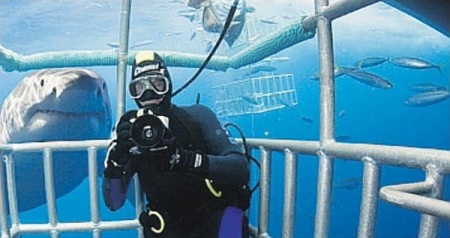
Today Carol R posted some pics of her recent (caged) shark diving experiences in Mexico. My initial reaction was "never me" and "terrifying". Then this article was posted on bush warriors and it reminded me, as with all thing in life, that I need to be open-minded about these things! This is a really inspiring article about how one man, is winning the shark conservation war, with a multi-layered approach involving vigilance, law enforcement and eco-tourism. Thanks to Carol and bush warriors for reminding me to always check my prejudices. - MA
PS: There are LOTS more pictures in the original article on the Bush Warriors website.


Sharks, Tourism, and Conservation: The Truth About Shark Diving
From the Bushwarriors blog

Selling shark tourism as a way to inspire appreciation for these misunderstood predators is one thing, but if the business is done right, it can accomplish much more than an increased affinity for these animals. Of course, changing society’s attitude towards these creatures is imperative to their survival. However, shark tourism operators also have the potential to offer protection to these big fish, in addition to supporting shark research and conservation efforts. And they can make money while they do these things!

The majority of mainstream media attention focuses on instilling a fear of these creatures with sensationalized headlines that include words like “shark attack”, “monster”, and even “Killer Shark Looms Offshore Waiting for Next Victim”. However, the truth of the matter is that every single day we are some 217,000 sharks closer to losing these ocean-balancing organisms forever. Shark diving opportunities provide people with a chance to gain a new understanding for these animals. When done properly, it brings people as close to these predators as one can safely get. Such an experience can change a person’s life and give them motivation to protect these animals.

Imagine the power of these experiences, if they were to educate people on the largely unknown state of the current shark crisis. Beyond education, what if shark tourism clients were provided a way to literally become involved in protecting and conserving sharks, and even assisting with their research? This is entirely possible, and it’s already being done in some places.

Canadian national, Mike Lever, is a veteran in the cage diving business and is one of the largest shark cage diving operators on the Pacific coast of Mexico, but he’s much different than the majority of his competitors. After seeing the devastating effects of overfishing and shark finning, Lever has built his business in a way that provides protection for these amazing creatures, a purpose for the shark tourism industry that is largely overlooked and neglected.

As a large challenge in halting illegal fishing of sharks seems to lie in a lack of enforcement and patrols, Lever has purposefully placed his boats in a position that serves as a warning to anyone who dares to attempt to fish for or fin sharks in the areas where he operates. His and his clients’ mere presence serves as a deterrent to the these activities. The conservationist businessmen established this persona by confronting shark poachers head on.

In 2008, Lever chased a poaching vessel for four hours before he was finally able to convince the captain to return to the location where his crew had set an illegal fishing net. Sadly, Lever found that the boat was already loaded with numerous dead sharks and manta rays. However, when they got back to the site, they found sea turtles, dolphins, and 17 thresher sharks entangled in the poachers’ net.

“That was really distressing. They are gentle giants. It was like pulling over a truck in Africa and finding seven elephants,” commented Lever in his interview with the Vancouver Sun.

Though he expected a strong response from law enforcement, he was shocked to learn the authorities took no action at all and even rejected the claim that there were sharks and mantas onboard the ship. Lever waged war against the sharks’ enemies and made a lot of noise with a widely seen TV show that depicted the event. As expected, Mexico responded promptly and beefed up their patrols… at least until the noise died down.

Lever says the fishermen stayed away from the shark-concentrated area where he conducts his cage diving tours for almost a year. He now flies his own aircraft on random patrols over the area to discourages illegal shark fisheries, while his shark tour boats hold down the fort in the water. He’s setting a classic example of how other shark tourism operators can create a business that serves multiple purposes, aside from making money.

Additionally, this man has a profound respect for the predatory and unpredictable nature of these animals. He says he would never put sharks in a position that would allow them to become vilified, say by providing free-diving shark experiences in which someone could potentially be killed by a shark, for example.

One of the controversies surrounding shark tourism involves chumming, the practice of baiting sharks to an area by tossing blood and raw animal flesh into the waters. Doing this can change shark behavior and potentially create a dangerous situation. Some operators in Hawaii have recently come under scrutiny of the courts for this practice. Lever is opposed to this large-scale chumming, for the safety of his clients, as well as that of the sharks.

Lever has also created two conservation trust funds with the sole purpose of protecting the marine life of the areas where he conducts his tours: Guadalupe Island and Socorro Island. He successfully raised $160,000 through donations from his clients and from his personal income over the last two years, and uses the money to fund American and Mexican researchers studying sharks. Some of the projects the trust funds have supported include putting transmitter tags on the animals so they can be tracked, as well as deploying marine acoustic censors designed to monitor the sharks’ environment.

“You can’t save these animals if you don’t understand them,” Lever explains.

There are other ways for shark tourists to get involved in the conservation of these creatures, as well. Recall the development of a new scientific database that allows researchers to keep tabs on sharks and their populations using photos of their fins. Cage diving clients can easily contribute to this research by snapping photos of the sharks they see, which can then be stored in the new database. Not only would they get to enjoy their direct shark experience, but they can humbly assist with the collection of much-needed data.

Shark-based tourism holds far more potential than one would think. We recently told you about a report from a team of environmental economists that highlighted the success of this industry, as well as the increased value of alive sharks over those killed for their fins or flesh. Furthermore, the business creates jobs and generates revenue for the economy.

The questionable future of these incredible marine predators could benefit greatly from an increase in shark tourism, especially that which also seeks to protect these animals. After all, they could not be in make money without these animals, so why not repay them with these simple gestures? Converting shark fishermen to business in safe and ethical shark tourism could very well reverse the current trends threatening all shark populations with extinction.

To read more about Mike Lever’s story, click here.

Wednesday, August 11, 2010

Someone Built the Perfect Green House in a Perfect Paradise


from GIZMODO.com
by JESUS DIAZ

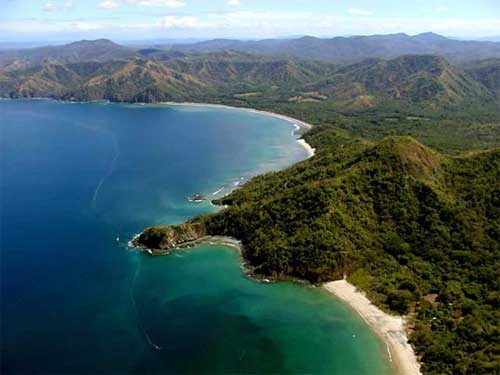
Playa Carate, Peninsula de Osa, Costa Rica. 5% of the world biodiversity is in this place, a perfect paradise on Earth. Somehow, someone built this house in it. Loaded with green technology, it's not only pretty but 100% self-sufficient.

Created by Robles Arquitectos, the house is so isolated from civilization that it has no access to public power cables, sanitation, or water. For the latter, the house uses water from the forest, which also serves as a power source thanks to two low-impact hydroelectric turbines that crank 800kWh. In addition to the generators, the roof can provide up to 10,800kWh of electricity thanks to its panels. Additional panels heat up the water.

Everything else in the house has been designed to be energy efficient and easy to maintain:
All the proposed materials were tested in order to evaluate its behavior on the difficult environment that the Osa peninsula has because of its humidity, high percentage of rain, mould, fungi and its flora and fauna.
The whole house—which is 1 meter over the ground so it's away from its humidity—uses thermal panels, built around a steel structure. The structure itself has been designed following the same principles that make insects energy efficient, to enhance ventilation, reduced sun exposure, and provide with natural illumination for as long as possible during the day.

According to the architects, the house is the "first stage" of the ISEAMI Institute (Institute of sustainability, ecology, art, mind and investigation):
The house is the main area of the institute, therefore, it's design will serve as a multifunctional place in order to host activities as Investigation, meditation, training, Yoga and joy at the terrace located in the first level. At the same time, the Institute director will habit the house on the second level.
This whole institute feels like an excuse to build an amazing house in an amazing place, but whatever. I want to join it as much as I wanted to join those bastards of the Dharma Initiative. [

For TONS more pictures go to the original gizmodo post

Wednesday, June 2, 2010

Conservation protection alleviates poverty nationwide in Costa Rica and Thailand!

A great paper that shows that when protected areas were set up in the 70s and 80s in Costa Rica and Thailand, the surrounding regions had the lowest national average poverty indices. Today these areas have dramatically increased their poverty status (see caveats below). The mechanism by which this is acting is unclear at the moment (some hypotheses below) but its great news for conservation! - MA

Andam KS, Ferraro PJ, Sims KR, Healy A, Holland MB (2010)Protected areas reduced poverty in Costa Rica and Thailand. PNAS. doi: 10.1073/pnas.0914177107 [open access]

Protected areas reduced poverty in Costa Rica and Thailand
Abstract
As global efforts to protect ecosystems expand, the socioeconomic impact of protected areas on neighboring human communities continues to be a source of intense debate. The debate persists because previous studies do not directly measure socioeconomic outcomes and do not use appropriate comparison groups to account for potential confounders. We illustrate an approach using comprehensive national datasets and quasi-experimental matching methods. We estimate impacts of protected area systems on poverty in Costa Rica and Thailand and find that although communities near protected areas are indeed substantially poorer than national averages, an analysis based on comparison with appropriate controls does not support the hypothesis that these differences can be attributed to protected areas. In contrast, the results indicate that the net impact of ecosystem protection was to alleviate poverty.

From the discussion [bold added]:
Despite the differences in Costa Rica's and Thailand's institutions, economic development trajectories, and protected area system histories, we find no evidence that their protected areas systems have exacerbated poverty on average in neighboring communities. In fact, we find the opposite: if anything, protected areas have reduced poverty. This result is remarkable given that previous studies have shown that protected area systems in these two nations have reduced deforestation. These results thus support recent claims, based on an examination of World Bank project evaluations, that biodiversity conservation is not necessarily incompatible with development goals. Our results also suggest that protecting biodiversity can contribute to both environmental sustainability and poverty alleviation, two of the United Nations Millennium Development Goals...

...Our analysis does not elucidate the specific mechanisms through which protected areas may have reduced poverty. We speculate that benefits to local residents have included tourism business opportunities, investments in human and physical capital by national and international agents, and the maintenance of ecosystem services. Research to understand these mechanisms is a clear future priority...

... Costa Rica and Thailand are not representative of all developing nations. They have both experienced rapid macroeconomic growth, have had relatively stable political systems, have made substantial investments in their protected area systems, and have relatively successful eco-tourism sectors. Thus whether our results would hold for other nations is an open question... Only through multination replications and extensions can we obtain a global picture of the impacts of protected areas on human welfare.
Thanks to Dieter L for the link!

Friday, January 8, 2010

"education is often a far better investment than artillery"


from the NYtimes.com, Op-Ed Columnist
The Happiest People
By NICHOLAS D. KRISTOF

Hmmm. You think it’s a coincidence? Costa Rica is one of the very few countries to have abolished its army, and it’s also arguably the happiest nation on earth.

There are several ways of measuring happiness in countries, all inexact, but this pearl of Central America does stunningly well by whatever system is used. For example, the World Database of Happiness, compiled by a Dutch sociologist on the basis of answers to surveys by Gallup and others, lists Costa Rica in the top spot out of 148 nations.

That’s because Costa Ricans, asked to rate their own happiness on a 10-point scale, average 8.5. Denmark is next at 8.3, the United States ranks 20th at 7.4 and Togo and Tanzania bring up the caboose at 2.6.

Scholars also calculate happiness by determining “happy life years.” This figure results from merging average self-reported happiness, as above, with life expectancy. Using this system, Costa Rica again easily tops the list. The United States is 19th, and Zimbabwe comes in last.

A third approach is the “happy planet index,” devised by the New Economics Foundation, a liberal think tank. This combines happiness and longevity but adjusts for environmental impact — such as the carbon that countries spew.

Here again, Costa Rica wins the day, for achieving contentment and longevity in an environmentally sustainable way. The Dominican Republic ranks second, the United States 114th (because of its huge ecological footprint) and Zimbabwe is last.

Maybe Costa Rican contentment has something to do with the chance to explore dazzling beaches on both sides of the country, when one isn’t admiring the sloths in the jungle (sloths truly are slothful, I discovered; they are the tortoises of the trees). Costa Rica has done an unusually good job preserving nature, and it’s surely easier to be happy while basking in sunshine and greenery than while shivering up north and suffering “nature deficit disorder.”

After dragging my 12-year-old daughter through Honduran slums and Nicaraguan villages on this trip, she was delighted to see a Costa Rican beach and stroll through a national park. Among her favorite animals now: iguanas and sloths.

(Note to boss: Maybe we should have a columnist based in Costa Rica?)

What sets Costa Rica apart is its remarkable decision in 1949 to dissolve its armed forces and invest instead in education. Increased schooling created a more stable society, less prone to the conflicts that have raged elsewhere in Central America. Education also boosted the economy, enabling the country to become a major exporter of computer chips and improving English-language skills so as to attract American eco-tourists.

I’m not antimilitary. But the evidence is strong that education is often a far better investment than artillery.

In Costa Rica, rising education levels also fostered impressive gender equality so that it ranks higher than the United States in the World Economic Forum gender gap index. This allows Costa Rica to use its female population more productively than is true in most of the region. Likewise, education nurtured improvements in health care, with life expectancy now about the same as in the United States — a bit longer in some data sets, a bit shorter in others.

Rising education levels also led the country to preserve its lush environment as an economic asset. Costa Rica is an ecological pioneer, introducing a carbon tax in 1997. The Environmental Performance Index, a collaboration of Yale and Columbia Universities, ranks Costa Rica at No. 5 in the world, the best outside Europe.

This emphasis on the environment hasn’t sabotaged Costa Rica’s economy but has bolstered it. Indeed, Costa Rica is one of the few countries that is seeing migration from the United States: Yankees are moving here to enjoy a low-cost retirement. My hunch is that in 25 years, we’ll see large numbers of English-speaking retirement communities along the Costa Rican coast.

Latin countries generally do well in happiness surveys. Mexico and Colombia rank higher than the United States in self-reported contentment. Perhaps one reason is a cultural emphasis on family and friends, on social capital over financial capital — but then again, Mexicans sometimes slip into the United States, presumably in pursuit of both happiness and assets.

Cross-country comparisons of happiness are controversial and uncertain. But what does seem quite clear is that Costa Rica’s national decision to invest in education rather than arms has paid rich dividends. Maybe the lesson for the United States is that we should devote fewer resources to shoring up foreign armies and more to bolstering schools both at home and abroad.

In the meantime, I encourage you to conduct your own research in Costa Rica, exploring those magnificent beaches or admiring those slothful sloths. It’ll surely make you happy.

Thanks to Dieter L for the link