Thanks to Gioia A for the link - deals with calorie restriction and exercise, longevity and health.
From the economist
Worth all the sweat
Just why exercise is so good for people is, at last, being understood
ONE sure giveaway of quack medicine is the claim that a product can treat any ailment. There are, sadly, no panaceas. But some things come close, and exercise is one of them. As doctors never tire of reminding people, exercise protects against a host of illnesses, from heart attacks and dementia to diabetes and infection.
How it does so, however, remains surprisingly mysterious. But a paper just published in Nature by Beth Levine of the University of Texas Southwestern Medical Centre and her colleagues sheds some light on the matter.
Dr Levine and her team were testing a theory that exercise works its magic, at least in part, by promoting autophagy. This process, whose name is derived from the Greek for “self-eating”, is a mechanism by which surplus, worn-out or malformed proteins and other cellular components are broken up for scrap and recycled.
To carry out the test, Dr Levine turned to those stalwarts of medical research, genetically modified mice. Her first batch of rodents were tweaked so that their autophagosomes—structures that form around components which have been marked for recycling—glowed green. After these mice had spent half an hour on a treadmill, she found that the number of autophagosomes in their muscles had increased, and it went on increasing until they had been running for 80 minutes.
To find out what, if anything, this exercise-boosted autophagy was doing for mice, the team engineered a second strain that was unable to respond this way. Exercise, in other words, failed to stimulate their recycling mechanism. When this second group of modified mice were tested alongside ordinary ones, they showed less endurance and had less ability to take up sugar from their bloodstreams.
There were longer-term effects, too. In mice, as in people, regular exercise helps prevent diabetes. But when the team fed their second group of modified mice a diet designed to induce diabetes, they found that exercise gave no protection at all.
Dr Levine and her team reckon their results suggest that manipulating autophagy may offer a new approach to treating diabetes. And their research is also suggestive in other ways. Autophagy is a hot topic in medicine, as biologists have come to realise that it helps protect the body from all kinds of ailments.
The virtues of recycling
Autophagy is an ancient mechanism, shared by all eukaryotic organisms (those which, unlike bacteria, keep their DNA in a membrane-bound nucleus within their cells). It probably arose as an adaptation to scarcity of nutrients. Critters that can recycle parts of themselves for fuel are better able to cope with lean times than those that cannot. But over the past couple of decades, autophagy has also been shown to be involved in things as diverse as fighting bacterial infections and slowing the onset of neurological conditions like Alzheimer’s and Huntington’s diseases.
Most intriguingly of all, it seems that it can slow the process of ageing. Biologists have known for decades that feeding animals near-starvation diets can boost their lifespans dramatically. Dr Levine was a member of the team which showed that an increased level of autophagy, brought on by the stress of living in a constant state of near-starvation, was the mechanism responsible for this life extension.
The theory is that what are being disposed of in particular are worn-out mitochondria. These structures are a cell’s power-packs. They are where glucose and oxygen react together to release energy. Such reactions, though, often create damaging oxygen-rich molecules called free radicals, which are thought to be one of the driving forces of ageing. Getting rid of wonky mitochondria would reduce free-radical production and might thus slow down ageing.
A few anti-ageing zealots already subsist on near-starvation diets, but Dr Levine’s results suggest a similar effect might be gained in a much more agreeable way, via vigorous exercise. The team’s next step is to test whether boosted autophagy can indeed explain the life-extending effects of exercise. That will take a while. Even in animals as short-lived as mice, she points out, studying ageing is a long-winded process. But she is sufficiently confident about the outcome that she has, in the meantime, bought herself a treadmill.
Showing posts with label calorie restriction. Show all posts
Showing posts with label calorie restriction. Show all posts
Friday, March 16, 2012


Thursday, December 1, 2011
Chimpanzees self-medicate with food

Congrats to former MPI-er Shelly Masi :) and thanks to Caro D for the link!
from msnbc
By Jennifer Viegas
Many of the plants they eat aren't for nutrition, but for medicinal purpose
An extensive look at what chimpanzees consume each day reveals that many of the plants they consume aren't for nutrition but are likely ingested for medicinal purpose.
The findings, published in the journal Physiology & Behavior, indicate that the origins of medicine go way back, beyond the human species.
"We conclude that self-medication may have appeared in our ancestors in association with high social tolerance and lack of herbivorous gut specialization," lead author Shelly Masi and her colleagues write.
Masi, a researcher at the National Museum of Natural History in Paris, and her team recorded the items consumed by a community of over 40 wild chimpanzees at Kibale National Park, Uganda. They also documented the availability of the foods, as well as the social interactions between the chimps.
They also documented the same information for about a dozen wild western gorillas in Dzanga-Ndoki National Park, Central African Republic.
Unusual food consumption in chimpanzees, meaning foods not normally associated with nutritional needs, was twice as high as it was for gorillas. Gorillas turn out to have more specialized guts that are better capable of detoxyifying harmful compounds, making them have have less of a need to self-medicate than chimps and humans may need to.
Chimpanzees and people are extremely social and both learn from each other, including what to eat.
"Older and more successful individuals (such as those that are high ranking) are expected to be the best model to copy, and are mainly responsible for generating and transmitting food traditions," according to the authors.
Analysis of the mostly non-nutritional and sometimes slightly toxic foods consumed determined that most had medicinal properties. Based on the study, the chimpanzee medicine chest appears to include the following: Antiaris toxicaria leaves (anti-tumor), Cordia abyssinica pith (anti-malarial and anti-bacterial), Ficus capensis (anti-bacterial), Ficus natalensis bark (anti-diarrheal), Ficus urceolaris leaves (de-worming agent), and many more.
The primates seemed to strategically go for the medicinal parts of these plants, and would consume them even when other more nutritious and palatable foods were available.
While chimps and humans appear to be the world's most self-medicating animals, another new study, accepted for publication in the journal Small Ruminant Research, documents how both wild and domesticated herbivores also consume plants for medical reasons.
Juan Villalba of Utah State University's Department of Wildland Resources, and co-author Serge Landau of Israel’s Volcani Center explain how goats sometimes nibble on the anti-parasitic plant Albizia anthelmintica. This was "followed by expulsion of worms in the feces and alleviation" of the worm problem.
Stacy Lindshield, an Iowa State University researcher, also identified a medicated body scratcher invented by wild spider monkeys.
"Spider monkeys have been observed rubbing crushed and chewed leaves on their bodies," Lindshield told Discovery News, explaining that "some primates select plants or invertebrates with chemical properties." In addition to medicinal purposes, she said the resulting smelly ointment might also facilitate olfactory communication.
Julio Mercader, a University of Calgary archaeologist, told Discovery News that he believes such medicinal and otherwise useful plant “tools” merit study via a new interdisciplinary field of primate archaeology.
He said, "We used to think that culture and, above anything else, technology was the exclusive domain of humans, but this is not the case."
Thursday, July 21, 2011
Meta-analysis of what keeps weight gain at bay: Nuts, Yoghurt, Sleep (and more...)

From the NYTimes
Still Counting Calories? Your Weight-Loss Plan May Be Outdated
By JANE E. BRODY
It’s no secret that Americans are fatter today than ever before, and not just those unlucky people who are genetically inclined to gain weight or have been overweight all their lives. Many who were lean as young adults have put on lots of unhealthy pounds as they pass into middle age and beyond.
It’s also no secret that the long-recommended advice to eat less and exercise more has done little to curb the inexorable rise in weight. No one likes to feel deprived or leave the table hungry, and the notion that one generally must eat less to control body weight really doesn’t cut it for the typical American.
So the newest findings on what specific foods people should eat less often — and more importantly, more often — to keep from gaining pounds as they age should be of great interest to tens of millions of Americans.
The new research, by five nutrition and public health experts at Harvard University, is by far the most detailed long-term analysis of the factors that influence weight gain, involving 120,877 well-educated men and women who were healthy and not obese at the start of the study. In addition to diet, it has important things to say about exercise, sleep, television watching, smoking and alcohol intake.
The study participants — nurses, doctors, dentists and veterinarians in the Nurses’ Health Study, Nurses’ Health Study II and the Health Professionals Follow-up Study — were followed for 12 to 20 years. Every two years, they completed very detailed questionnaires about their eating and other habits and current weight. The fascinating results were published in June in The New England Journal of Medicine.
The analysis examined how an array of factors influenced weight gain or loss during each four-year period of the study. The average participant gained 3.35 pounds every four years, for a total weight gain of 16.8 pounds in 20 years.
“This study shows that conventional wisdom — to eat everything in moderation, eat fewer calories and avoid fatty foods — isn’t the best approach,” Dr. Dariush Mozaffarian, a cardiologist and epidemiologist at the Harvard School of Public Health and lead author of the study, said in an interview. “What you eat makes quite a difference. Just counting calories won’t matter much unless you look at the kinds of calories you’re eating.”
Dr. Frank B. Hu, a nutrition expert at the Harvard School of Public Health and a co-author of the new analysis, said: “In the past, too much emphasis has been put on single factors in the diet. But looking for a magic bullet hasn’t solved the problem of obesity.”
Also untrue, Dr. Mozaffarian said, is the food industry’s claim that there’s no such thing as a bad food.
“There are good foods and bad foods, and the advice should be to eat the good foods more and the bad foods less,” he said. “The notion that it’s O.K. to eat everything in moderation is just an excuse to eat whatever you want.”
The study showed that physical activity had the expected benefits for weight control. Those who exercised less over the course of the study tended to gain weight, while those who increased their activity didn’t. Those with the greatest increase in physical activity gained 1.76 fewer pounds than the rest of the participants within each four-year period.
But the researchers found that the kinds of foods people ate had a larger effect over all than changes in physical activity.
“Both physical activity and diet are important to weight control, but if you are fairly active and ignore diet, you can still gain weight,” said Dr. Walter Willett, chairman of the nutrition department at the Harvard School of Public Health and a co-author of the study.
As Dr. Mozaffarian observed, “Physical activity in the United States is poor, but diet is even worse.”
Little Things Mean a Lot
People don’t become overweight overnight.
Rather, the pounds creep up slowly, often unnoticed, until one day nothing in the closet fits the way it used to.
Even more important than its effect on looks and wardrobe, this gradual weight gain harms health. At least six prior studies have found that rising weight increases the risk in women of heart disease, diabetes, stroke and breast cancer, and the risk in men of heart disease, diabetes and colon cancer.
The beauty of the new study is its ability to show, based on real-life experience, how small changes in eating, exercise and other habits can result in large changes in body weight over the years.
On average, study participants gained a pound a year, which added up to 20 pounds in 20 years. Some gained much more, about four pounds a year, while a few managed to stay the same or even lose weight.
Participants who were overweight at the study’s start tended to gain the most weight, which seriously raised their risk of obesity-related diseases, Dr. Hu said. “People who are already overweight have to be particularly careful about what they eat,” he said.
The foods that contributed to the greatest weight gain were not surprising. French fries led the list: Increased consumption of this food alone was linked to an average weight gain of 3.4 pounds in each four-year period. Other important contributors were potato chips (1.7 pounds), sugar-sweetened drinks (1 pound), red meats and processed meats (0.95 and 0.93 pound, respectively), other forms of potatoes (0.57 pound), sweets and desserts (0.41 pound), refined grains (0.39 pound), other fried foods (0.32 pound), 100-percent fruit juice (0.31 pound) and butter (0.3 pound).
Also not too surprising were most of the foods that resulted in weight loss or no gain when consumed in greater amounts during the study: fruits, vegetables and whole grains. Compared with those who gained the most weight, participants in the Nurses’ Health Study who lost weight consumed 3.1 more servings of vegetables each day.
But contrary to what many people believe, an increased intake of dairy products, whether low-fat (milk) or full-fat (milk and cheese), had a neutral effect on weight.
And despite conventional advice to eat less fat, weight loss was greatest among people who ate more yogurt and nuts, including peanut butter, over each four-year period.
Nuts are high in vegetable fat, and previous small studies have shown that eating peanut butter can help people lose weight and keep it off, probably because it slows the return of hunger.
That yogurt, among all foods, was most strongly linked to weight loss was the study’s most surprising dietary finding, the researchers said. Participants who ate more yogurt lost an average of 0.82 pound every four years.
Yogurt contains healthful bacteria that in animal studies increase production of intestinal hormones that enhance satiety and decrease hunger, Dr. Hu said. The bacteria may also raise the body’s metabolic rate, making weight control easier.
But, consistent with the new study’s findings, metabolism takes a hit from refined carbohydrates — sugars and starches stripped of their fiber, like white flour. When Dr. David Ludwig of Children’s Hospital Boston compared the effects of refined carbohydrates with the effects of whole grains in both animals and people, he found that metabolism, which determines how many calories are used at rest, slowed with the consumption of refined grains but stayed the same after consumption of whole grains.
Other Influences
As has been suggested by previous smaller studies, how long people slept each night influenced their weight changes. In general, people who slept less than six hours or more than eight hours a night tended to gain the most. Among possible explanations are effects of short nights on satiety hormones, as well as an opportunity to eat more while awake, Dr. Hu said.
He was not surprised by the finding that the more television people watched, the more weight they gained, most likely because they are influenced by a barrage of food ads and snack in front of the TV.
Alcohol intake had an interesting relationship to weight changes. No significant effect was found among those who increased their intake to one glass of wine a day, but increases in other forms of alcohol were likely to bring added pounds.
As expected, changes in smoking habits also influenced weight changes. Compared with people who never smoked, those who had quit smoking within the previous four years gained an average of 5.17 pounds. Subsequent weight gain was minimal — 0.14 pound for each four-year period.
Those who continued smoking lost 0.7 pound in each four-year period, which the researchers surmised may have resulted from undiagnosed underlying disease, especially since those who took up smoking experienced no change in weight.
Friday, May 28, 2010
The anti-aging revolution
In early 1934, Depression-weary Americans were beginning to see tendrils of hope poking out of the bleak landscape. President Franklin D. Roosevelt's New Deal was bringing the economy back from the dead. Galvanized by the sight of elderly women scrounging for food from garbage, California physician Francis Townsend had launched a crusade for government-funded pensions that would soon spur the creation of Social Security. Things were even looking up for the long-suffering Washington Senators, who had made it to the World Series the previous fall.
But one of the new year's most promising developments passed almost unnoticed. According to a brief article in the Jan. 13 Science News Letter, Cornell University researcher Clive McCay was nearing the end of a four-year study that showed that rats' life spans were greatly extended when they were put on near-starvation diets.
To many of his scientific peers, McCay's data made no sense at all. A glorious new chapter in nutrition science had been opened not long before by the discovery of dietary deficiencies behind scourges such as rickets, pellagra, and beriberi. In the wake of such progress, it seemed almost subversive to suggest that a bunch of rodent Oliver Twists, raised on such short rations that their growth was stunted, could live radically longer than well-fed ones. McCay sheepishly acknowledged in his initial report that his results seemed "little short of heresy."
Over the next several decades, his discovery was all but forgotten outside of the back halls of science -- a laboratory curiosity that didn't actually spark much curiosity. Most scientists were reluctant to risk wasting time probing an anomaly that seemed as baffling as aging itself.
Calorie restriction (CR), as it's now called, eventually was shown to extend many species' life spans by a third or more. Now that anti-aging research is hot, it seems bizarre that CR spent decades on science's back shelf. Simply put, McCay showed that the rate of aging is incredibly plastic, and that it's supremely simple to brake it in animals whose inner workings aren't all that different from ours. No biomedical discovery of the past century was more astonishing or significant.
So here's a prediction: McCay will someday be recognized as one of the last century's most important discoverers. He wasn't a genius with a capital G. But his skinny rats had made history with a capital H.
The idea of mimicking CR with drugs -- and without the hunger pangs that discourage most people from trying it -- finally got traction in the late 1990s when scientists began getting hints on the kinds of compounds that might work. (It had always been clear that such medicines were needed to make CR's broad health- and longevity-enhancing effects available to the masses, but before then researchers knew too little to get started.) Around 2000 several biotech startups were formed to pursue CR mimetics, including LifeGen Technologies of Madison, BioMarker Pharmaceuticals of San Jose, and GeroScience of Pylesville, Md. This first wave of CR-mimetic companies have been low-profile affairs compared with Sirtris Pharmaceuticals, the Cambridge, Mass., biotech juggernaut formed a few years later to develop drugs based on resveratrol, the famous red-wine compound shown to induce CR-like effects in animals. (Sirtris was acquired by GlaxoSmithKline in 2008.) They haven't been idle, though. GeroScience has worked with Procter & Gamble's (PG, Fortune 500) pet food unit, for example, on CR mimetics for pets, including a sugar in avocados called mannoheptulose. I wouldn't be surprised to see Fido and Muffy launch the era of effective anti-aging medicines.
The startups also deserve credit for beginning to transform the anti-aging quest from a guessing game into a fairly routine exercise in drug development. Before the pursuit of CR mimetics took off, most anti-aging investigators were like blind magicians trying to pull rabbits from a barrel of snakes. Not surprisingly, even the serious scientists among them often wound up covered in snake oil, promoting "breakthroughs" such as monkey-testicle implants and radium-laced elixirs.
CR-mimetic developers don't have to solve the monster problem of how aging happens in order to devise interventions that oppose it. Evolution has solved the problem for them. It did so while fashioning CR's machinery, which is poised to carry out all the intricate metabolic adjustments necessary to brake aging when activated by a true CR mimetic. Such drugs will be designed to switch on an ancient, enormously complex mechanism embedded in our genomes to postpone, and possibly attenuate, a myriad of ills brought on by aging: dementia, heart disease, cancer, as well as wrinkles, arthritis, age-related loss of muscle and bone, and the onset of senior moments. In effect, they'll represent the biggest free lunch in medical history. And given that compounds capable of emulating key effects of CR in rodents have already come to light, it's arguable that the Great Free Lunch's appetizers are now on the table.
Just a few weeks before his death in 1996 at age 100, George Burns was still enjoying life, cracking wise at a Christmas party thrown by Frank Sinatra. France's Jeanne Calment, who holds the record for longevity (she died in 1997 at 122), was similarly droll and unsinkable. When a reporter at an annual party in her honor departed with the words "Until next year, perhaps?" she shot back, "I don't see why not! You don't look so bad to me."
Very old people with such élan are obviously rare. But I suspect that many who retain mental clarity in late life make their way toward something like Burns' and Calment's radiant rapprochement with old age. Surveys show that self-reported happiness among older people in reasonably good health is generally higher than among younger groups. I don't want to sugarcoat old age -- it isn't for sissies, as they say. But I'd love to see more well-tempered sages like Burns in the world. Call it the George Burns scenario.
Some critics argue that developing anti-aging drugs is likely to engender a disastrous surfeit of needy oldsters gripped by greed and ennui. Leon Kass, a University of Chicago professor who chaired the President's Council on Bioethics under George W. Bush, has asserted, for instance, that "the desire to prolong youthfulness [is] an expression of a childish and narcissistic wish incompatible with devotion to posterity." Some naysayers add that "greedy geezers" will rack up ruinous Medicare and Social Security bills. Worse, they argue, the drugs may simply drag out late-life morbidity, recreating en masse something like the Greek myth of Tithonus, who was granted eternal life but not everlasting youth and wound up miserably withered forever.
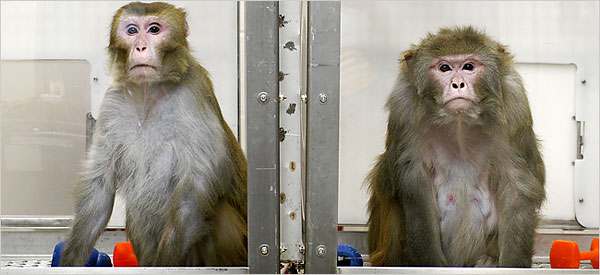
I regard such visions as ill-founded. For one thing, there's evidence that CR mimetics would buy us quality time, not prolong misery. A study of CR's effects in rhesus monkeys has shown that it reduces age-related diseases by about a third in the primates during their later lives -- the calorie-restricted monkeys have greater lean muscle mass, significantly less age-related brain atrophy, half as much cancer, and half as much cardiovascular disease as do peers on normal diets. The world's longest-lived human population, natives of Japan's Okinawa prefecture, whose scant traditional diets are regarded as tantamount to mild CR, have 80% less breast and prostate cancer at advanced ages than North Americans do, suffer about 40% fewer hip fractures, and experience half the rate of dementia between 85 and 90.
It's possible that anti-aging drugs would compress late-life misery, letting us reach a ripe old age in good shape before a speedy demise. That could have huge economic and social payoffs -- much greater, for instance, than a miracle cure for all cancers.
Even if the medicines only postponed aging's deterioration, boosting life expectancy by, say, a decade, the benefits would be monumental. As Richard Miller, a University of Michigan gerontologist, says, "When you ask people, 'Would you like to live to 100?' they picture what today's elderly, infirm person looks and feels like. But the proper question is a different one: 'Would you like to add another 10 or 20 years to the middle of your life, so you reach 80 or 90 in the same condition that people generally are today at around 60 or 70?' "
A drug that increases healthy life-years would deliver large benefits across many sectors of the economy. Healthier, longer-living people can stay in the workforce longer, preserving skilled human capital that might otherwise be lost. Healthier workers are physically and mentally more robust, making them more productive. They're motivated to invest more in developing their skills, because they expect to reap the benefits of such investments for longer periods. They save more for retirement, boosting capital formation that fuels economic growth. They pose lighter burdens on federal entitlement programs and contribute more in federal and state tax revenue. Such factors probably explain why per-capita incomes of nations around the world have long risen in tandem with their populations' life expectancies.
Anti-aging drugs may well have downsides too. For instance, nest eggs that once seemed adequate may prove too small in an era of extended life spans. But the drugs should also help with that problem by keeping us vibrant enough to work after 62, the average age at which U.S. workers have retired in recent years. Of course, it remains to be seen whether the economy will support demand for older workers' services. Still, surveys show many baby boomers expect to work at least part-time in retirement for both fiscal and personal-fulfillment reasons -- they apparently agree with a piece of wisdom George Burns expressed late in life: "As long as you're working, you stay young."
Where does the anti-aging quest stand? As always with cutting-edge science, the quest has had ups and downs. In 2008, Harvard's David Sinclair and colleagues reported that resveratrol failed to extend the life spans of mice on normal diets, suggesting that it is at best a partial CR mimetic -- the group had earlier made a splash by showing that the compound induces CR-like effects in mice on high-fat diets. But last year a major turning point was reached: Researchers showed for the first time that a drug could convincingly extend life span in mammals.
The drug was rapamycin, a medicine long prescribed to help prevent rejection of transplanted organs. In parallel mouse experiments in three different labs, scientists funded by the National Institute on Aging found that rapamycin dramatically boosted longevity in mice on normal diets in a way reminiscent of CR's effects. Stunningly, the study showed that when rodents were first put on the drug at 20 months of age, roughly equivalent to 60 years in humans, the life expectancies of males were boosted by 28%, and that of females by 38%. Even CR itself hasn't been shown to exert such large effects on animals so close to the end of their lives. Former perma-bears about the anti-aging quest are now sounding upbeat.
Unfortunately, the drug industry has shown little interest in trying to translate such breakthroughs into anti-aging medicines. Both drug regulators and the medical establishment still essentially view aging as totally mysterious, inexorable, and intractable -- they wouldn't dream of adding it to the official list of drug indications. Thus, drug companies have no way to develop anti-aging compounds as high-margin prescription drugs. And that means that spending many hundreds of millions of dollars on clinical trials of the drugs' efficacy just doesn't compute. (The relatively small proceeds from marketing them as low-margin dietary supplements can't justify such costly, high-risk trials either.)
Besides, vetting the drugs would require first developing reliable biomarkers of aging, telltale signs of normal bodily decline over time that could be used to register how fast people are going downhill. Such biomarkers would enable the vetting of CR mimetics' efficacy in trials that last only a few years, rather than the impossibly long time it would take to assess their longevity-boosting effects in humans.
In short, the hugely promising anti-aging quest is now stuck between the R and the D stages, and I fear it will stay there until the federal government greatly steps up funding in the area. I, for one, don't plan to take purported CR mimetics until there's some reasonably rigorous clinical trial data showing that they're safe and effective. And until such data are available, the anti-aging revolution is likely to remain little more than the enthusiastic pursuit of placebo effects by wishful thinkers.
All this is terribly ironic. In effect, it means that authorities charged with promoting public health are fatalistically standing and watching the "silver tsunami" of population aging -- with its huge economic and human costs -- bearing down on us as if there were no way to shelter ourselves from its full force. Meanwhile, the authorities are perfectly willing to devote many billions of dollars annually to the pursuit of ever costlier palliatives for diseases of aging, which are typically applied when it's too late to do much good -- the federal government now annually spends less than 0.04% as much on research about the biology of aging as it does on Medicare.
So here's the moral of the story: The George Burns scenario is within our grasp if we collectively recognize what has happened in aging science and seize the day. And while anti-aging drugs may not enable all of us to live as long as Burns, they promise to let many of us age as gracefully as he did and thus aspire to our own version of his timelessness. As Burns once quipped, "You can't help getting older, but you don't have to get old." Words to remember from a wise guy to the end.
Subscribe to:
Posts (Atom)


 Posts
Posts


