translate

Site update

Since I have been really terrible at updating the blog (but pretty good at keeping up with the facebook blog posts) I've added the widget below so that facebook cross posts to the blog.

You shouldn't need to join facebook but can just click on the links in the widget to access the articles. If you have any problems or comments please mail me at arandjel 'AT' eva.mpg.de.
Showing posts with label media. Show all posts

Wednesday, June 15, 2011

Op-Ed: Liking Is for Cowards. Go for What Hurts.


This is an AMAZING op-ed about technology, social media, environmentalism, conservation and love. Enjoy! -MA

Liking Is for Cowards. Go for What Hurts.
By JONATHAN FRANZEN
from the NYTimes

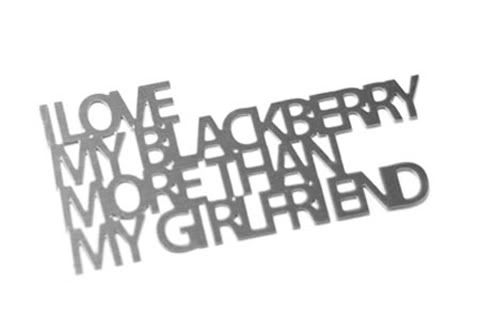
A COUPLE of weeks ago, I replaced my three-year-old BlackBerry Pearl with a much more powerful BlackBerry Bold. Needless to say, I was impressed with how far the technology had advanced in three years. Even when I didn’t have anybody to call or text or e-mail, I wanted to keep fondling my new Bold and experiencing the marvelous clarity of its screen, the silky action of its track pad, the shocking speed of its responses, the beguiling elegance of its graphics.

I was, in short, infatuated with my new device. I’d been similarly infatuated with my old device, of course; but over the years the bloom had faded from our relationship. I’d developed trust issues with my Pearl, accountability issues, compatibility issues and even, toward the end, some doubts about my Pearl’s very sanity, until I’d finally had to admit to myself that I’d outgrown the relationship.

Do I need to point out that — absent some wild, anthropomorphizing projection in which my old BlackBerry felt sad about the waning of my love for it — our relationship was entirely one-sided? Let me point it out anyway.

Let me further point out how ubiquitously the word “sexy” is used to describe late-model gadgets; and how the extremely cool things that we can do now with these gadgets — like impelling them to action with voice commands, or doing that spreading-the-fingers iPhone thing that makes images get bigger — would have looked, to people a hundred years ago, like a magician’s incantations, a magician’s hand gestures; and how, when we want to describe an erotic relationship that’s working perfectly, we speak, indeed, of magic.

Let me toss out the idea that, as our markets discover and respond to what consumers most want, our technology has become extremely adept at creating products that correspond to our fantasy ideal of an erotic relationship, in which the beloved object asks for nothing and gives everything, instantly, and makes us feel all powerful, and doesn’t throw terrible scenes when it’s replaced by an even sexier object and is consigned to a drawer.

To speak more generally, the ultimate goal of technology, the telos of techne, is to replace a natural world that’s indifferent to our wishes — a world of hurricanes and hardships and breakable hearts, a world of resistance — with a world so responsive to our wishes as to be, effectively, a mere extension of the self.

Let me suggest, finally, that the world of techno-consumerism is therefore troubled by real love, and that it has no choice but to trouble love in turn.

Its first line of defense is to commodify its enemy. You can all supply your own favorite, most nauseating examples of the commodification of love. Mine include the wedding industry, TV ads that feature cute young children or the giving of automobiles as Christmas presents, and the particularly grotesque equation of diamond jewelry with everlasting devotion. The message, in each case, is that if you love somebody you should buy stuff.

A related phenomenon is the transformation, courtesy of Facebook, of the verb “to like” from a state of mind to an action that you perform with your computer mouse, from a feeling to an assertion of consumer choice. And liking, in general, is commercial culture’s substitute for loving. The striking thing about all consumer products — and none more so than electronic devices and applications — is that they’re designed to be immensely likable. This is, in fact, the definition of a consumer product, in contrast to the product that is simply itself and whose makers aren’t fixated on your liking it. (I’m thinking here of jet engines, laboratory equipment, serious art and literature.)

But if you consider this in human terms, and you imagine a person defined by a desperation to be liked, what do you see? You see a person without integrity, without a center. In more pathological cases, you see a narcissist — a person who can’t tolerate the tarnishing of his or her self-image that not being liked represents, and who therefore either withdraws from human contact or goes to extreme, integrity-sacrificing lengths to be likable.

If you dedicate your existence to being likable, however, and if you adopt whatever cool persona is necessary to make it happen, it suggests that you’ve despaired of being loved for who you really are. And if you succeed in manipulating other people into liking you, it will be hard not to feel, at some level, contempt for those people, because they’ve fallen for your shtick. You may find yourself becoming depressed, or alcoholic, or, if you’re Donald Trump, running for president (and then quitting).

Consumer technology products would never do anything this unattractive, because they aren’t people. They are, however, great allies and enablers of narcissism. Alongside their built-in eagerness to be liked is a built-in eagerness to reflect well on us. Our lives look a lot more interesting when they’re filtered through the sexy Facebook interface. We star in our own movies, we photograph ourselves incessantly, we click the mouse and a machine confirms our sense of mastery.

And, since our technology is really just an extension of ourselves, we don’t have to have contempt for its manipulability in the way we might with actual people. It’s all one big endless loop. We like the mirror and the mirror likes us. To friend a person is merely to include the person in our private hall of flattering mirrors.

I may be overstating the case, a little bit. Very probably, you’re sick to death of hearing social media disrespected by cranky 51-year-olds. My aim here is mainly to set up a contrast between the narcissistic tendencies of technology and the problem of actual love. My friend Alice Sebold likes to talk about “getting down in the pit and loving somebody.” She has in mind the dirt that love inevitably splatters on the mirror of our self-regard.

The simple fact of the matter is that trying to be perfectly likable is incompatible with loving relationships. Sooner or later, for example, you’re going to find yourself in a hideous, screaming fight, and you’ll hear coming out of your mouth things that you yourself don’t like at all, things that shatter your self-image as a fair, kind, cool, attractive, in-control, funny, likable person. Something realer than likability has come out in you, and suddenly you’re having an actual life.

Suddenly there’s a real choice to be made, not a fake consumer choice between a BlackBerry and an iPhone, but a question: Do I love this person? And, for the other person, does this person love me?

There is no such thing as a person whose real self you like every particle of. This is why a world of liking is ultimately a lie. But there is such a thing as a person whose real self you love every particle of. And this is why love is such an existential threat to the techno-consumerist order: it exposes the lie.

This is not to say that love is only about fighting. Love is about bottomless empathy, born out of the heart’s revelation that another person is every bit as real as you are. And this is why love, as I understand it, is always specific. Trying to love all of humanity may be a worthy endeavor, but, in a funny way, it keeps the focus on the self, on the self’s own moral or spiritual well-being. Whereas, to love a specific person, and to identify with his or her struggles and joys as if they were your own, you have to surrender some of your self.

The big risk here, of course, is rejection. We can all handle being disliked now and then, because there’s such an infinitely big pool of potential likers. But to expose your whole self, not just the likable surface, and to have it rejected, can be catastrophically painful. The prospect of pain generally, the pain of loss, of breakup, of death, is what makes it so tempting to avoid love and stay safely in the world of liking.

And yet pain hurts but it doesn’t kill. When you consider the alternative — an anesthetized dream of self-sufficiency, abetted by technology — pain emerges as the natural product and natural indicator of being alive in a resistant world. To go through a life painlessly is to have not lived. Even just to say to yourself, “Oh, I’ll get to that love and pain stuff later, maybe in my 30s” is to consign yourself to 10 years of merely taking up space on the planet and burning up its resources. Of being (and I mean this in the most damning sense of the word) a consumer.

When I was in college, and for many years after, I liked the natural world. Didn’t love it, but definitely liked it. It can be very pretty, nature. And since I was looking for things to find wrong with the world, I naturally gravitated to environmentalism, because there were certainly plenty of things wrong with the environment. And the more I looked at what was wrong — an exploding world population, exploding levels of resource consumption, rising global temperatures, the trashing of the oceans, the logging of our last old-growth forests — the angrier I became.

Finally, in the mid-1990s, I made a conscious decision to stop worrying about the environment. There was nothing meaningful that I personally could do to save the planet, and I wanted to get on with devoting myself to the things I loved. I still tried to keep my carbon footprint small, but that was as far as I could go without falling back into rage and despair.

BUT then a funny thing happened to me. It’s a long story, but basically I fell in love with birds. I did this not without significant resistance, because it’s very uncool to be a birdwatcher, because anything that betrays real passion is by definition uncool. But little by little, in spite of myself, I developed this passion, and although one-half of a passion is obsession, the other half is love.

And so, yes, I kept a meticulous list of the birds I’d seen, and, yes, I went to inordinate lengths to see new species. But, no less important, whenever I looked at a bird, any bird, even a pigeon or a robin, I could feel my heart overflow with love. And love, as I’ve been trying to say today, is where our troubles begin.

Because now, not merely liking nature but loving a specific and vital part of it, I had no choice but to start worrying about the environment again. The news on that front was no better than when I’d decided to quit worrying about it — was considerably worse, in fact — but now those threatened forests and wetlands and oceans weren’t just pretty scenes for me to enjoy. They were the home of animals I loved.

And here’s where a curious paradox emerged. My anger and pain and despair about the planet were only increased by my concern for wild birds, and yet, as I began to get involved in bird conservation and learned more about the many threats that birds face, it became easier, not harder, to live with my anger and despair and pain.

How does this happen? I think, for one thing, that my love of birds became a portal to an important, less self-centered part of myself that I’d never even known existed. Instead of continuing to drift forward through my life as a global citizen, liking and disliking and withholding my commitment for some later date, I was forced to confront a self that I had to either straight-up accept or flat-out reject.

Which is what love will do to a person. Because the fundamental fact about all of us is that we’re alive for a while but will die before long. This fact is the real root cause of all our anger and pain and despair. And you can either run from this fact or, by way of love, you can embrace it.

When you stay in your room and rage or sneer or shrug your shoulders, as I did for many years, the world and its problems are impossibly daunting. But when you go out and put yourself in real relation to real people, or even just real animals, there’s a very real danger that you might love some of them.

And who knows what might happen to you then?

Jonathan Franzen is the author, most recently, of “Freedom.” This essay is adapted from a commencement speech he delivered on May 21 at Kenyon College.

Saturday, March 19, 2011

HipHop and Hard Rock - how to save the planet while on tour

Ludacris and Tommy Lee for Planet Green:


TreeHugger has a list of the 7 funniest green commercials. The one above is by far my fave, but the others are cute and good for a smile.

Friday, March 4, 2011

Be part of science: Take this conservation and the media survey


Arkive posted a link to this survey today beng carried out by a student at the University of Liverpool.
The main aim of the study is to examine how different media forms can lead to an increase in animal conservation awareness. If you agree to proceed to the study, you will be asked to view 3 written documents and listen to 1 audio recording, each followed by a number of questions relating to the information presented.
It takes about 10 to 15 minutes to complete I would say, and should provide some really interesting results

Thursday, February 17, 2011

ARKive: Promoting the Conservation of the World's Threatened Species, Through the Power of Wildlife Imagery


"Films and photographs are an emotive, powerful and effective means of building environmental awareness - they can bring a scientific name to life, show what a species looks like and why it is special. As such, they are a valuable educational resource and conservation tool. Continued habitat destruction and the rise in extinction rates also mean that for many species, films, photographs and audio recordings may soon be all that remains. They are, therefore, important historical and scientific records of the species they depict."


For more info go to the ARKive website or join their facebook page.

Thanks to Cleve H for the link!

Tuesday, February 8, 2011

How 'Chimpus Commercialus' Went From Ad Star to Endangered Species

This is REALLY great news!
but...
I am sot of surprised PETA is getting the credit...for as long as I have been following this campaign (since 2000 when i joined the Great Ape Project, GAP) I don't remember PETA really being a main advocate against the use of great apes in ads...I even remember a few years ago sending complaint letters to PETA for having fall out boy as their anti-KFC spokespeople WHILE fall out boy had a music video with chimps and orangs in it on MTV!?!?
I guess it doesnt really matter, results are results, and PETA clearly has had a big advocacy role behind the scenes according to this article, but I think other heros in this fight are certainly Dr. Goodall who has spoken out very loudly against chimps in entertainment, Dr. Hare & Dr. Ross and collaborators who had that great study out in Science about chimps in entertainment , and of course all the people who have been fighting for retired chimpanzees like Carole Noon and Jen Feuerstein at Save the chimps as well as those mentioned in the article below at the Center for Great Apes. I am sure I am forgetting others but that is who pops to mind....
what do you guys think?
my favorite statement in this piece is:
But it's not the treatment of the animals on set that is the main concern from animal-rights groups. Rather, it's the procurement and disposal of apes for acting.
(Thanks to Jen F for the link!)
-MA

From Advertising Age
BY BRIAN STEINBERG
Pressure From Animal-Rights Groups Has Agencies Pledging Not to Use Great Apes for Ad Entertainment

They were once stars. After a rough start in life -- taken from their mothers during infancy -- they found themselves on the national stage, making millions laugh during the Super Bowl. Their careers were short, two or three years at most, and now they've been shunted aside. But they're the lucky ones. Sent to finish out their lives in Florida, the four chimpanzees from the original CareerBuilder Super Bowl ads share a home with Michael Jackson's former pet, Bubbles, at the Center for Great Apes in Wauchula. They could have ended up in cages in roadside attractions, or on the nightly news, put down after going on a rampage.

Before this year's Super Bowl, it had likely been years since most Americans had seen a national TV spot featuring an ape. That's because chimpus commercialus and its kin, thanks to pressure put on marketers and ad agencies by animal-rights groups, are on the verge of extinction.

But there are still reminders. After moving away from the use of chimpanzees in its Big Game commercials, CareerBuilder has sparked a minor controversy by reviving interest in the animals that have long been a staple of big-budget TV advertising. CareerBuilder ads in last night's game returned to the theme from the company's memorable efforts in 2005 and 2006: chimpanzees as obstinate, time-wasting cubicle-mates who demonstrate the need for CareerBuilder's online job listings.
Related Stories

Last night's spot could mark the last for this close relative of the monkey that has ridden on Madison Avenue's back for decades.

Eighteen different ad agencies have agreed in the last few years to stop using great apes in the commercials they produce, the result of an ongoing effort started in 2008 by People for the Ethical Treatment of Animals.

Among the big firms involved are Omnicom Group's BBDO, GSD&M and Merkley & Partners; Interpublic Group of Cos.' McCann Erickson, DraftFCB and RPA; Havas' Arnold and Euro RSCG; WPP's Grey Group, Ogilvy & Mather, Young & Rubicam and JWT; and Publicis Groupe's Saatchi & Saatchi and Leo Burnett.

"The list is only going to grow," said Julia Galluci, a primatologist with PETA who studies the use of apes in commercials.

Indeed, Omnicom's DDB and TBWA/Chiat/Day, two agencies that work for marketers that have made memorable ads with chimps in the past -- Anheuser-Busch InBev and PepsiCo -- are not yet on the list.

PETA also successfully lobbied several major advertisers to modify or pull ads in 2010 when apes were featured. Pfizer edited out an orangutan used in a commercial crafted by Grey Group for its Robitussin, and decided instead to incorporate a digital image of a chimp. Dodge, AT&T and Travelers Insurance made similar moves after PETA's approach.

For its part, CareerBuilder, which created its ad in-house, said it has treated the animals involved in this year's Super Bowl plans well. "During the production of our ad, we followed the strictest guidelines to ensure our chimpanzee stars were treated well and not harmed in any way. We hired top trainers known to provide the highest standard of care for their animals. We also had a member of an animal rights group, the American Humane Association, on set during the entire filming to ensure the chimpanzees were treated with respect," the company said in a statement. "This was very important to us."

But it's not the treatment of the animals on set that is the main concern from animal-rights groups. Rather, it's the procurement and disposal of apes for acting.

Apes in the wild stay with their mothers for nearly the first decade of life, and typically nurse for the first five or six years, said Patti Ragan, founder and director of the Center for Great Apes, the private sanctuary that hosts those four CareerBuilder chimps as well as Bubbles. But to work on an ad, movie or TV program, a chimp or orangutan needs to be under the age of 8. When they pass that age, she said, "they are too dangerous and strong to work around humans" and are therefore retired. Caring for the animals after they can no longer work on shoots can require something in the neighborhood of $20,000 a year, she estimated.

Heartstring-plucking details such as these are likely not immediately clear to the consumers who thrill to monkeyshines in TV pitches. And even those who protect the chimps admit that there has been no consumer outrage. If it did, the animals wouldn't show up year after year in the Super Bowl, the nation's broadest advertising showcase.

Great apes have appeared in 10 different ads tailored for the Big Game since 2000, according to research from students of Chuck Tomkovick, a professor of marketing at University of Wisconsin-Eau Claire, who has studied Super Bowl ads for years. There's good reason: Mr. Tomkovick's recent research suggests that placing any sort of an animal in an ad increases its likability.

The ad industry's eagerness to distance itself from chimps and their cousins comes even though capturing consumer attention with TV ads has become increasingly difficult. And it arrives despite the fact consumers are more likely to stop and notice chimps and apes when spotted on the TV screen. Chimps and apes have particular appeal, said Barbara J. King, an anthropology professor at the College of William and Mary, who has studied apes and monkeys in the wild and in U.S. zoos for 30 years.

"They are like us, but they're not like us," she said. "It's exactly that strange paradox that grabs people."

Further, when it comes to convincing consumers that apes need protecting, there is a perception problem. "It looks to me like these commercials are making these animals seem cute and perfectly well-cared for," said Ms. King, the anthropology professor. "It's not clear to me from the surface of it why consumers would necessarily be concerned unless someone tells them the back story."

And PETA has been relaying that story to ad-agency executives to some effect. "The cruelty of separating baby apes from their mothers, the brutal training, and the tragic 'retirement' provide a real incentive not to use them," said Andrew Robertson, president-CEO of BBDO Worldwide.

"They are cute. They behave like humans. They are cuddly," said Tony Granger, global chief creative officer at Young & Rubicam. "But what really does it for me is understanding that the apes are taken away from their mothers. We honestly didn't know any of this."

PETA expects to press its case, Ms. Galluci said. The organization is in early talks with BBDO to create an ad campaign aimed at ad-industry employees and make them aware of the problems with using live apes in ad shoots. "It's the agencies that are writing the stories, writing the scripts for these ads," she said. Once agency executives hear the details about the simians, she added, "they are really quick to agree" not to use them any longer. Whether the entire industry apes the move remains to be seen.

Tuesday, October 19, 2010

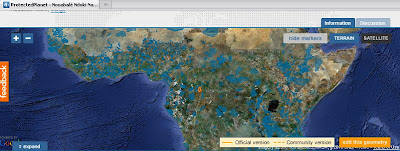
very cool new resource: protectedplanet.net


Check out this cool new UNEP/IUCN database, ProtectedPlanet.net on the globe's protected areas, which is wiki based (but with fact checking) so you can update the database with information that you have on some of the more remote areas.

from their website:
Be inspired by the most beautiful places on the planet. Explore the worlds national parks, wilderness areas and world heritage sites. Help us find and improve information on every protected area in the world. Protectedplanet.net lets you discover these incredible places through elegant mapping and intuitive searching. Protectedplanet.net wants you to contribute information about protected areas alongside national agencies and international organisations. Protectedplanet.net helps you understand what and where our natural resources are being conserved. If you are interested in analysing a global dataset on protected areas, you can download the data, today, here at protectedplanet.net.

Monday, October 4, 2010

10:10 carbon cutting campaign shows people exploding, controversy ensues.

From TreeHugger.com
Violent Climate Change Film Lands 10:10 Campaign in Trouble
by SAMI GROVER

!Alert! Video graphically shows people being blown up (its not real though), do not watch if you can't stomach graphic violence.


At times it's seemed like the 10:10 Campaign has got the whole of Britain cutting its carbon. From football teams to corporations to schools, individuals and organizations have committed to 10% CO2 cuts in just one year. Even the new UK Government pledged to cut its own emissions 10% in 2010. But 10:10 hasn't been free of controversy—most notably facing accusations of eco-snobbery for turning down an airport wanting to cut its emissions. Now 10:10 has caused a stir again, releasing and then promptly withdrawing a film in which school children, corporate workers and even a famous footballer are blown up for not taking part in cutting their emissions. So what's up? Is this a clever use of dark and self-deprecating humor to capture attention and hit the headlines, or a disastrous, inappropriate and violent own-goal for the environmental movement?

According to The Guardian, the 10:10 campaign short film No Pressure—written by Four Weddings and a Funeral screenwriter Richard Curtis—was intended to be an edgy and attention-grabbing piece that would put climate change back in the headlines. It has certainly done that—but the question is whether it will alienate more people than it will engage.

Featuring film star Gillian Anderson, England footballer Peter Crouch, and music from Radiohead, the film was shot by a 40-strong professional film crew led by director Dougal Wilson—in other words, this was clearly a major undertaking for the campaign. With those kind of resources being directed at this piece, it seems strange to think that the campaign would be unaware that there may be some controversy—in fact many folks have suggested that releasing then withdrawing the film may have been the intention all along.

The plot—which involves school kids, office workers and soccer stars unwilling to join the campaign being blown up by their peers—is undoubtedly a provocative one. Even the reaction to the movie by Fanny Armstrong, 10:10 founder and director of the Age of Stupid, was clearly meant to provoke a reaction:

"What to do with those people, who are together threatening everybody's existence on this planet? Clearly we don't really think they should be blown up, that's just a joke for the mini-movie, but maybe a little amputating would be a good place to start?"

I have to say I found the whole thing kind of funny. And while some people will doubtless paint the film as one more example of zealous environmentalists advocating a "go green or else" approach—I actually took it as a self-parody of such a dictatorial approach. But then again, I have been known to have a pretty inappropriate sense of humor. Certainly some major funders to the campaign were less than amused, with charity Action Aid arguing that "the moment this film was seen it was clear it was inappropriate."

Even many of my fellow TreeHuggers, while not exactly shocked by the film, were unimpressed. Reactions like "one big meh", "pretty poor", and "a bit lame" were commonplace in our internal discussions. And there was definitely a general agreement that for a campaign that is seeking to unify a broad swathe of the public, this was an unlikely and probably counterproductive way to do it.

Eco-advertising uses a power washer, a stencil and the dirty London streets


From core77 via neatorama

Green Street Media is a British ad agency that emphasizes eco-friendly advertising. One medium that it uses consists of applying stenciled designs and a power washer to dirty London sidewalks. The company estimates that an ad should remain legible for 3-5 months.

When a client wants a sidewalk advertisement, rather than using chalk or spraypaint GSM uses laser-cut stencils and a high-pressure hose to blast a clean spot out of the stencil's negative space. The only materials used are the stencil and plain water.