From Newsweek.com & the magazine issue dated Jan 11, 2010
No More Sacred Cows
by Jennie Yabroff
The latest cookbook by Mollie Katzen, author of vegetarian bibles The Moosewood Cookbookand The Enchanted Broccoli Forest, includes recipes for spinach lasagna and vegetable tofu stir fry with orange ginger glaze. It also includes a recipe for beef stew. No, not "beef" stew, in which some soy-based protein substitute is dressed and spiced to look (and sort of taste) like meat. Beef stew. With real beef. From a cow.
Considered one of the chefs most responsible for the mainstreaming of vegetarianism in the 1970s and '80s, and a vegetarian herself for 30 years, Katzen began eating meat again a few years ago. "Somehow it got ascribed to me that I don't want people to eat meat," Katzen said. "I've just wanted to supply possibilities that were low on the food chain."
For as long as people have been foreswearing meat, they've also been sneaking the occasional corn dog. The difference is, vegetarians used to feel guilty about their sins of the flesh-consumption. Now, thanks to the cachet attached to high-end meat, they are having their burgers without sacrificing the moral high ground.
The word "flexitarian," meaning someone who mostly eats vegetarian with the occasional cheesesteak thrown in, has been around for a while. But only recently have former vegetarians been so smug about their forays to the dark side. "There is something almost primal about it," writes lapsed vegetarian Tara Austen Weaver, describing her first meat-buying expedition in The Butcher and the Vegetarian. "I haven't actually hunted dinner myself, but I set my sights and claimed the prize I sought." The "primalness" of the meat-eating (or meat-purchasing) experience comes up a lot in these conversion narratives, which inevitably take place at a quaint, family-run butcher shop. Some of these shops are even run by former vegetarians and vegans, such as Fleisher's, the upstate New York store where Julie Powell (of Julie and Juliafame) learned to carve up a steer for her forthcoming Cleaving.
Buying only grass-fed, sustainably raised (and incredibly expensive) meat allows former vegetarians to maintain the same sanctimony they expressed with their old "I don't eat anything with a face" T shirts. In response to an article by Jonathan Safran Foer about his decision to give up meat, a Brooklyn meat moralist wrote, "lovingly raised meat is not as hard to find as [Safran Foer] seems to think—at least not if you have the good fortune to live near a farmers' market. Almost all the sheep and cattle and most of the pigs and chickens raised by the farmers who sell at those markets have spent their lives in the fields, free to run, graze and root as their natures dictate." This is the argument used by born-again carnivores like Katzen: eating meat is not ethically wrong. Eating ethically wrong meat (i.e., the cheap, mass-processed, hormone-stuffed burgers and steaks that constitute 80 percent of the meat sold in the U.S.) is wrong.
While it's true that sustainably raised, grass-fed beef may be better for the consumer, it's hard to argue that it's ultimately better for the cow. What these steak apologists seem to be missing is that no matter how "lovingly" the cow was raised, no matter how much grazing or rooting he did in his life, he gave up that life to become their dinner. Carnivores who only ate the flesh of animals that had died of natural causes at the end of long, satisfying lives might have a claim to moral superiority, but what to call them? Corpsevores? And if these organic farm animals have such great lives, isn't the more humane thing to eat a cage-raised, industrially processed chicken? At least we'd be putting it out of its misery.
Find this article at http://www.newsweek.com/id/228720
Site update
Since I have been really terrible at updating the blog (but pretty good at keeping up with the facebook blog posts) I've added the widget below so that facebook cross posts to the blog.
You shouldn't need to join facebook but can just click on the links in the widget to access the articles. If you have any problems or comments please mail me at arandjel 'AT' eva.mpg.de.
Friday, January 8, 2010
"education is often a far better investment than artillery"
from the NYtimes.com, Op-Ed Columnist
The Happiest People
By NICHOLAS D. KRISTOF
Hmmm. You think it’s a coincidence? Costa Rica is one of the very few countries to have abolished its army, and it’s also arguably the happiest nation on earth.
There are several ways of measuring happiness in countries, all inexact, but this pearl of Central America does stunningly well by whatever system is used. For example, the World Database of Happiness, compiled by a Dutch sociologist on the basis of answers to surveys by Gallup and others, lists Costa Rica in the top spot out of 148 nations.
That’s because Costa Ricans, asked to rate their own happiness on a 10-point scale, average 8.5. Denmark is next at 8.3, the United States ranks 20th at 7.4 and Togo and Tanzania bring up the caboose at 2.6.
Scholars also calculate happiness by determining “happy life years.” This figure results from merging average self-reported happiness, as above, with life expectancy. Using this system, Costa Rica again easily tops the list. The United States is 19th, and Zimbabwe comes in last.
A third approach is the “happy planet index,” devised by the New Economics Foundation, a liberal think tank. This combines happiness and longevity but adjusts for environmental impact — such as the carbon that countries spew.
Here again, Costa Rica wins the day, for achieving contentment and longevity in an environmentally sustainable way. The Dominican Republic ranks second, the United States 114th (because of its huge ecological footprint) and Zimbabwe is last.
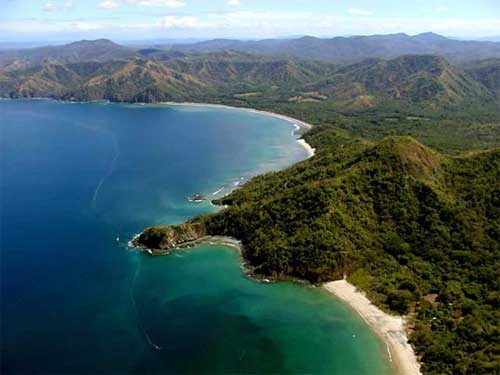
Maybe Costa Rican contentment has something to do with the chance to explore dazzling beaches on both sides of the country, when one isn’t admiring the sloths in the jungle (sloths truly are slothful, I discovered; they are the tortoises of the trees). Costa Rica has done an unusually good job preserving nature, and it’s surely easier to be happy while basking in sunshine and greenery than while shivering up north and suffering “nature deficit disorder.”
After dragging my 12-year-old daughter through Honduran slums and Nicaraguan villages on this trip, she was delighted to see a Costa Rican beach and stroll through a national park. Among her favorite animals now: iguanas and sloths.
(Note to boss: Maybe we should have a columnist based in Costa Rica?)
What sets Costa Rica apart is its remarkable decision in 1949 to dissolve its armed forces and invest instead in education. Increased schooling created a more stable society, less prone to the conflicts that have raged elsewhere in Central America. Education also boosted the economy, enabling the country to become a major exporter of computer chips and improving English-language skills so as to attract American eco-tourists.
I’m not antimilitary. But the evidence is strong that education is often a far better investment than artillery.
In Costa Rica, rising education levels also fostered impressive gender equality so that it ranks higher than the United States in the World Economic Forum gender gap index. This allows Costa Rica to use its female population more productively than is true in most of the region. Likewise, education nurtured improvements in health care, with life expectancy now about the same as in the United States — a bit longer in some data sets, a bit shorter in others.
Rising education levels also led the country to preserve its lush environment as an economic asset. Costa Rica is an ecological pioneer, introducing a carbon tax in 1997. The Environmental Performance Index, a collaboration of Yale and Columbia Universities, ranks Costa Rica at No. 5 in the world, the best outside Europe.
This emphasis on the environment hasn’t sabotaged Costa Rica’s economy but has bolstered it. Indeed, Costa Rica is one of the few countries that is seeing migration from the United States: Yankees are moving here to enjoy a low-cost retirement. My hunch is that in 25 years, we’ll see large numbers of English-speaking retirement communities along the Costa Rican coast.
Latin countries generally do well in happiness surveys. Mexico and Colombia rank higher than the United States in self-reported contentment. Perhaps one reason is a cultural emphasis on family and friends, on social capital over financial capital — but then again, Mexicans sometimes slip into the United States, presumably in pursuit of both happiness and assets.
Cross-country comparisons of happiness are controversial and uncertain. But what does seem quite clear is that Costa Rica’s national decision to invest in education rather than arms has paid rich dividends. Maybe the lesson for the United States is that we should devote fewer resources to shoring up foreign armies and more to bolstering schools both at home and abroad.
In the meantime, I encourage you to conduct your own research in Costa Rica, exploring those magnificent beaches or admiring those slothful sloths. It’ll surely make you happy.
Thanks to Dieter L for the link
The Happiest People
By NICHOLAS D. KRISTOF
Hmmm. You think it’s a coincidence? Costa Rica is one of the very few countries to have abolished its army, and it’s also arguably the happiest nation on earth.
There are several ways of measuring happiness in countries, all inexact, but this pearl of Central America does stunningly well by whatever system is used. For example, the World Database of Happiness, compiled by a Dutch sociologist on the basis of answers to surveys by Gallup and others, lists Costa Rica in the top spot out of 148 nations.
That’s because Costa Ricans, asked to rate their own happiness on a 10-point scale, average 8.5. Denmark is next at 8.3, the United States ranks 20th at 7.4 and Togo and Tanzania bring up the caboose at 2.6.
Scholars also calculate happiness by determining “happy life years.” This figure results from merging average self-reported happiness, as above, with life expectancy. Using this system, Costa Rica again easily tops the list. The United States is 19th, and Zimbabwe comes in last.
A third approach is the “happy planet index,” devised by the New Economics Foundation, a liberal think tank. This combines happiness and longevity but adjusts for environmental impact — such as the carbon that countries spew.
Here again, Costa Rica wins the day, for achieving contentment and longevity in an environmentally sustainable way. The Dominican Republic ranks second, the United States 114th (because of its huge ecological footprint) and Zimbabwe is last.
Maybe Costa Rican contentment has something to do with the chance to explore dazzling beaches on both sides of the country, when one isn’t admiring the sloths in the jungle (sloths truly are slothful, I discovered; they are the tortoises of the trees). Costa Rica has done an unusually good job preserving nature, and it’s surely easier to be happy while basking in sunshine and greenery than while shivering up north and suffering “nature deficit disorder.”
After dragging my 12-year-old daughter through Honduran slums and Nicaraguan villages on this trip, she was delighted to see a Costa Rican beach and stroll through a national park. Among her favorite animals now: iguanas and sloths.
(Note to boss: Maybe we should have a columnist based in Costa Rica?)
What sets Costa Rica apart is its remarkable decision in 1949 to dissolve its armed forces and invest instead in education. Increased schooling created a more stable society, less prone to the conflicts that have raged elsewhere in Central America. Education also boosted the economy, enabling the country to become a major exporter of computer chips and improving English-language skills so as to attract American eco-tourists.
I’m not antimilitary. But the evidence is strong that education is often a far better investment than artillery.
In Costa Rica, rising education levels also fostered impressive gender equality so that it ranks higher than the United States in the World Economic Forum gender gap index. This allows Costa Rica to use its female population more productively than is true in most of the region. Likewise, education nurtured improvements in health care, with life expectancy now about the same as in the United States — a bit longer in some data sets, a bit shorter in others.
Rising education levels also led the country to preserve its lush environment as an economic asset. Costa Rica is an ecological pioneer, introducing a carbon tax in 1997. The Environmental Performance Index, a collaboration of Yale and Columbia Universities, ranks Costa Rica at No. 5 in the world, the best outside Europe.
This emphasis on the environment hasn’t sabotaged Costa Rica’s economy but has bolstered it. Indeed, Costa Rica is one of the few countries that is seeing migration from the United States: Yankees are moving here to enjoy a low-cost retirement. My hunch is that in 25 years, we’ll see large numbers of English-speaking retirement communities along the Costa Rican coast.
Latin countries generally do well in happiness surveys. Mexico and Colombia rank higher than the United States in self-reported contentment. Perhaps one reason is a cultural emphasis on family and friends, on social capital over financial capital — but then again, Mexicans sometimes slip into the United States, presumably in pursuit of both happiness and assets.
Cross-country comparisons of happiness are controversial and uncertain. But what does seem quite clear is that Costa Rica’s national decision to invest in education rather than arms has paid rich dividends. Maybe the lesson for the United States is that we should devote fewer resources to shoring up foreign armies and more to bolstering schools both at home and abroad.
In the meantime, I encourage you to conduct your own research in Costa Rica, exploring those magnificent beaches or admiring those slothful sloths. It’ll surely make you happy.
Thanks to Dieter L for the link
Thursday, January 7, 2010
Attenborough "sings"
"The Unbroken Thread" is the fourth video in the Symphony of Science series, and it features David Attenborough, Jane Goodall, and Carl Sagan. The clips used in this installment come from Carl Sagan's Cosmos, David Attenborough's Charles Darwin and the Tree of Life, The Life of Mammals, The Living Planet, BBC Life, XVIVO Scientific Animations, IMAX Cosmic Voyage, Jane Goodall's TED Talk, and a clever Guiness Commercial. The themes present in The Unbroken Thread attempt to explore the wild diversity of life on our planet, the intricacy and origin of its mechanisms, and its close relation to all other life forms.
Check out http://symphonyofscience.com for more science music videos!
Thanks to Cleve H for the link
Posted by
Mimi Arandjelovic
at
8:38 a.m.
0
comments
Labels:
attenborough,
biology,
chimpanzees,
DNA,
evolution,
genetics,
jane goodall,
misc water dwellers,
misc mammals,
molecular code,
music,
orangutans,
pop science,
primates,
teehee,
video
Tuesday, January 5, 2010
Kenya arrests 'rhino poaching gang'
from BBC Nature
Kenyan authorities have arrested a gang suspected of killing a white rhino and cutting off and selling its horns.
Julius Kipng'etich of the Kenya Wildlife Service said the suspects were caught with two rhino horns and 647,000 shillings ($8,500; £5,300) in cash.It is thought some of the 12 suspects were buyers of the horns and had used the money to pay the poachers.Kenya had many thousands of rhinos in the 1970s but only hundreds remain after decades of poaching.The hunters supply an illegal trade in rhino horns, which are widely used in traditional medicines in Asia. Kenyan authorities have arrested a gang suspected of killing a white rhino and cutting off and selling its horns.
Week-long manhunt
Lobby groups warned last month that rhino poaching around the world was on the rise despite efforts to protect the animals.A report funded by WWF International suggested that a decline in law enforcement is the main reason for the rise in poaching in Africa.The report found that 95% of rhino poaching in the continent since 2006 had occurred in Zimbabwe and South Africa.
Mr Kipng'etich said Kenya had the world's third-largest rhino population with 610 black rhinos and 240 white ones.But he said 2009 had been a bad year, with poachers killing 12 black rhinos and six white ones.
The gang of 12 men was arrested near a private ranch in Laikipia West in the Rift Valley Province after a man-hunt lasting several days.
The ranch's 10-year-old female white rhino was found dead on 28 December.
Monday, January 4, 2010
The Secret Langugage of Elephants
Sunday, January 3, 2010
BBC Nature lists off the the wildlife discoveries of 2009
from BBC Nature (Please visit the BBC Nature website to see great video clips of some of the articles described below)
Animal magic: the wildlife discoveries of 2009
By Matt Walker
From a new species of giant rat to ants that took over the world, 2009 was a good year for new animal discoveries.
It was a year for all creatures great, with the mating ritual of the humpback whale filmed for the first time and the unearthing of a colossal sea monster. And for the small, with one of the world's tiniest parrots caught on camera, as was a polar bear cub hitching a ride on its mother's back.
It was also a year where many species headed ever closer to extinction.
Nature of course is red in tooth and claw, and there were some illuminating insights into how death becomes every animal.
For start, it emerged that there is a generic 'smell of death' to which all animals may respond.
We watched eagles hunting reindeer calves, and two stags locked in mortal combat, while we learnt how intelligent primates can struggle with grief.
Orang utans were recorded cannibalising their own already deceased young, perhaps in response to the emotional turmoil that apes go through when they lose an infant.
Grieving monkeys struggling with the loss of their newborn offspring were also recorded drinking their own milk.
On a more heartening note, we gained a number of insights into primate family life including: film of a family of spectral tarsiers, a battle between two vast baboon troops, grandmother monkeys seen stepping in to care for their grandchildren, a behaviour not recorded before, and gorilla mums clapping to attention badly behaved younger gorillas and male silverbacks.
Other family moments recorded this year were three cheetah brothers filmed cooperating to bring down a giant bird, and superpods of killer whales gathering into 'social clubs'. and the discovery that lions form prides to ensure they win turf wars with their neighbours.
The ultimate family story of 2009, and perhaps of all time, was the news that a megacolony of ants has taken over the world.
Without sex, there cannot be family.
Filmmakers from the BBC natural history series Life filmed the 'humpback heat run' in its entirety for the first time.
They also filmed a marvellous hummingbird display, where a male spatuletail hummingbird put on an extraordinary show in a bid to convince a female to mate with him, and the ghostly yet entrancing dance of two mating seadragons.
Downright bizarre discoveries included the undersea crab that eats trees, a coral that eats jellyfish, a squirrel seen savaging a fruit bat and a host of weird creatures found in the lost world of an extinct volcano crater, including a giant rat, one of the world's largest rat species discovered for the first time by scientists.
Professional and amateur palaentologists were pleasantly shocked by the unearthing of a colossal sea monster from rocky cliffs on the south coast of the UK, a place known as the 'Jurassic Coast.'
The ferocious sea monster, which terrorised oceans 150 million years ago, may yet turn out to be the largest marine pliosaur yet discovered.
Other discoveries about extinct creatures included the world's oldest dinosaur burrow, and the revelation that starvation may have wiped out the giant deer, the largest deer species to have lived.
However, despite the wondrous and celebratory tone of many of the new things we learnt about the natural world in 2009, the year also saw its share of less optimistic stories, those that act as a reminder of the perilous state of many species and the efforts of conservationists to preserve them.
Conservation groups uncovered evidence of a significant trade in big cat skins in China, and the scale of gorilla poaching in Africa was exposed.
Both Europe's largest mammal, the bison, and the world's largest cat, the amur tiger, were found to be on the 'genetic brink' with the genetic health of their remaining populations falling.
Reindeer herds were found to be in global decline and it was realised that a giant fish verges on extinction, with a three-year quest to find the giant Chinese paddlefish in the Yangtze river failing to sight or catch a single individual.
In a bid to help some species, safe havens were created for rare primates while a new population of one of the world's rarest crocodiles was returned to the wild.
But despite the extinction crisis threatening biodiversity across the planet, 2009 showed that animals everywhere still have a capacity to surprise and awe us.
Researchers revealed how they had witnessed the largest ever herd of Mongolian gazelles, where a quarter of a million Mongolian gazelles gathered on the country's steppes, one of the world's last great wildernesses.
Cameramen captured the first film of a giant stingray, while the rare Cross River gorilla was caught on camera, as was an elusive golden cat. A 'lost seabird' returned to the ocean while the world became excited by a new species of giant meat-eating plant discovered in the highlands of the central Philippines.
And last, but not least, after hundreds of years of studying them, scientists only just worked out that the cephalopods can hear you.
Posted by
Mimi Arandjelovic
at
10:36 a.m.
0
comments
Labels:
biology,
birds,
census,
cetaceans,
congo,
conservation,
death,
fish,
genetics,
gorillas,
goualougo,
insects,
misc water dwellers,
misc mammals,
orangutans,
primates,
reintroduction,
reptiles,
video
Volcano adjacent to Virunga National Park, eastern DR-Congo, erupts
Not the best start to 2010, but at least it seems that scientists have known about this volcanic activity since at least May 2009 and (some?) appropriate precautions have already been taken (people have been evacuated etc). MA.
from BBC News.
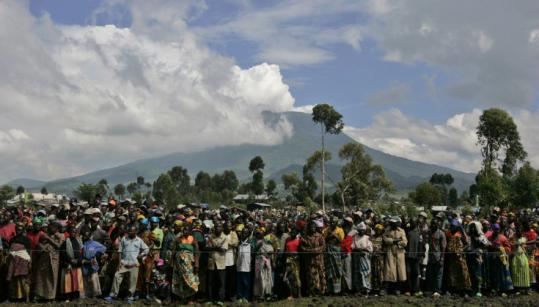
Mount Nyamulagira, 25km (16 miles) from the eastern city of Goma, erupted at dawn on Saturday, sending lava into the surrounding Virunga National Park.
About 40 endangered chimpanzees and other animals live in the area.
But the country's famous critically endangered mountain gorillas are said to be safe as they live further east.
from BBC News.
Please visit the BBC website for video and more information
Volcano erupts in eastern Congo
Lava from a volcano in a sparsely populated area of the Democratic Republic of Congo is threatening rare chimpanzees, wildlife officials say. Mount Nyamulagira, 25km (16 miles) from the eastern city of Goma, erupted at dawn on Saturday, sending lava into the surrounding Virunga National Park.
About 40 endangered chimpanzees and other animals live in the area.
But the country's famous critically endangered mountain gorillas are said to be safe as they live further east.
Emmanuel de Merode, Virunga's director, said that park staff were working with the civilian and military authorities to assess the risk and take appropriate action.
Rangers were deployed to the area to monitor the flow of lava and were due to report back hourly, he added.
A government official, Feller Lutahichirwa, said observers were monitoring the situation with help from UN helicopters, the Associated Press reports.
'Mountain on fire'
While few people live in the area immediately affected, officials said their primary concern was to protect human settlements.
Rangers were deployed to the area to monitor the flow of lava and were due to report back hourly, he added.
A government official, Feller Lutahichirwa, said observers were monitoring the situation with help from UN helicopters, the Associated Press reports.
'Mountain on fire'
While few people live in the area immediately affected, officials said their primary concern was to protect human settlements.
Innocent Mburanumwe, warden for Virunga's southern sector, said that lava was flowing towards an area to the south of the volcano, where "many people" live.
"I was woken at 0345 [0145 GMT] by a loud bang, which I first thought was the sound of war," he added.
"I thought there was fighting again near our park station," he said, referring to the conflicts which have wracked eastern DR Congo.
"Then I saw the mountain was on fire with sparks flying."
Mount Nyamulagira (also spelled Nyamuragira), which stands at 3,058m (10,033ft), is one of the most active volcanoes in Africa, according to officials in Virunga.
It has registered more than 35 eruptions since 1882, with the most recent before this weekend being in 2006.
Virunga, a Unesco World Heritage Site since 1979, is home to 200 of the world's 720 remaining mountain gorillas but they live on the flanks of the Mikeno volcano further east from Nyamulagira.
Previous eruptions of the volcano have threatened the city of Goma, which has a population of at least 200,000 as well as tens of thousands of refugees.
"I was woken at 0345 [0145 GMT] by a loud bang, which I first thought was the sound of war," he added.
"I thought there was fighting again near our park station," he said, referring to the conflicts which have wracked eastern DR Congo.
"Then I saw the mountain was on fire with sparks flying."
Mount Nyamulagira (also spelled Nyamuragira), which stands at 3,058m (10,033ft), is one of the most active volcanoes in Africa, according to officials in Virunga.
It has registered more than 35 eruptions since 1882, with the most recent before this weekend being in 2006.
Virunga, a Unesco World Heritage Site since 1979, is home to 200 of the world's 720 remaining mountain gorillas but they live on the flanks of the Mikeno volcano further east from Nyamulagira.
Previous eruptions of the volcano have threatened the city of Goma, which has a population of at least 200,000 as well as tens of thousands of refugees.
Subscribe to:
Posts (Atom)