translate

Site update

Since I have been really terrible at updating the blog (but pretty good at keeping up with the facebook blog posts) I've added the widget below so that facebook cross posts to the blog.

You shouldn't need to join facebook but can just click on the links in the widget to access the articles. If you have any problems or comments please mail me at arandjel 'AT' eva.mpg.de.

Friday, November 5, 2010

Thursday, November 4, 2010

Thank You! DNApes is 4th best Primatology blog for students


The E-advisor blog just listed the DNApes blog as the #4 best Primatology blog for students! (and i LOVE their description:)
"DNApes: DNApes, given their title, isn't one to shy away from mixing humor with primatology. (The picture on their Facebook page speaks volumes.) They post a variety of news articles and video links, with the occasional joke or fake story thrown in for good measure. Lighthearted but never dumb."
Thanks to everyone for your readership and comments, you make me want to keep posting! And of course thank you to all the wonderful people out there doing really great (and ethical) science, inspiring conservation work and everyone with an amazing sense of humour that i totally steal from. THANK YOU!!!

Please check out the entire list here, there are lots of other great blogs out there for all your science and conservation news and opinions, there are a bunch I can't wait to explore! A special plug for Vanessa Wood's page: Your Inner bonobo who i have cross posted from many times! My other two favorites are Primatology.net and Serious Monkey Business which I think are really well written too.

Thanks again!
-MA

Wednesday, November 3, 2010

Bushmeat hunting alters forest structure in Africa

by JEREMY HANCE
from mongabay.com

According to the first study of its kind in Africa, bushmeat hunting impacts African rainforests by wiping-out large mammals and birds—such as forest elephants, primates, and hornbills—that are critical for dispersing certain tree species. The study, published in Biotropica, found that heavy bushmeat hunting in the Central African Republic changes the structure of forest species by favoring small-seeded trees over large-seeded, leading to lower tree diversity of trees that have big seeds.

"When hunters remove big animals, they remove at the same time the ecological functions of the animals," lead author Hadrien Vanthomme, from the Museum National d'Histoire Naturelle in France, explained to mongabay.com. "To keep it simple, animals can have two opposite impacts on forest regeneration: they can favor it (mostly by carrying seeds away from the parent plants, phenomenon called dispersion), or they can oppose regeneration (by destroying seeds or young seedlings). So basically, we expect that if a guild of animals implied in seed dispersal of a plant is removed, the regeneration of this plant species will be compromised."

Due to a dearth in data, Vanthomme and colleagues did not know which animals spread which plants, but instead had to hypothesize likely ecological interactions.

According to co-author, Pierre-Michel Forget, given the diversity of such it's almost impossible "to know all the actors involved—we are simply not enough and an army of scientists would be needed for that, just as to describe the diversity on earth—and what are the ecological services these animals offer to plants".

However by analyzing two plots in the Ngotto Forest, one with little hunting and the other with high hunting, they were able to paint a broad picture of the impact of bushmeat hunting on forests in the region, a "net effect" as Vanthomme puts it.

The study found that a number of key trees—the African star apple Chrysophyllum africanum, a species of cola nut tree Cola acuminate, and the Carapa procera, a species of mahogany—were all depleted in the high hunting site, most likely due to the lack of necessary seed dispersers. Each of these trees produces large seeds that probably require big mammals and birds to disperse successfully.

"Our results show a significant reduction of regeneration diversity in the hunted site compared to the less hunted site, and that this reduction also concern mainly animal-dispersed and large-seeded plant species," says Vanthomme.

Dr. Forget adds that the study's findings are buoyed by similar studies in South America that show that trees which hold similar ecological niches also vanish when hunting is high. However, since the study broke new ground, more research is needed to confirm the results and build a more complete picture of how hunting is changing forests, according to the authors.

"Duplicating this kind of study across Africa and other tropical forest will make it possible to compare the situation across space and better target the questions that need to be answered regionally. It will also be possible to choose appropriate plant species to further test hypotheses and produce data that could be used in ecological models to predict the future diversity of tropical rain forest plant species," says Vanthomme.

Yet if these findings stand the test of time, it means forest structure is being changed in ways hardly imagined a few decades ago.

"It would mean that hunting, on the long term, may affect the general balance of plant species in forests," says Vanthomme. "Consequences of this phenomenon are absolutely unpredictable, especially when associated to other disturbance like logging, fragmentation, or climate changes… One thing is sure: forest will never be the same."

New studies on seed dispersal in African tropical forests are already moving ahead according to Forget.

"In Rwanda, we are studying what happens when elephant disappeared and do not disperse seeds anymore, and whether rodents might compensate for the lack of dispersal of large seeds," he says. To date, he says results show rodents may in make-up for the absence of elephants in dispersing certain seeds. But, they do not spread seeds nearly as far as elephants, affecting tree species' "distribution and density".

While, seed dispersal studies have become almost common in South America and Southeast Asia, Vanthomme and Forget say that studies in Africa have taken time to get off the ground in part due to a lack of field stations and infrastructure in tropical Africa for researchers.

"It is crucial to develop and support field stations in Central Africa if we want to know more about how human activities impact the ecology and diversity of the rainforest. African scientists, for instance, have many difficulties to study their own forest due to the lack of infrastructure, and that is not fair," says Forget.

In addition, if researchers are to move forward in their understanding of the complex interactions between animals and plants in rainforests—knowledge that could prevent species and ecosystems from vanishing—Forget says that local education must be paramount.

"[We] need more researchers from tropical countries to describe the diversity and the essential relationships that exists linking plant to animals. And for that, we need to both educate a young generation of scientists, and to offer them the most favorable conditions for adequate learning and training to study rainforest ecology. That is the next challenge for educators, politicians and stakeholders if they don’t want the rainforest to disappear."

---
Reference: Vanthomme H, Belle B, Forget PM (2010). Bushmeat Hunting Alters Recruitment of Large-Seeded Plant Species in Central Africa. Biotropica. 42(6): 672–679. doi: 10.1111/j.1744-7429.2010.00630.x.

ABSTRACT
We investigated the effect of local hunting on plant recruitment at the community level in the Ngotto Forest, Central African Republic. It is the first study of this kind in the afrotropics. To compare our results with previous studies conducted in the neotropics, we used the protocol proposed byNuñez-Iturri and Howe. We compared animal relative abundances and seed length, density and diversity of seedlings at two sites with contrasting anthropogenic pressures: one with low hunting pressure (LH) and one with high hunting pressure (HH). Furthermore, we investigated how density and diversity of recruitment vary with seed length in the two sites. Both sites exhibit similar soil, climate and tree species composition, and have never been logged. Large mammals (frugivores and herbivores) were extirpated from HH and relative abundance of medium-sized frugivores drastically decreased in HH compared with LH. In HH, diversity of seedlings was reduced compared with LH, especially for large-seeded plant species dispersed by large game mammals. The approach used in this study shows promising perspectives to investigate the effects of human disturbances on the regeneration of tropical forests. Furthermore, in the afrotropical context of a lack of data on plant–animal ecological relationships, seed length appears to be a good predictor of the strength of the deficit of plant recruitment due to large mammal extirpation because of hunting. Thus, more efforts are needed to study the ecological roles of large-seeded plants in order to better understand the effects of their disappearance on tropical forest resilience.

Buy traditional BaAka jewlery online - support conservation and local traditions.

You can now buy authentic traditional BaAka Pygmy jewlery online from KambaTiBa'Aka!
By purchasing traditional BaAka Pygmy jewelry you can help to maintain the medical care system of the BaAka around Bayanga in Central African Republic.

You can check out their facebook page HERE

There is a gallery full of pictures of the various offerings
1 necklace OR pair of earrings for 4 Euro
2 for 7 Euro
3 for 10 Euro

More form the facebook page:
We are a non profit organization marketing traditional BaAka Pygmy jewelry to maintain the medical care system of the BaAka people around Bayanga in the Dzanga- Sangha Protected Area in Central African Republic. In order to achieve this goal we are working closely together with the Dzanga Sangha Project and WWF Germany.

We purchase jewelry directly from EVERY BaAka family in the two villages Yandoumbe and Moussapoulla. Thereby the number of jewelry we buy from each family is based on the number of children it has. We guarantee you that half of the money you pay for the jewelry goes directly into the hands of the manufacturer. The other half will go into the health fund. Through this fund people get free medicine at the local clinic.

Mission:
The bigger the health fund, the more people can get medical treatment. That´s why we need your help! Help us to maintain the BaAkas’ health fund and make it grow! Purchase one (or more!) of the beautiful necklaces or earrings. Every piece is unique, they are all handmade and out of natural materials gathered by the BaAka in the rain forest.

We are happy to send your order to wherever far you live, but we´ll need to ask you to pay for shipping at extra cost.

Please send your order to daniela_hedwig@gmx.net :-)

Shark eco tourism: multi-layered, economically-viable appraoch to conservation

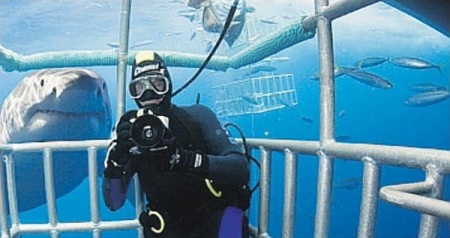
Today Carol R posted some pics of her recent (caged) shark diving experiences in Mexico. My initial reaction was "never me" and "terrifying". Then this article was posted on bush warriors and it reminded me, as with all thing in life, that I need to be open-minded about these things! This is a really inspiring article about how one man, is winning the shark conservation war, with a multi-layered approach involving vigilance, law enforcement and eco-tourism. Thanks to Carol and bush warriors for reminding me to always check my prejudices. - MA
PS: There are LOTS more pictures in the original article on the Bush Warriors website.


Sharks, Tourism, and Conservation: The Truth About Shark Diving
From the Bushwarriors blog

Selling shark tourism as a way to inspire appreciation for these misunderstood predators is one thing, but if the business is done right, it can accomplish much more than an increased affinity for these animals. Of course, changing society’s attitude towards these creatures is imperative to their survival. However, shark tourism operators also have the potential to offer protection to these big fish, in addition to supporting shark research and conservation efforts. And they can make money while they do these things!

The majority of mainstream media attention focuses on instilling a fear of these creatures with sensationalized headlines that include words like “shark attack”, “monster”, and even “Killer Shark Looms Offshore Waiting for Next Victim”. However, the truth of the matter is that every single day we are some 217,000 sharks closer to losing these ocean-balancing organisms forever. Shark diving opportunities provide people with a chance to gain a new understanding for these animals. When done properly, it brings people as close to these predators as one can safely get. Such an experience can change a person’s life and give them motivation to protect these animals.

Imagine the power of these experiences, if they were to educate people on the largely unknown state of the current shark crisis. Beyond education, what if shark tourism clients were provided a way to literally become involved in protecting and conserving sharks, and even assisting with their research? This is entirely possible, and it’s already being done in some places.

Canadian national, Mike Lever, is a veteran in the cage diving business and is one of the largest shark cage diving operators on the Pacific coast of Mexico, but he’s much different than the majority of his competitors. After seeing the devastating effects of overfishing and shark finning, Lever has built his business in a way that provides protection for these amazing creatures, a purpose for the shark tourism industry that is largely overlooked and neglected.

As a large challenge in halting illegal fishing of sharks seems to lie in a lack of enforcement and patrols, Lever has purposefully placed his boats in a position that serves as a warning to anyone who dares to attempt to fish for or fin sharks in the areas where he operates. His and his clients’ mere presence serves as a deterrent to the these activities. The conservationist businessmen established this persona by confronting shark poachers head on.

In 2008, Lever chased a poaching vessel for four hours before he was finally able to convince the captain to return to the location where his crew had set an illegal fishing net. Sadly, Lever found that the boat was already loaded with numerous dead sharks and manta rays. However, when they got back to the site, they found sea turtles, dolphins, and 17 thresher sharks entangled in the poachers’ net.

“That was really distressing. They are gentle giants. It was like pulling over a truck in Africa and finding seven elephants,” commented Lever in his interview with the Vancouver Sun.

Though he expected a strong response from law enforcement, he was shocked to learn the authorities took no action at all and even rejected the claim that there were sharks and mantas onboard the ship. Lever waged war against the sharks’ enemies and made a lot of noise with a widely seen TV show that depicted the event. As expected, Mexico responded promptly and beefed up their patrols… at least until the noise died down.

Lever says the fishermen stayed away from the shark-concentrated area where he conducts his cage diving tours for almost a year. He now flies his own aircraft on random patrols over the area to discourages illegal shark fisheries, while his shark tour boats hold down the fort in the water. He’s setting a classic example of how other shark tourism operators can create a business that serves multiple purposes, aside from making money.

Additionally, this man has a profound respect for the predatory and unpredictable nature of these animals. He says he would never put sharks in a position that would allow them to become vilified, say by providing free-diving shark experiences in which someone could potentially be killed by a shark, for example.

One of the controversies surrounding shark tourism involves chumming, the practice of baiting sharks to an area by tossing blood and raw animal flesh into the waters. Doing this can change shark behavior and potentially create a dangerous situation. Some operators in Hawaii have recently come under scrutiny of the courts for this practice. Lever is opposed to this large-scale chumming, for the safety of his clients, as well as that of the sharks.

Lever has also created two conservation trust funds with the sole purpose of protecting the marine life of the areas where he conducts his tours: Guadalupe Island and Socorro Island. He successfully raised $160,000 through donations from his clients and from his personal income over the last two years, and uses the money to fund American and Mexican researchers studying sharks. Some of the projects the trust funds have supported include putting transmitter tags on the animals so they can be tracked, as well as deploying marine acoustic censors designed to monitor the sharks’ environment.

“You can’t save these animals if you don’t understand them,” Lever explains.

There are other ways for shark tourists to get involved in the conservation of these creatures, as well. Recall the development of a new scientific database that allows researchers to keep tabs on sharks and their populations using photos of their fins. Cage diving clients can easily contribute to this research by snapping photos of the sharks they see, which can then be stored in the new database. Not only would they get to enjoy their direct shark experience, but they can humbly assist with the collection of much-needed data.

Shark-based tourism holds far more potential than one would think. We recently told you about a report from a team of environmental economists that highlighted the success of this industry, as well as the increased value of alive sharks over those killed for their fins or flesh. Furthermore, the business creates jobs and generates revenue for the economy.

The questionable future of these incredible marine predators could benefit greatly from an increase in shark tourism, especially that which also seeks to protect these animals. After all, they could not be in make money without these animals, so why not repay them with these simple gestures? Converting shark fishermen to business in safe and ethical shark tourism could very well reverse the current trends threatening all shark populations with extinction.

To read more about Mike Lever’s story, click here.

Social Learning in Dolphins - tail walking just for fun

From the Telegraph.co.uk
Dolphins 'walk' on water
Dolphins in the wild are teaching themselves to "walk" with their tails along the surface of water, biologists have claimed.


if above video doesnt work try this one on youtube

The mammals, which are celebrated for their playful natures, are developing the skill "just for fun", according to the Whale and Dolphin Conservation Society (WDCS) in Australia. Dolphin tail-walking has no known practical function and has been likened to dancing in humans.

WDCS researcher Dr Mike Bossley, who has observed Adelaide's Port River dolphins for the past 24 years, said he had documented spectacular tail walking in two adult female dolphins, known as Billie and Wave. Now four other individuals have been recorded perfecting their walking techniques – Wave's calf Tallula, Bianca and her calf Hope, and calf Bubbles. Tail walking is very rare in the wild and in thousands of hours of observation only one other dolphin has ever been observed tail walking in the Port River, and then only once. The Port Adelaide dolphins are now said to be tail walking many times each day.

It is thought the mammals may have learned the remarkable skill from Billie – who spent a short period at a visitor attraction 22 years ago. Dr Bossley said that the spread of tail walking appeared to be motivated by "fun", but it was also linked to a serious and fascinating cultural aspect previously unseen in the species.

He said: "Culture in the wider sense of the term, defined as 'learned behaviour characteristic of a community', is now frequently on show in the Port River. This cultural behaviour is of great significance for conservation. "Cultural behaviours in animals have been identified in several species, particularly chimpanzees. However, most if not all the cultural behaviours described to-date have been of a utilitarian nature, mainly to do with obtaining food. "A well known chimpanzee example is using a twig to extract termites from a nest in the Gombe Stream reserve. "The only dolphin example seen up to now is in Shark Bay, West Australia, where a small group of dolphins habitually carry a sponge on the end of their jaw while fishing to protect them from fish spines.

"As far as we are aware, tail walking has no practical function and is performed just for fun – akin to human dancing or gymnastics. As such, it represents an internationally important example of the behavioural similarities between humans and dolphins."

Monday, November 1, 2010

Biodiversity film competition - deadline Nov 17th!

Thanks to Carol D for the link!


Go to tv/e for more info!

Choose a category from their three categories and think how you might make a 2-minute film. Send them a proposal about the film you would like to make using the online form before 23.00 GMT 17 November 2010. Pitches will only be accepted in English.

A judging panel will select the best 12 proposals and provide funding of US$300 to help you make your film. Funding will only be awarded on delivery of the film.

The deadline for the delivery of the final 12 films is 15 December 2010.

The 12 films will be uploaded to tve's YouTube channel and the three films with the most views by 31 January 2011 will each receive a US$1500 prize. You have until 23.00 GMT on 17 November 2010 to submit.

Go to tv/e for more info!